
Last updated October 30, 2026
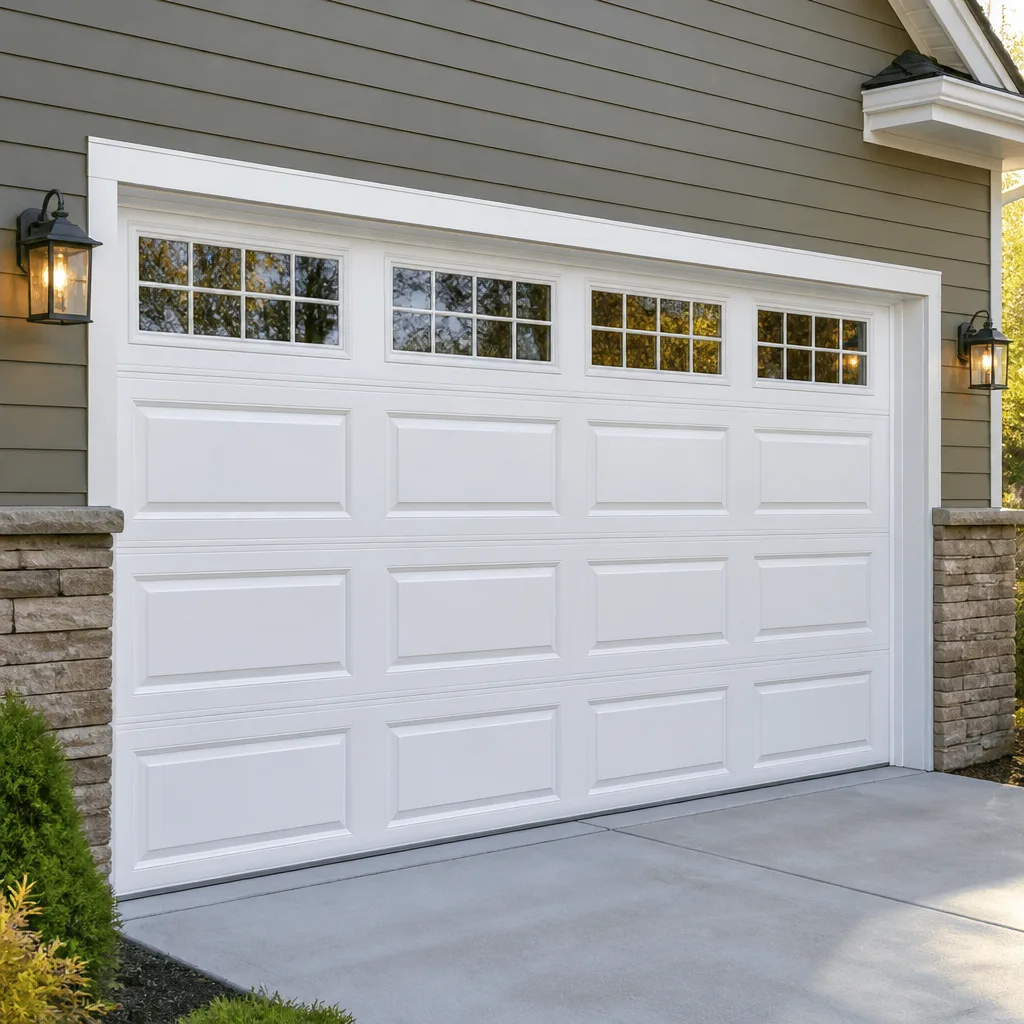 Raised-panel steel
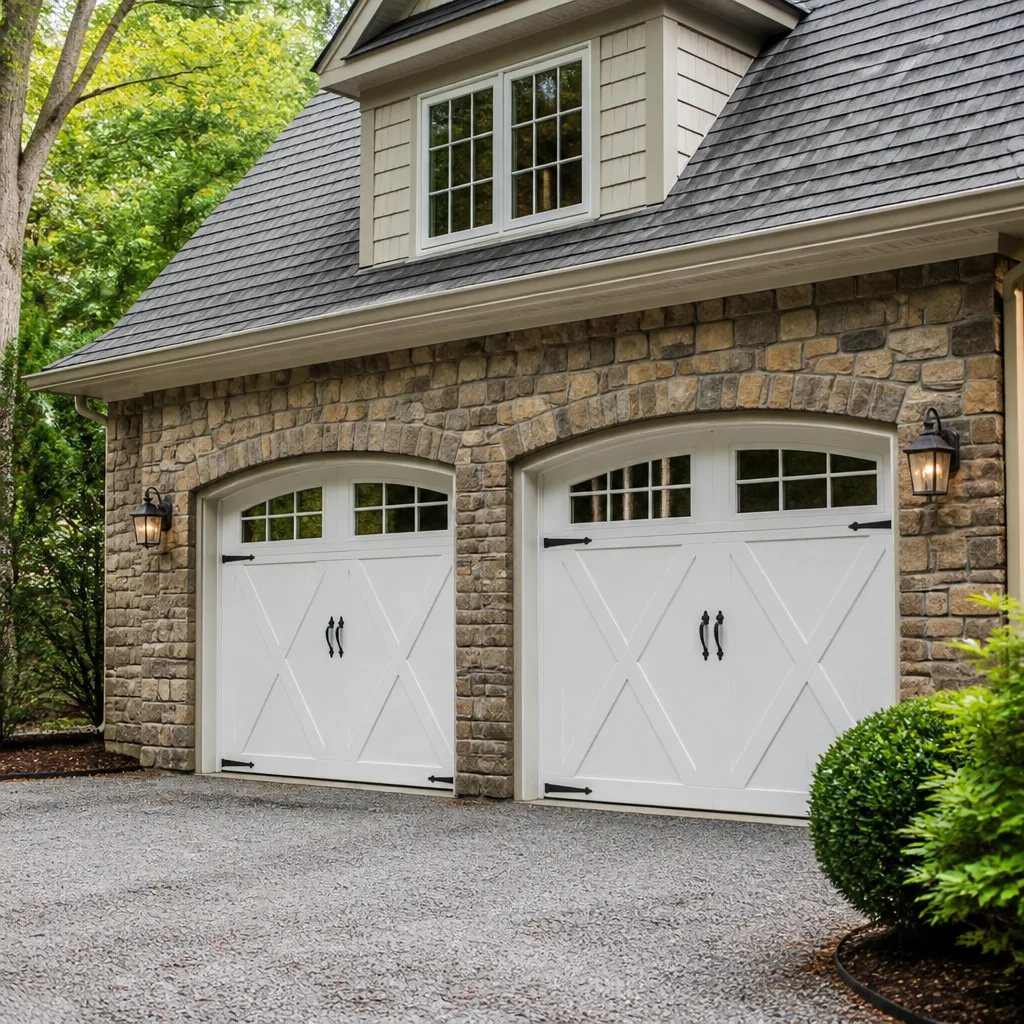 Carriage house
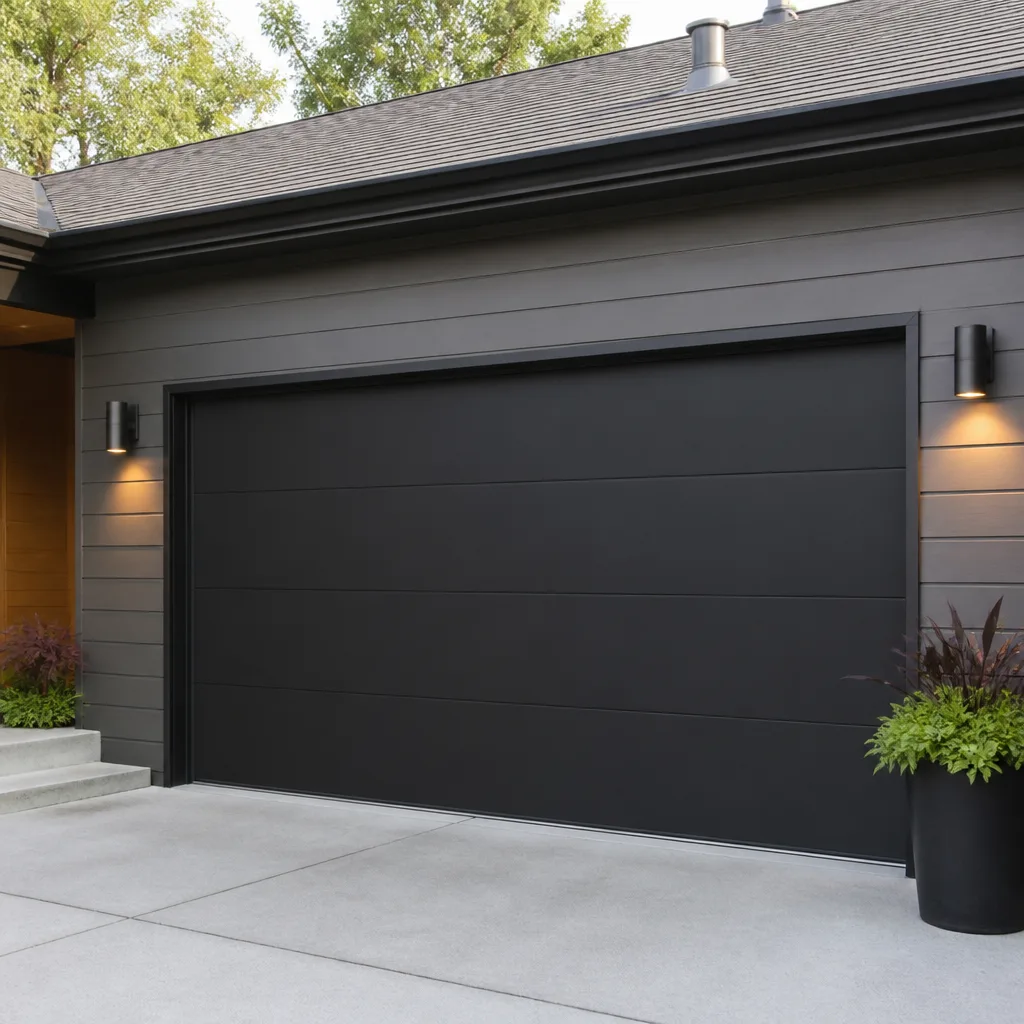 Modern flush
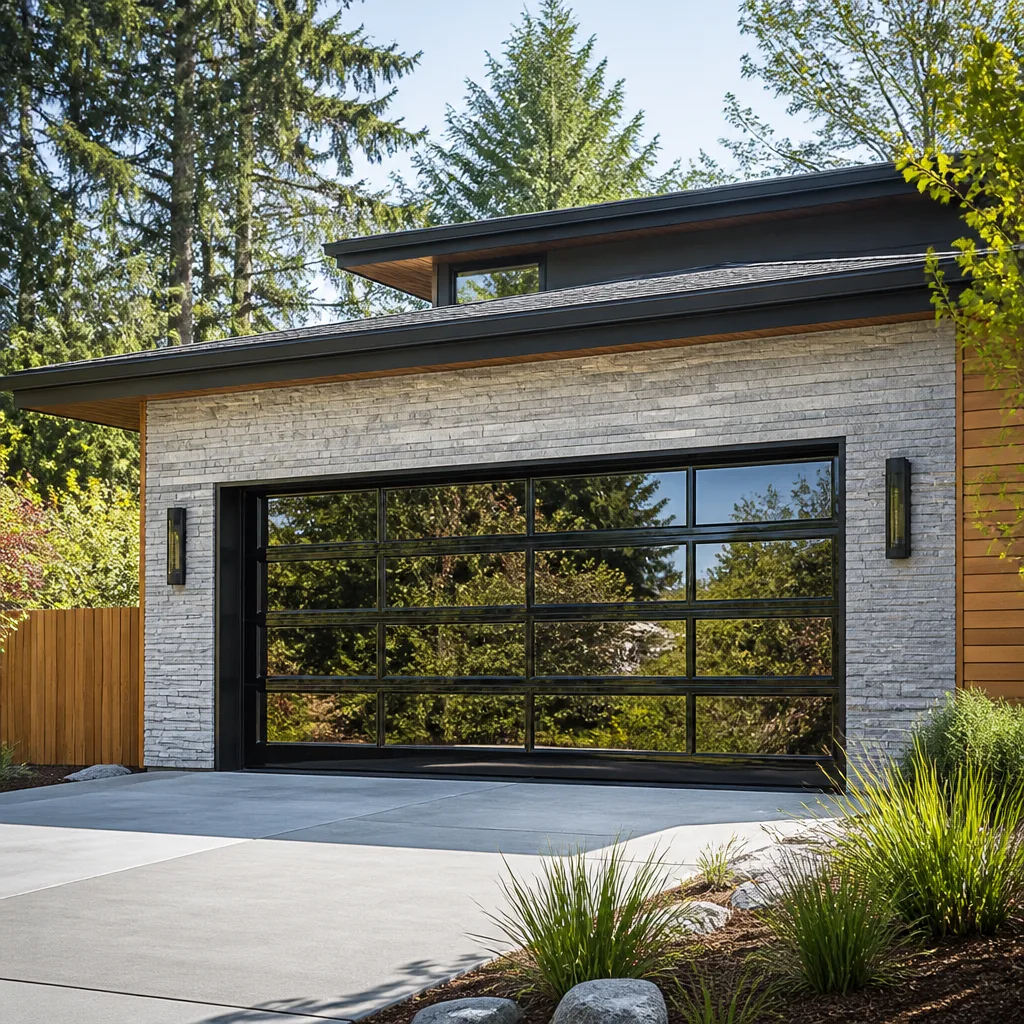 Full-view glass
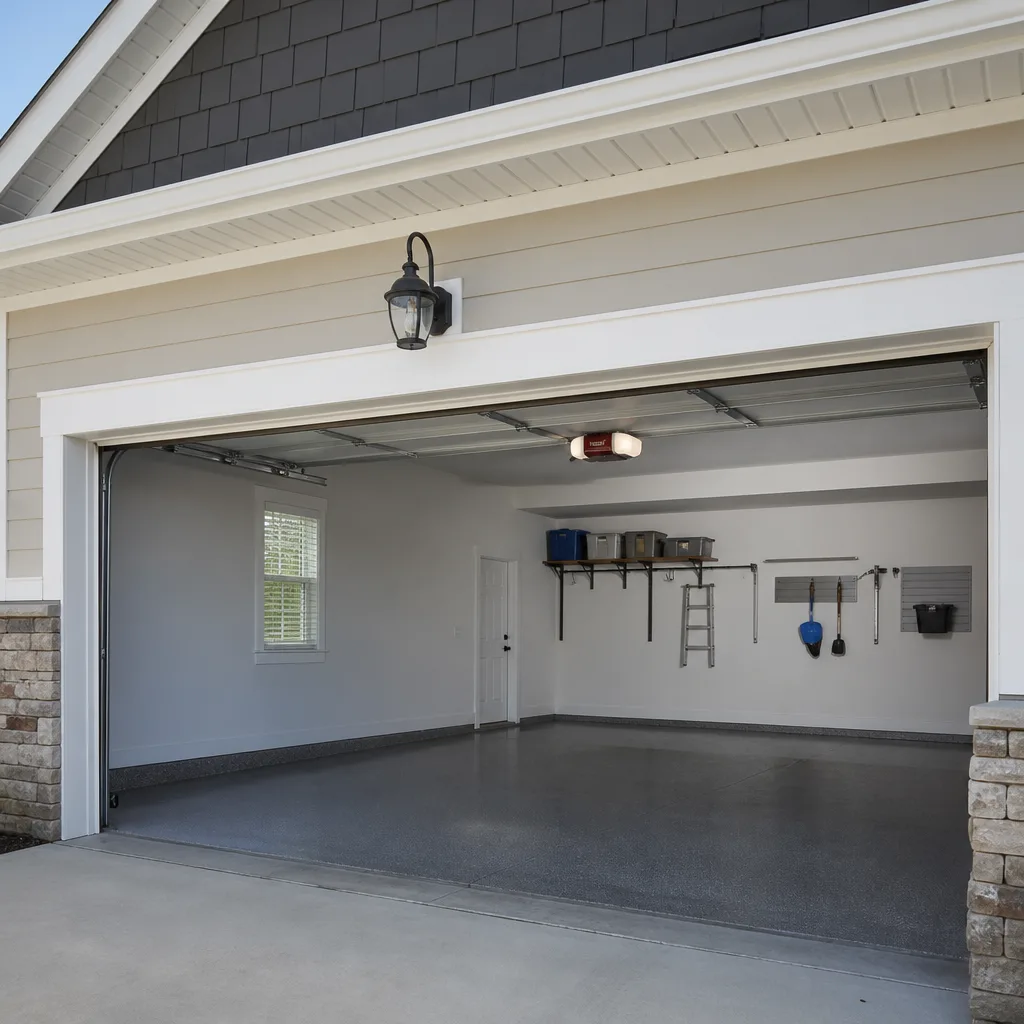 LiftMaster openers
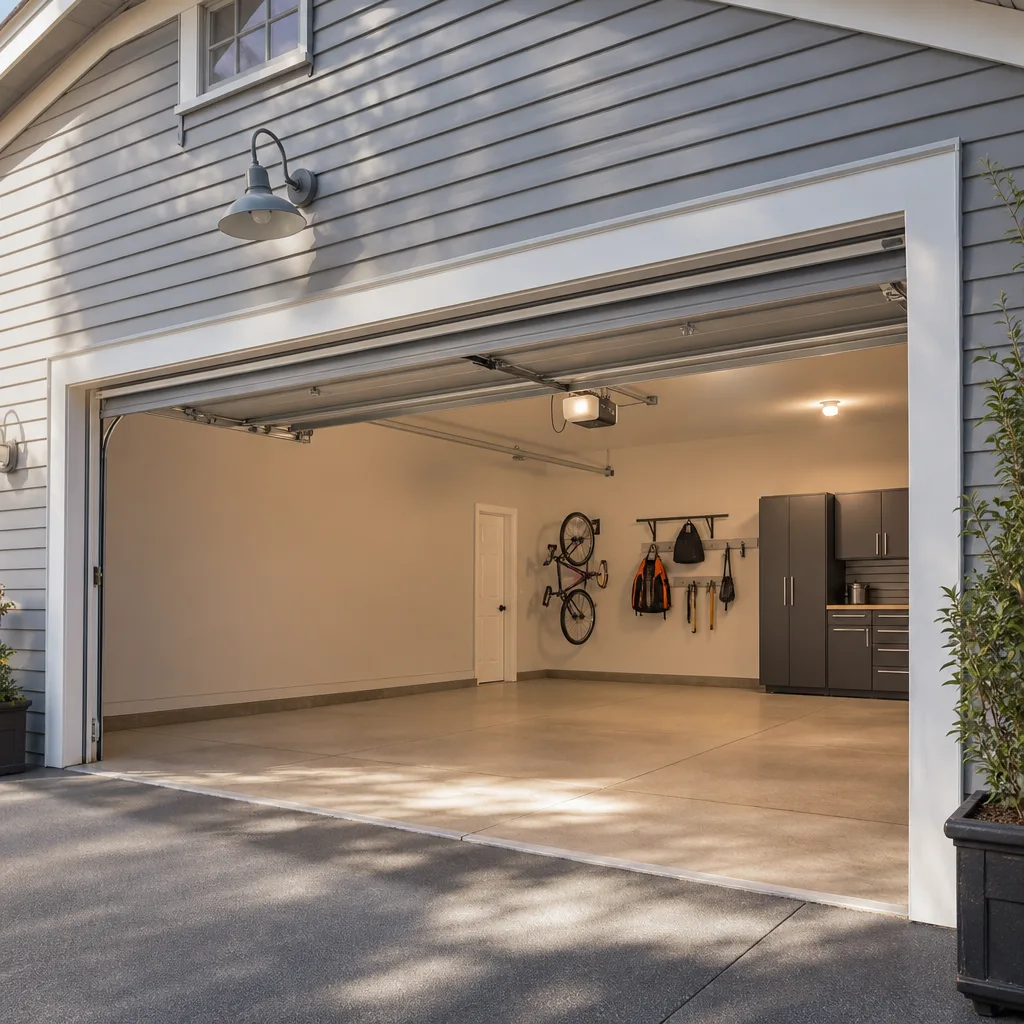 Chamberlain openers
Full 25-point door and opener safety check with every visit - springs, cables, rollers, tracks, and your LiftMaster or Chamberlain opener included
You get a price before we start. It does not change when the truck arrives.
Get your free estimateGarage Door Emergency Preparedness Guide for Miami Beach Homes
After Hurricane Irma, some Miami Beach homeowners couldn’t open their garage doors for 72 hours. Not because of structural damage, but because they’d never practiced manual release operation, and the cord had corroded and snapped from years of salt-air exposure without anyone noticing. If you live in Miami Beach, your garage door faces threats that inland homes never encounter: salt-laden wind, storm surge, and the reality that your garage may be your only protected entry point during an evacuation. This guide covers the emergency preparedness steps specific to coastal garage doors, from pre-storm inspection routines to post-flood salvage decisions, so you’re not discovering a failure at the worst possible moment.
Quick Answer
The core of garage door emergency preparedness in Miami Beach comes down to four things: test your manual release mechanism before hurricane season starts and replace any corroded parts, secure the door properly when a storm is named, know how to assess the door after the storm passes before re-engaging the opener, and understand what saltwater does to opener electronics so you can act within the salvage window. If your emergency release cord is stiff, rusted, or unlabeled, address it now, not when the power is out and the winds are rising. A garage door that won’t operate manually is a safety problem, and in a coastal environment, corrosion is the most common reason manual operation fails.
Styles & brands we work with
Table of Contents
- The Emergency Release: Your Door’s Most Critical Survival Feature
- Pre-Storm Securing Sequence for Miami Beach Garage Doors
- Post-Storm Assessment: When Is It Safe to Operate the Door?
- Saltwater Flooding and Your Opener: The 48-Hour Decision Window
- Battery Backup and Florida Building Code Requirements
- Springs, Cables, and Coastal Corrosion: What Fails First
- Riding Out a Power Outage With a Manual Door
- Building a Coastal Garage Door Inspection Routine
The Emergency Release: Your Door’s Most Critical Survival Feature
The emergency release is the red cord hanging from your opener rail. When you pull it, the door disconnects from the opener carriage, and you can lift the door by hand. During a hurricane in Miami Beach, that cord is often the difference between getting your car out before evacuation and leaving it locked in the garage. It’s also the mechanism that lets you open the door manually during extended power outages, which can last for days after a major storm.
Coastal corrosion is the enemy here. Salt air accelerates rust on the release mechanism’s metal parts, and the cord itself can degrade from humidity and salt exposure. We’ve replaced release assemblies on Miami Beach garage doors where the cord looked fine from a distance but snapped the first time someone actually pulled it, because the internal swage fitting had corroded through.
Here’s the step-by-step inspection and test routine we recommend before storm season begins in June:
- Visual inspection: Look at the emergency release cord. Check for fraying, discoloration, or stiffness. The cord should hang free, not wrapped around the rail or tucked into brackets.
- Pull test: With the door closed, pull the release cord firmly downward. You should hear a click, and the carriage should disengage from the door. If the cord resists or feels gritty, corrosion is present.
- Manual lift test: After disengaging, lift the door by hand. It should rise smoothly with roughly 10-15 pounds of effort. If it’s heavy or jerky, the springs may be failing, and that’s a separate emergency.
- Re-engage test: Pull the release again or run the opener until the carriage re-connects. The door should lock back onto the opener without forcing.
- Label check: Make sure the release cord is labeled or marked so anyone in the household can find and operate it in the dark. A colored handle tag costs a few dollars and saves minutes during an evacuation.
If the release fails any of these tests, replace the assembly before storm warnings appear. The emergency release is not a component you want to discover is broken when the power is already out. And if the manual lift feels heavy, that points to a spring issue, which is a safety-critical repair best handled by a professional who works with high-tension hardware daily. For that kind of repair in Miami Beach, our Garage Door Repair in Miami Beach service covers spring replacement, release mechanism repair, and full safety inspections.
Pre-Storm Securing Sequence for Miami Beach Garage Doors
When a named storm is heading toward Miami Beach, your garage door becomes the largest opening on the windward side of your home. If it fails, wind pressure enters the garage and can lift the roof. This is not theoretical, and the failure mode is well documented in post-storm engineering assessments. The sequence you follow matters, and so does the timing.
The most common mistake homeowners make is waiting too long to secure the door, then rushing through the steps and skipping the manual release check. The second most common mistake is bolting a piece of plywood across the inside of the door, which provides almost no wind resistance and creates a false sense of security.
- Test the emergency release first: Before doing anything else, confirm you can manually open and close the door. In a post-storm scenario, you may need to operate the door by hand for days.
- Close the door completely: Do not leave the door partially open. A partially open door catches wind like a sail and transfers the load to the hinges and tracks in ways they were never designed to handle.
- Disengage the opener: Pull the emergency release and leave the door in manual mode. This protects the opener from damage if the door shifts during the storm, and it lets you operate the door without power afterward.
- Install hurricane bracing or a reinforced door: If you have vertical bracing kits or a hurricane-rated door, install them according to the manufacturer’s instructions. Miami Beach building code requires wind-rated doors for new construction, but older homes may have unreinforced doors. The time to upgrade is before storm season, not during a watch.
- Clear the tracks: Remove any objects leaning against the tracks or stored near the door that could be thrown against it by wind or flooding.
- Document everything: Take photos of the door, tracks, and opener from multiple angles. If you need to file an insurance claim after the storm, pre-storm photos are the single most useful piece of evidence you can have.
This entire sequence takes about 20 to 30 minutes once you know what you’re doing. Practice it once in the spring so it’s second nature by August. The garage door is one of the few things on a Miami Beach home that you can meaningfully prepare in the final hours before landfall, and those 30 minutes are worth more than any post-storm repair call.
Post-Storm Assessment: When Is It Safe to Operate the Door?
In the hours after a hurricane passes through Miami Beach, the instinct is to open the garage and assess the damage. But operating a damaged door can cause further injury or destroy the door entirely. The assessment protocol below should happen before you attempt to open or close the door, whether by hand or with the opener.
Start by looking, not touching. Stand inside the garage and examine the door from the interior side. Look for visible panel deformation, cracks, or separation at the seams. Then check the tracks on both sides for bending, pulling away from the wall, or signs of impact. Hurricane-force winds can push a door inward far enough to twist the tracks without causing obvious panel damage, and a twisted track will bend the rollers, jam the door, or throw the cables off the drums.
Next, check the spring system. Look at the torsion spring above the door or the extension springs along the tracks. If a spring is broken, you’ll usually see a gap in the coil or a dangling spring end. A broken spring means the door’s weight is no longer counterbalanced. Do not attempt to lift a door with a broken spring. The weight of a typical double garage door panel runs 150 to 250 pounds, and lifting it without spring tension is a fast way to get seriously hurt.
After the visual check, do a slow manual test. With the opener still disengaged, lift the door about 12 inches and let go. It should stay in place. If it drops, the springs are not carrying the load correctly. Next, lift it to waist height and check that it rolls smoothly on both tracks without grinding or catching. Any grinding sound means a roller, hinge, or track issue that needs attention before the door sees regular use.
Only after the door passes the manual tests should you re-engage the opener. Run it through a full open and close cycle while watching the door’s movement from the side. Listen for strain in the motor, watch for uneven movement, and stop immediately if anything sounds wrong. An opener that was working before the storm can develop problems quickly if the door shifted during high winds, and running it against misaligned tracks burns out the motor fast. If anything failed these checks, our Garage Door Opener Repair in Miami Beach specialists can run full diagnostics on both the door and the opener.
Saltwater Flooding and Your Opener: The 48-Hour Decision Window
Saltwater flooding is a different beast from wind damage. Freshwater from rain can sometimes be dried out and salvaged. Saltwater is conductive, corrosive, and aggressive. It attacks electronics immediately, and it begins leaving salt deposits as soon as the water recedes, which continue corroding for weeks.
If floodwater from storm surge reached your opener motor, the control board is almost certainly compromised. The motor itself may also be damaged, but the control board, the printed circuit assembly that runs the logic, receiver, and safety sensor inputs, is the most vulnerable component. Saltwater short-circuits the board, and even if the board appears to dry out and work temporarily, the salt residue will cause intermittent failures and eventual total failure. This is one area where the common advice to “let it dry out and see” does not apply.
Here’s the key distinction: the 48-hour window is about assessment and realistic expectation, not magical rescue. Within the first 48 hours after saltwater exposure, a qualified technician can determine what is salvageable by opening the unit, inspecting the board for corrosion, checking the motor windings, and testing the safety sensor circuit. In our experience with coastal Miami Beach homes, if saltwater reached the opener head itself, the unit is generally a replacement, not a repair. If only the bottom few inches of the opener rail were submerged, the head unit may be fine, but the safety sensors at the bottom of the door tracks were almost certainly affected.
Act early because waiting changes the equation. Salt corrosion doesn’t pause while you handle other storm cleanup. By the time you get around to checking the garage door opener a week after the storm, components that might have been salvageable with a quick cleaning are often beyond saving. And the longer a saltwater-damaged board sits connected to power, the higher the risk of a short that damages the transformer or the motor. Get the assessment done quickly, even if the actual repair or replacement happens later. For post-storm opener diagnostics and Garage Door Installation in Miami Beach when replacement is the honest recommendation, our techs can evaluate the system and give you a clear picture of what’s salvageable.
Battery Backup and Florida Building Code Requirements
Florida Building Code has required automatic garage door openers in new residential construction to include battery backup systems for several years, and the requirement extends to replacement openers in many cases. The rationale is straightforward: after a hurricane, electrical outages can last for days, and a garage door that cannot be opened without grid power traps vehicles inside. Battery backup systems allow the opener to operate, usually for a limited number of open and close cycles, on stored power.
LiftMaster and Chamberlain are the two brands we see most often on Miami Beach homes, and most current models from these manufacturers include battery backup as either a standard feature or a factory option. The battery units typically mount above or beside the opener motor and provide enough power for 20 to 50 cycles, depending on door size and condition. That’s usually enough to get through several days of intermittent use if you’re disciplined about running the door only when necessary.
For older openers without built-in battery backup, there are retrofit options. Standalone battery backup units can be wired into existing openers, though the installation requires a knowledge of the opener’s control board and power supply, and the result is never as clean as a factory-integrated system. If your opener is more than 10 years old and you’re considering a retrofit, the smarter move is often a full opener replacement to a model with integrated battery backup, better safety sensor performance, and compatibility with your existing door. That’s not always the answer, and we’ll tell you when a retrofit makes sense for a nearly new opener.
One thing to know about battery backup systems: they are not a substitute for knowing how to operate the door manually. Batteries drain. After enough cycles without grid power, the backup system is depleted, and the manual release becomes the only way to operate the door. The manual release is your last line of defense, and in Miami Beach, where outages routinely outlast battery capacity, manual operation is a skill every household member should have. Your Bayside Garage Door Repair home team can test the full system, battery included, during a routine service call.
Springs, Cables, and Coastal Corrosion: What Fails First
In Miami Beach, the garage door components that fail first are not the same as in inland homes. The constant salt-laden humidity attacks metal parts year-round, and the failure pattern follows a predictable sequence: cables, then springs, then rollers, then hinges. Understanding this sequence helps you prioritize inspection and catch problems during the early stages.
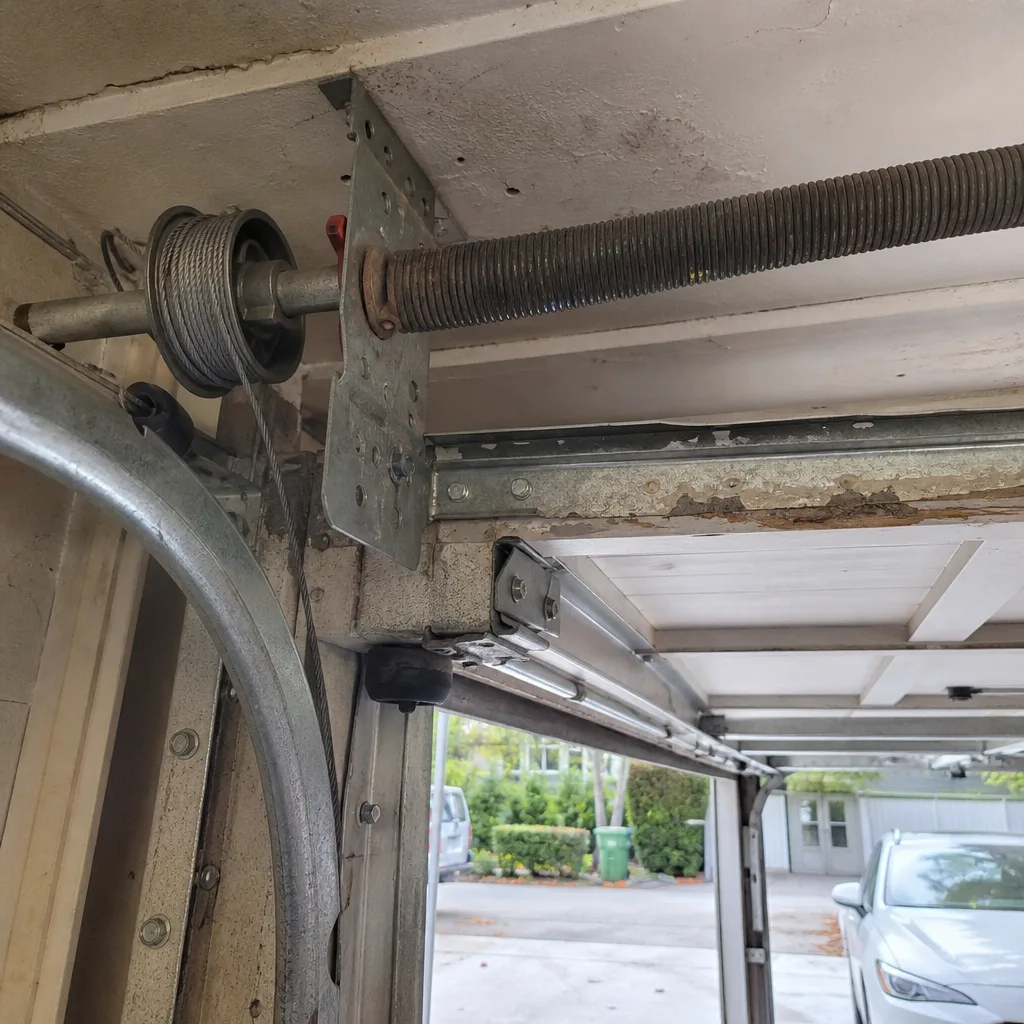
Cables are usually the first casualty. The lift cables, the steel wires that connect the bottom brackets to the cable drums, are thin and exposed. Salt air causes surface rust, which leads to fraying, which leads to snapping. A snapped cable is a safety-critical failure: the door becomes unbalanced, the remaining cable takes the full load, and if you continue operating the door, the second cable will follow. We’ve seen Miami Beach garage doors where both cables had rusted to the point of visible fraying, and the homeowner had no idea because the door still operated. It’s a time bomb.
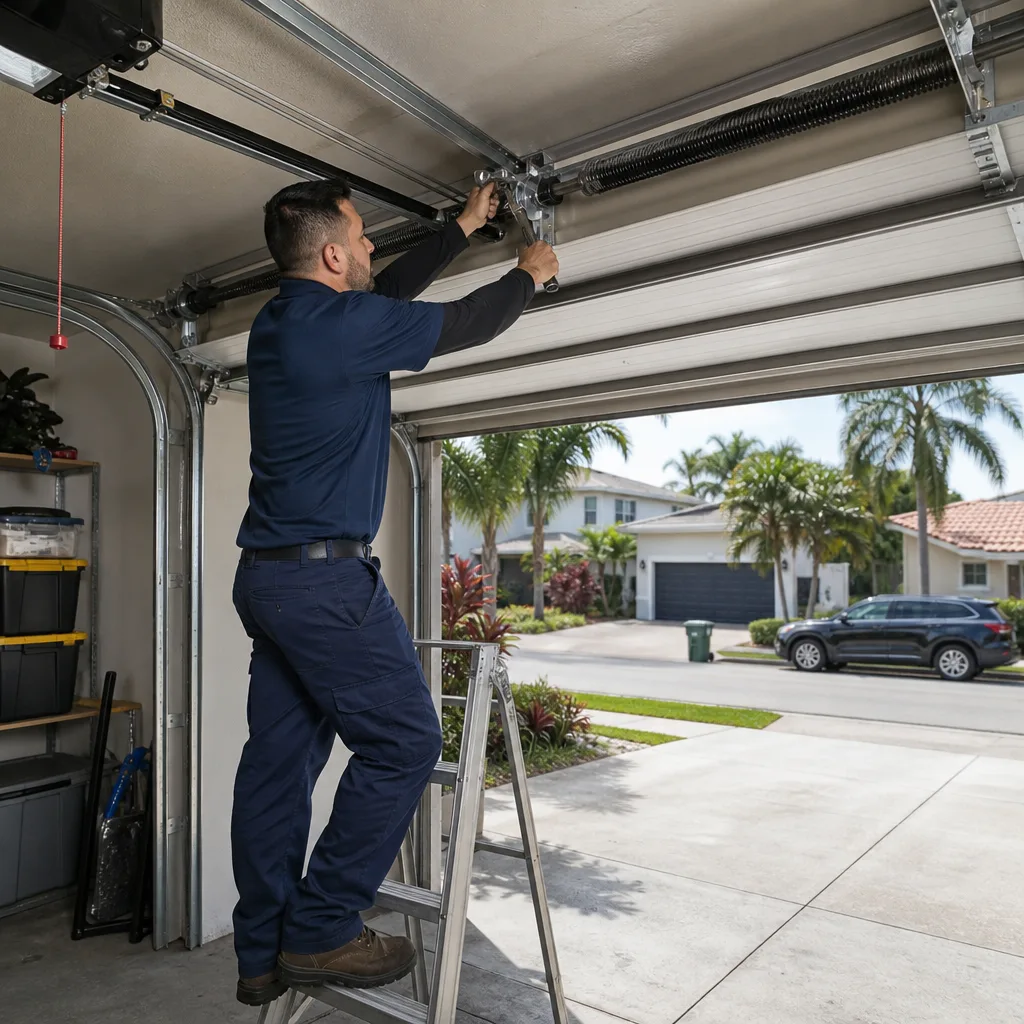
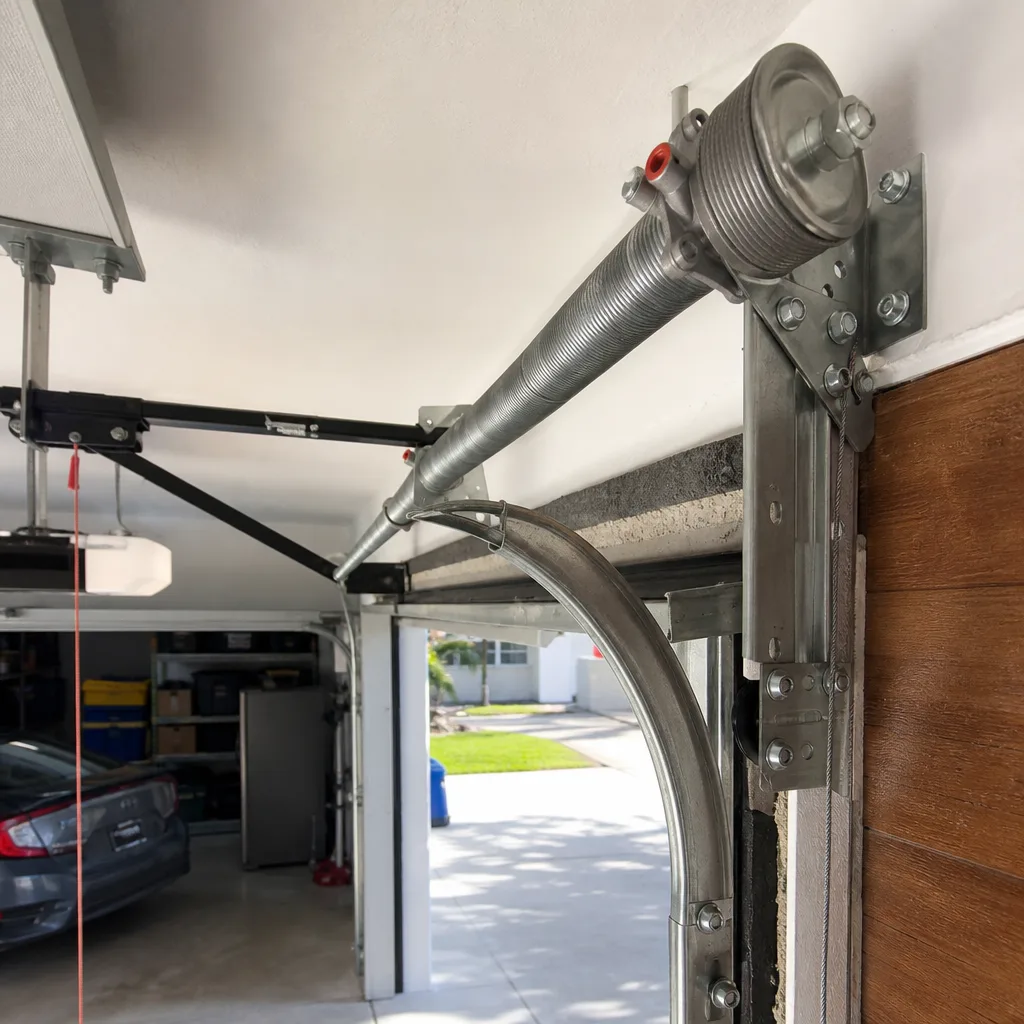
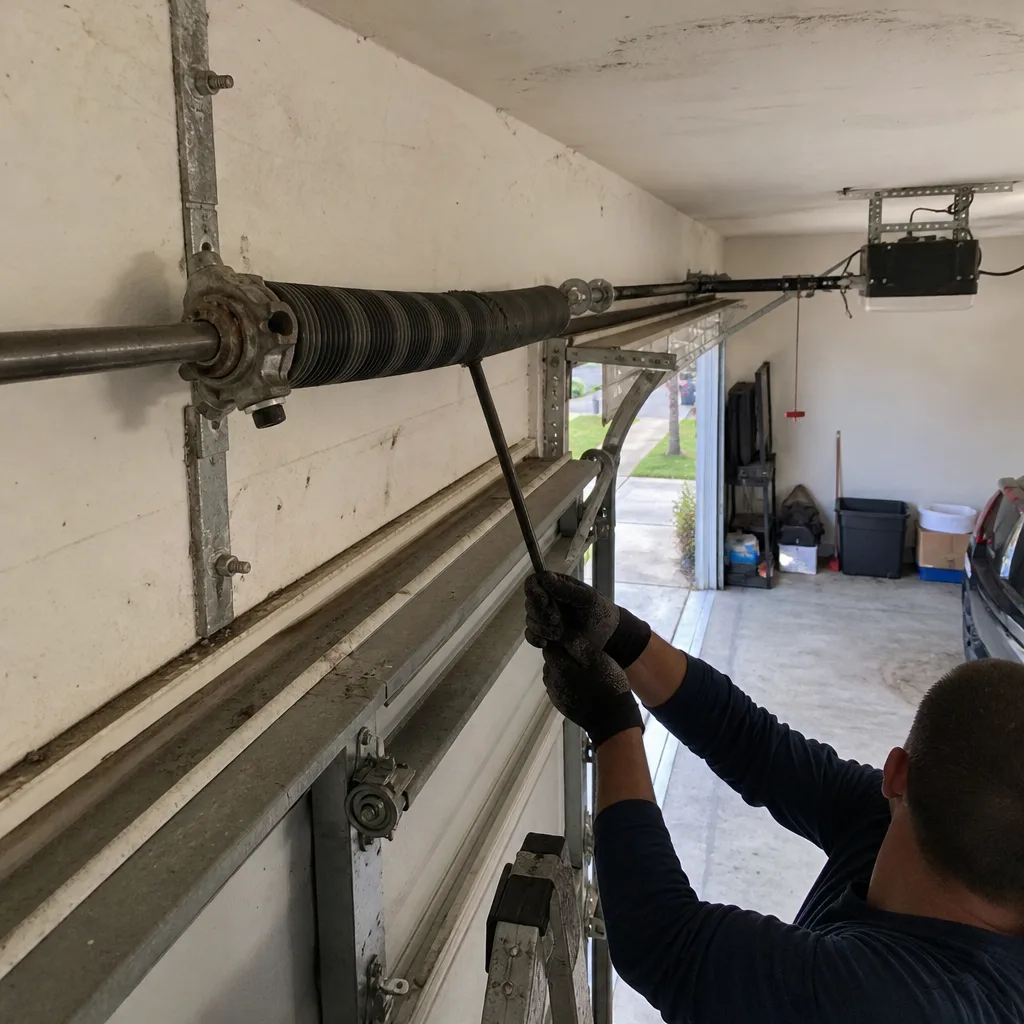
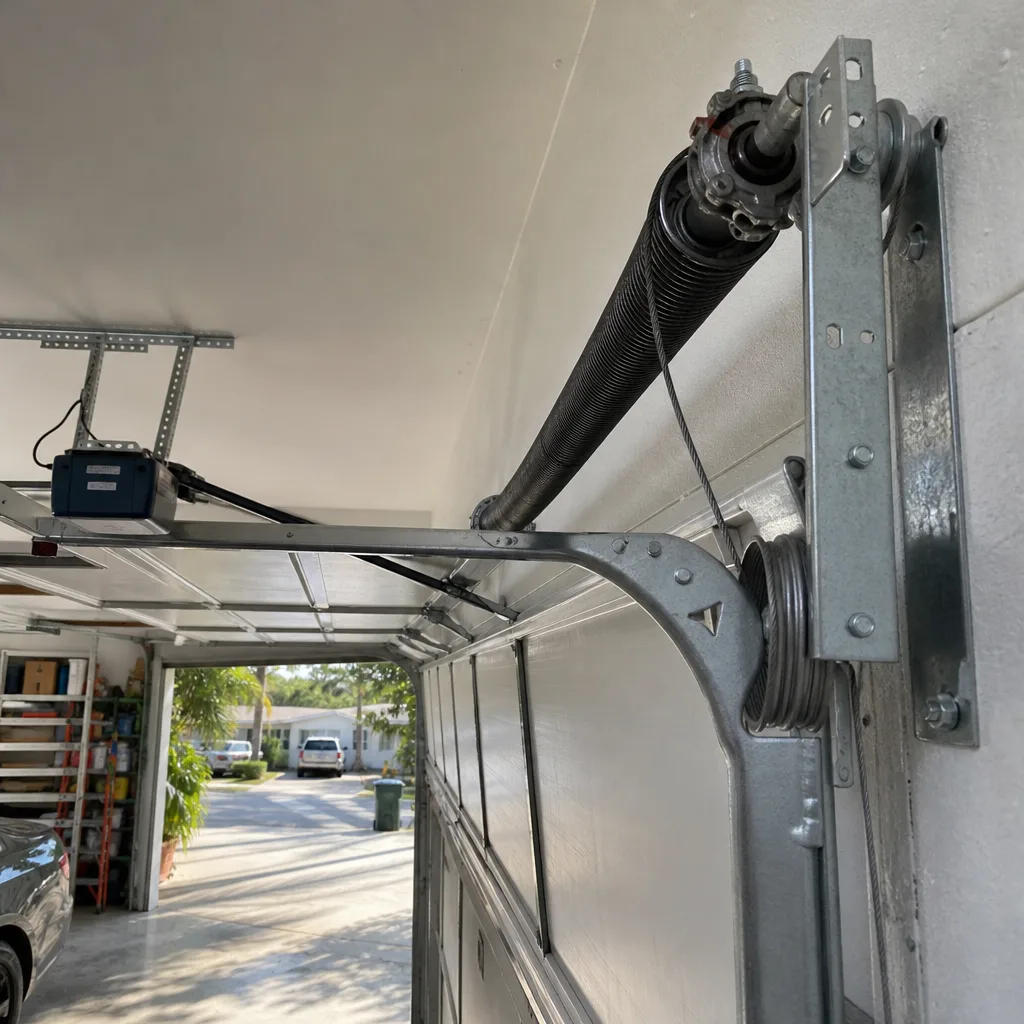
Torsion springs fail next. The spring that counterbalances the door’s weight is under constant tension, and that tension accelerates the effect of corrosion. A rusted spring develops microscopic pits that become stress risers, and eventually the spring snaps, usually with a sound like a gunshot. The broken spring is an emergency in the truest sense: the door won’t open manually or by motor, and any attempt to force it risks injury. This is also the component where DIY repair is genuinely dangerous. High-tension springs store enough energy to cause life-altering injury. If you have a broken spring, call a professional. We work on springs from all major door manufacturers, including Clopay, Amarr, Wayne Dalton, and Raynor doors, so we can source the correct spring size and tension for your specific door rather than installing a generic substitute.
Rollers and hinges round out the corrosion failure list. Nylon rollers hold up better than steel in coastal environments, but the bearings inside still rust. Hinges develop surface rust that doesn’t usually affect function but does indicate the general corrosion environment. If your cables and springs are nearing failure from rust, your hinges are probably not far behind, and a full-system inspection is warranted before storm season. We carry parts for Craftsman and Raynor systems as well, so older doors aren’t left without a source for compatible hardware.
Riding Out a Power Outage With a Manual Door
After a hurricane knocks out power in Miami Beach, the outage typically lasts longer than the battery backup on any garage door opener. FPL restoration times vary, and in the hardest-hit areas, it can be a week or more before the garage door opener has power again. That means manual operation is the default mode, and the way you use the door manually has a big impact on whether it still works when the power returns.
The first rule: disconnect the opener before the storm. If the power goes out while the opener is still engaged, the door is locked to the rail, and the emergency release is the only way to transition to manual mode. You can still pull the release after the power fails, but it’s easier and safer to do it before the storm hits. Disengage the opener, close the door manually, and leave it in that state until power is restored or until you need to open the door.
The second rule: limit cycles. Every manual open and close cycle puts wear on the springs, cables, and rollers, and in a post-storm coastal environment, these parts are already stressed. Open the door only when you need to move a car or retrieve something essential. Treat each cycle as a resource you’re conserving. If you can go two days without opening the door, do it. The fewer cycles you run during the outage, the fewer opportunities for a weakened component to fail.
The third rule: when power returns, re-engage carefully. Don’t just plug the opener back in and hit the button. Check the door’s balance first with a quick manual lift test, then re-engage the opener and run a full cycle while watching for hesitation or strain. If the door was forced at any point during the storm or the outage, the tracks or panels may have shifted, and running the opener against that resistance will damage the motor. A slow, observant re-engagement saves you from turning a door repair into an opener replacement.
Building a Coastal Garage Door Inspection Routine
The single most effective emergency preparedness measure for a Miami Beach garage door is a regular inspection routine tuned to the coastal environment. Most hurricane-related garage door failures are not random. They are the result of months or years of untreated corrosion that finally exceeded the material’s capacity, and the storm was simply the event that triggered the failure. A twice-yearly inspection catches these problems at the early stage, when repairs are cheap and scheduling is easy.
Here is the inspection checklist we use on coastal garage doors, in order of importance:
- Emergency release: Test the pull cord monthly. Check for fraying, stiffness, or a gritty feel in the mechanism. This is your evacuation lifeline, and it’s a two-minute test.
- Cables: Inspect both lift cables for rust, fraying, or kinking. If you can see individual broken strands at any point along the cable, it’s at risk of snapping and should be replaced.
- Springs: Look at the torsion spring for rust, gaps, or uneven coil spacing. A spring that looks rusted is in the early stages of failure. Extension springs should be inspected for visible gaps or corrosion at the attachment points.
- Rollers and hinges: Listen for grinding or squealing during operation. Check hinges for rust and loose bolts. A little silicone lubricant on the rollers goes a long way. Do not grease the tracks.
- Tracks and brackets: Check for rust on the tracks, especially near the bottom where saltwater splash can reach. Check bracket bolts for looseness.
- Safety sensors: Test the auto-reverse function monthly by placing an object in the door’s path. The door should reverse on contact. This is not optional, and in a coastal environment where sensor lenses get coated with salt spray, the sensors need occasional cleaning.
We recommend a professional inspection at the start of storm season in May or June, and a self-inspection in November or December when the worst of the hurricane risk has passed. A professional inspection in Miami Beach should include spring tension measurement, cable inspection, track alignment check, and a full safety sensor test. If you’re not sure what you’re looking at, or if anything on the checklist fails, have it checked before the June 1 storm season start. The Garage Door Repair in Miami Beach service includes this full coastal inspection whenever we’re on site for any repair, and we’ll flag problems before they become emergencies.
Common Mistakes to Avoid
- Never testing the manual release until the power is out. The first time you pull the emergency release should not be during a hurricane when you’re standing in the dark. Test it monthly, and you’ll know exactly what it feels like when it works correctly.
- Assuming a garage door brace kit is optional. In Miami Beach, wind-rated doors and bracing are code requirements for new construction. On older homes with unreinforced doors, a brace kit is the difference between a door that holds and a door that becomes a wall opening during a hurricane.
- Leaving the opener engaged during a storm. An engaged opener connects the door to the rail, and if the door shifts under wind load, that shock transfers into the opener carriage and motor. Disengaging is free insurance, and it takes seconds.
- Forcing a door after a storm when it feels heavy. A heavy door usually means a broken spring, and forcing the door damages the cables, the panels, and potentially the person lifting it. Stop and assess.
- Ignoring visible rust on cables and springs. In Miami Beach, rust on these components is not cosmetic. It’s a failure countdown. Surface rust on a cable means internal strand corrosion, and the cable is a few hundred cycles from snapping.
- Using a saltwater-damaged opener with the hope that it will keep working. Saltwater damage is progressive and irreversible on control boards. Using a compromised unit risks electrical shorts and fire, and the unit will fail eventually regardless.
- Skipping the pre-storm photo documentation. If your door is damaged by wind or debris, your insurance company will ask for evidence. Pre-storm photos establish the baseline condition and make the claim process significantly smoother.
See the difference
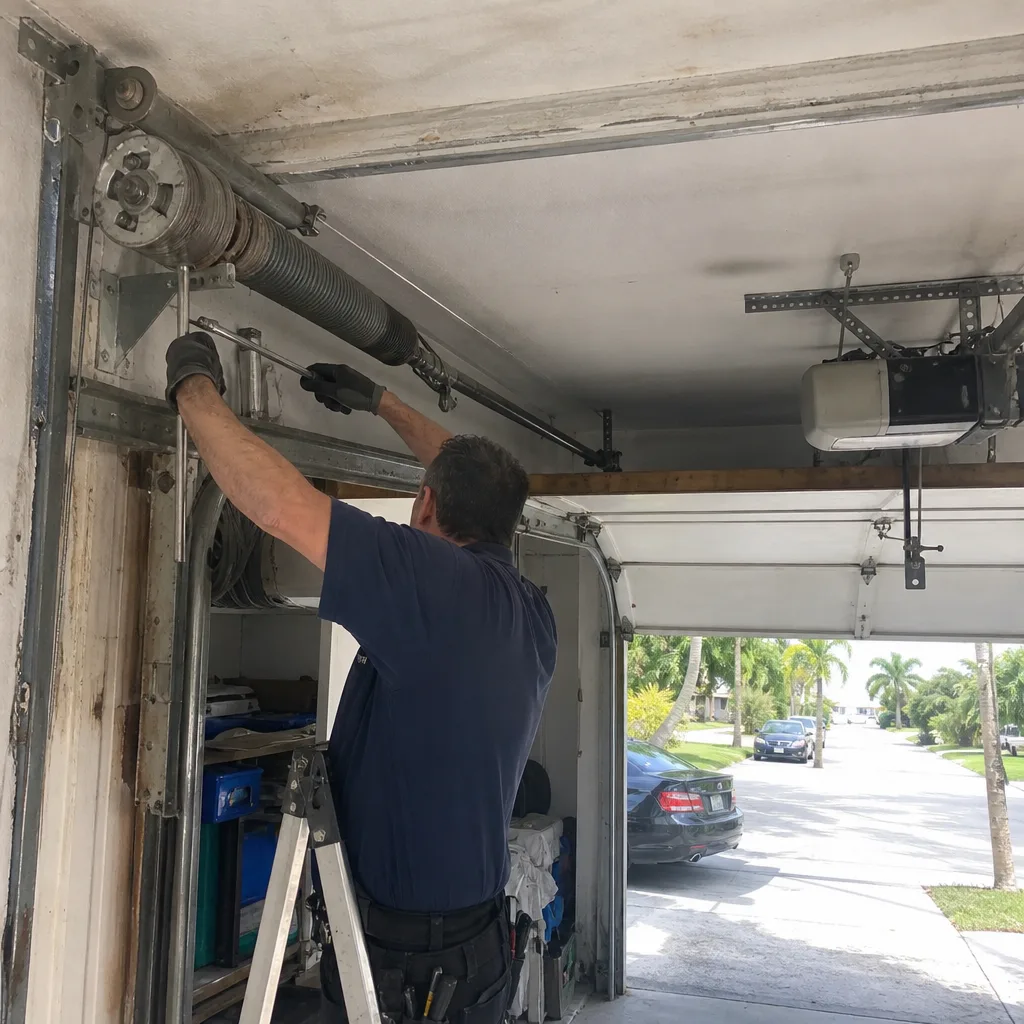 Before
 After
 Before
 After
 Before
 After
When to Call a Professional
Broken springs, snapped cables, bent tracks, or a saltwater-damaged opener are not DIY repairs. The spring system on a garage door operates under high tension, and a failed repair can cause severe injury. Cable replacement requires the door to be lowered safely and the cable routed under the correct tension, which is difficult without the right tools and training. Post-storm structural assessment and opener replacement involve electrical work and safety sensor installation that should be handled by someone who does this work daily. Bayside Garage Door Repair offers free estimates in Miami Beach – call (855) 674-1679 for a full assessment before or after storm season.
Frequently Asked Questions
Test the emergency release, disengage the opener, close the door completely, install any brace kits or storm bars you have, clear the tracks, and document the door’s condition with photos. The entire process takes about 30 minutes and should be done in that order. Practice before storm season so you’re not figuring it out for the first time when a storm is named. Call (855) 674-1679 if the release cord fails the test.
It depends on the door’s wind rating and the storm’s intensity. Older unreinforced doors in Miami Beach are at meaningful risk of panel failure in hurricane-force winds, and once a panel fails, the wind enters the garage and the structural risk escalates quickly. A brace kit is the single most effective retrofit for an unreinforced door, and it’s worth the investment before storm season.
Get a professional assessment within 48 hours if possible. Saltwater corrodes control boards and motor windings quickly, and even if the unit works briefly after drying, the salt residue continues causing progressive damage. If the opener head was submerged, replacement is usually the honest recommendation. If only the bottom of the rail and the safety sensors were exposed, the opener itself may be salvageable.
Pull the emergency release cord, which hangs from the opener rail, then lift the door by hand using the handle or the bottom edge. The door should feel light if the springs are working correctly. If the door is heavy or won’t lift, stop and call a professional, because a broken spring is likely. Practice the manual release sequence now so it’s familiar when you need it.
Yes, for new construction and, in many cases, for replacement openers installed in existing homes. The requirement exists because hurricanes cause extended power outages in Miami Beach, and a garage door that won’t open without grid power can trap occupants and vehicles. Battery backup systems typically provide 20 to 50 open/close cycles depending on the model and door weight.
We recommend a monthly manual release test and a visual check of the cables, springs, and rollers every three months, plus a professional inspection at the start of storm season in May or June. The salt-laden air in Miami Beach accelerates corrosion significantly compared to inland homes, and the inspection schedule should reflect that. Components that look fine on an inland door may be several months from failure on a coastal one.
The Bottom Line
Miami Beach garage doors face a distinct threat profile: salt-air corrosion, hurricane-force winds, flooding, and days-long power outages that make manual operation and battery backup essential, not optional. The preparedness sequence is straightforward once you know it: test your emergency release before June, secure the door properly when a storm is named, assess carefully after it passes, and act quickly on saltwater damage. The homeowners who handle these steps ahead of time don’t need a hero. They need a working manual release, a balanced door, and a backup plan. The Garage Door Opener Repair in Miami Beach service handles the electronic side of that equation, and the Garage Door Installation in Miami Beach service covers replacement when a door or opener reaches the end of its life. For anything else, call (855) 674-1679.
Written by the team at Bayside Garage Door Repair, serving Miami Beach since 2014.