
Last updated October 30, 2026
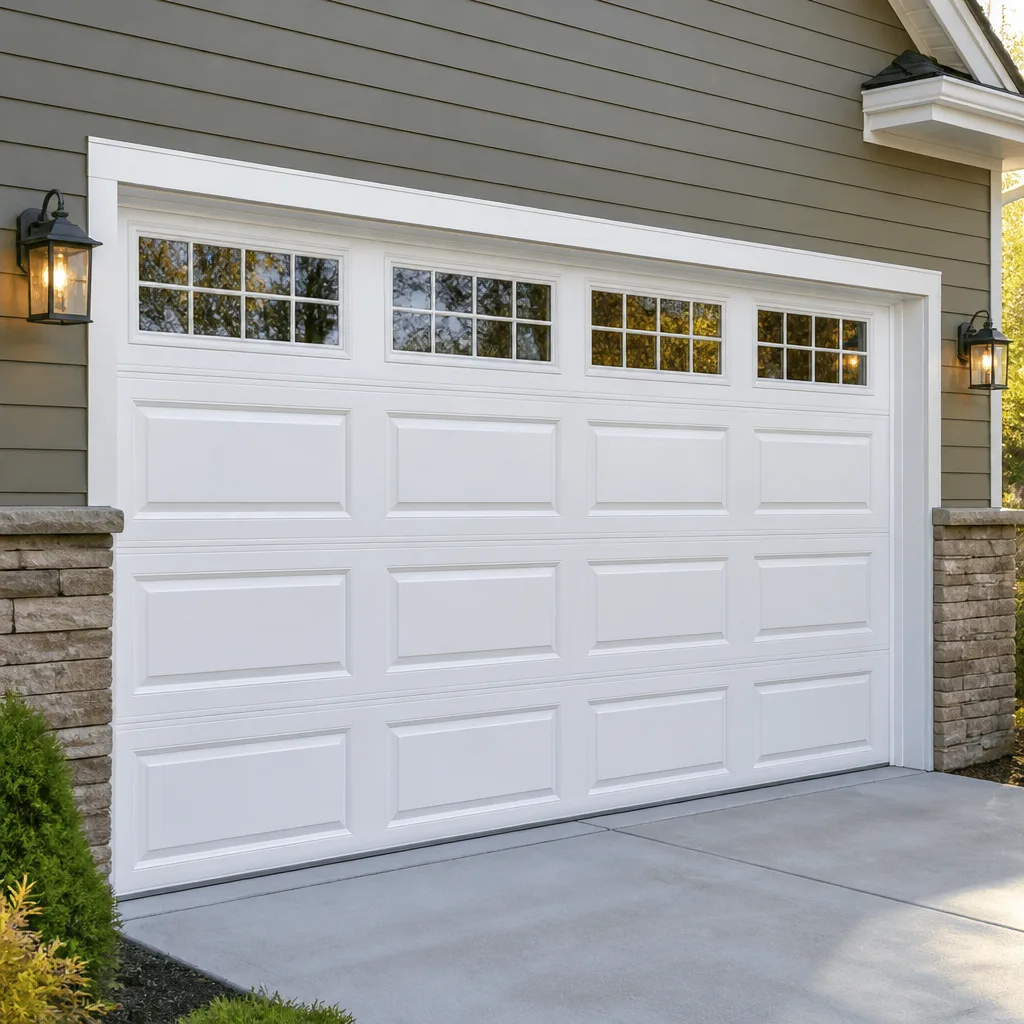 Raised-panel steel
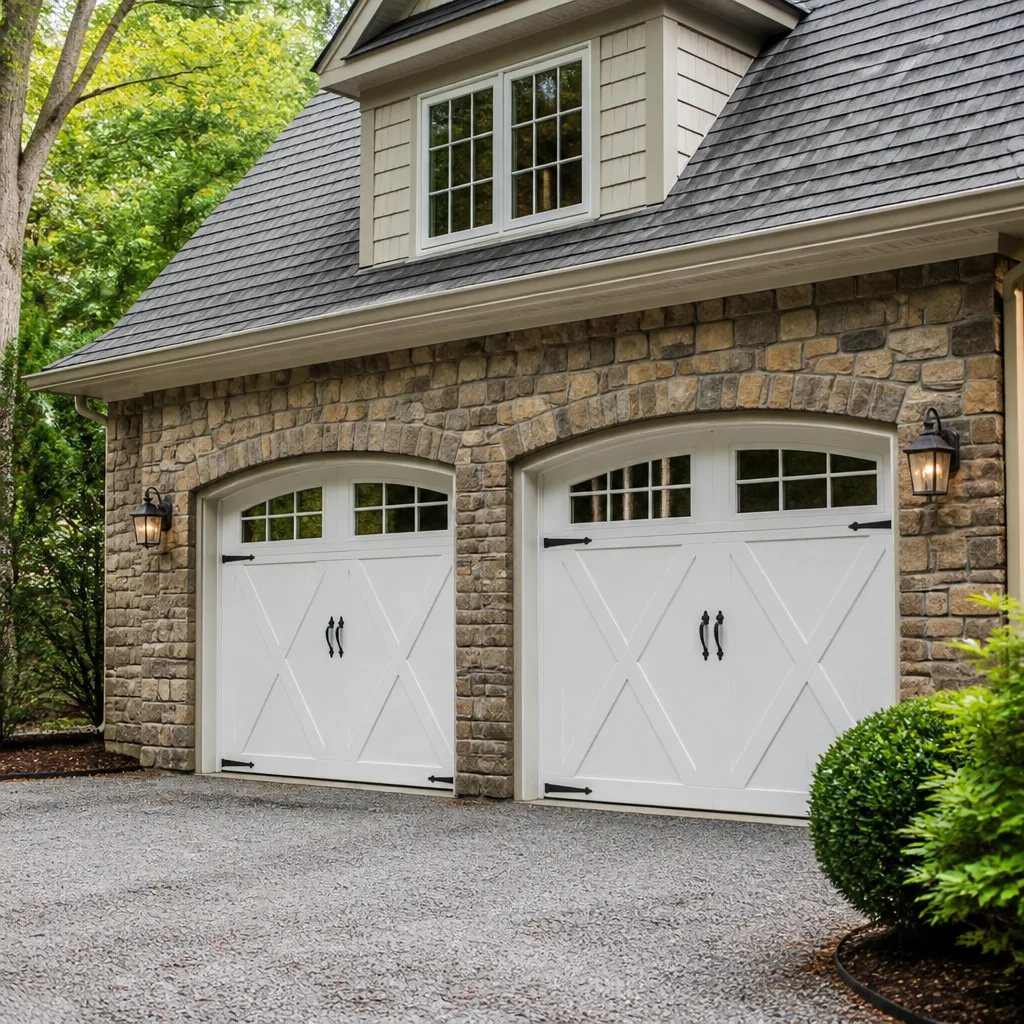 Carriage house
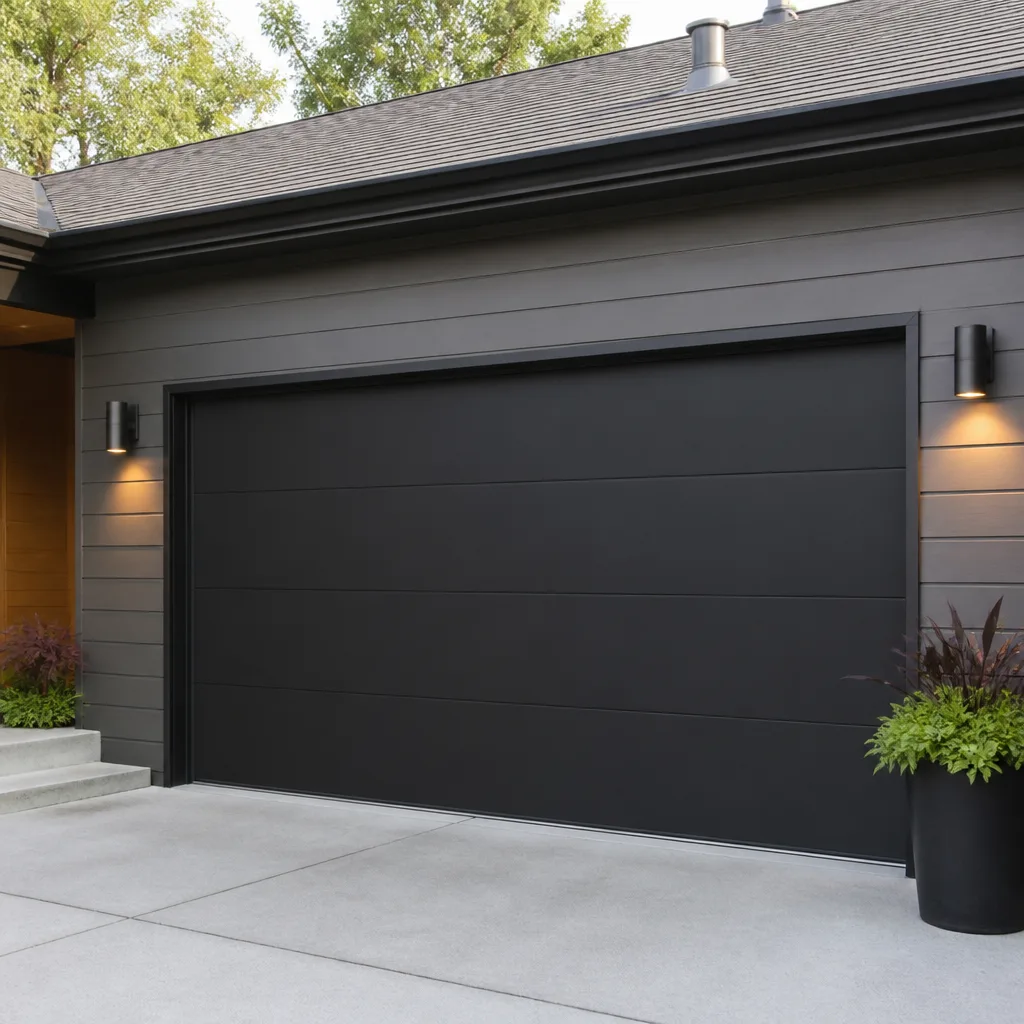 Modern flush
 Full-view glass
 LiftMaster openers
 Chamberlain openers
Full 25-point door and opener safety check with every visit - springs, cables, rollers, tracks, and your LiftMaster or Chamberlain opener included
You get a price before we start. It does not change when the truck arrives.
Get your free estimateHow to Hire a Garage Door Contractor in Miami Beach: A Step-by-Step Guide
Here’s something most Miami Beach homeowners don’t realize until it’s too late: if you hire an unlicensed contractor to install a garage door and that door fails during a hurricane, your insurance company can deny the claim outright. Florida law treats unlicensed contracting as a material misrepresentation on the homeowner’s part, which gives insurers grounds to void coverage for the resulting damage. This guide walks you through the exact steps to vet a garage door contractor in Miami Beach – the licensing checks, the Miami-Dade product approval questions, the quote red flags, and the questions that expose whether a company actually knows this market or just showed up after the last storm. For more on keeping your door in top shape year-round, see our Seasonal Garage Door Care for Miami Beach: Year-Round Homeowner’s Guide. By the time you finish, you’ll have a concrete framework that filters out the bad actors before they ever touch your property.
Quick Answer
To hire a garage door contractor in Miami Beach, verify their Florida contractor license on the DBPR portal (look for CGC, CBC, or a specialty garage door credential), confirm they understand Miami-Dade NOA product approval requirements for wind-rated doors, ask whether they service multiple brands or push one manufacturer, and insist on a written quote that itemizes permit fees and disposal costs before any work begins. A legitimate contractor will answer all of these directly – a storm-chaser will deflect.
Styles & brands we work with
Table of Contents
- Florida Contractor Licensing: What Covers Garage Doors and How to Verify It
- Miami-Dade NOA: The Product Approval Question That Separates Pros from Pretenders
- Brand-Agnostic Service vs. Manufacturer Dealers: Why It Affects Your Long-Term Costs
- South Florida Red Flags: Storm-Chasers, Surge Pricing, and Warranty Language
- How to Read a Miami Beach Garage Door Quote: Hidden Costs to Look For
- Twelve Questions to Ask Before You Sign Anything
- Common Mistakes to Avoid
- Frequently Asked Questions
Florida Contractor Licensing: What Covers Garage Doors and How to Verify It
Florida’s contractor licensing structure is layered, and garage door work falls into a few distinct categories depending on scope. A Certified General Contractor (CGC), Certified Building Contractor (CBC), or a registered specialty contractor with a garage door credential can legally install or replace doors. Here’s what each means: a CGC can handle the full scope of residential construction including doors; a CBC is limited to building construction but still covers garage door installation as part of the building envelope; and specialty garage door contractors hold a narrower credential that covers doors and related hardware specifically. All three require the contractor to appear in the Florida Department of Business and Professional Regulation (DBPR) database – and verifying this takes under two minutes if you know what you’re looking for.
Here’s the step-by-step verification process Miami Beach homeowners should follow:
- Go to the DBPR website and open the license verification portal – it’s myfloridalicense.com, the official state database, not a third-party site.
- Search by the company name, the contractor’s personal name, or the license number if they’ve provided one. Search the business name first – some companies operate under a DBA that differs from the licensee’s legal name.
- Check that the license type matches the work. A CGC or CBC covers garage door installation. A specialty garage door credential covers it too. If the only license you find is a general handyman or something unrelated, that’s a red flag.
- Confirm the license status is “Active” and not suspended, revoked, or expired. Look for any disciplinary actions or complaints noted on the profile.
- Cross-check the insurance certificate. Florida requires contractors to carry general liability insurance, and the certificate should name the same entity that holds the license. Ask to see it and call the insurer to confirm the policy is current.
Here’s the part most guides skip: in Miami Beach, the license check is not just about legality – it’s about insurance standing after a storm. Florida Statute 489.128 makes contracts with unlicensed contractors voidable by the homeowner, but the insurance angle is the one that bites. Most homeowner policies in South Florida include a hurricane deductible and specific windstorm terms, and carriers will scrutinize the installation after a claim. If the door was installed by someone who couldn’t legally pull the work, the insurer can point to that as contributory negligence. In a market where one bad storm can mean a $15,000 door replacement, that’s not a risk worth taking.
We’ve walked Miami Beach homeowners through this verification many times, and the most common surprise is finding that the person they were about to hire was working under someone else’s license – a practice called “renting a license” that’s illegal in Florida. It happens more often than people realize, especially with door-to-door companies that appear after hurricane season. Taking the two minutes to verify saves you from that entire category of trouble. If you’d rather skip the homework entirely, the team at Bayside Garage Door Repair home maintains current Florida licensure and will gladly walk you through how our credentials appear in the DBPR system.
Miami-Dade NOA: The Product Approval Question That Separates Pros from Pretenders
Miami-Dade County maintains its own product approval system – the Notice of Acceptance, or NOA – that governs which construction materials and products can be used in the county, including garage doors. This exists because Miami-Dade sits in a High Velocity Hurricane Zone (HVHZ), and the wind-load requirements here exceed the rest of Florida. A garage door that’s perfectly legal in Broward or Palm Beach County may not be approved for installation in Miami Beach. If your contractor doesn’t know what an NOA is, they don’t know this market.
The NOA matters because your garage door is one of the largest wall penetrations in the home, and in the HVHZ it’s treated as part of the windborne debris protection system. An impact-rated door with a valid Miami-Dade NOA has been tested to withstand specific wind pressures and projectile impacts. Here are the three questions that expose whether a contractor actually understands this requirement:
- “Can you provide the Miami-Dade NOA number for the door you’re recommending?” A contractor who works in this market should be able to produce this number quickly – it’s printed on the product documentation and available in the county’s online NOA database. If they respond with confusion or start talking about “hurricane rated” generically, that’s an exposure.
- “Is the NOA for this specific door model and size, or is it a different model you’re substituting?” NOAs are product-specific and size-specific. A door that’s approved at 8×7 feet may not be approved at 16×7. A legitimate installer checks the approval applies to your exact configuration.
- “How does the installation method affect the NOA?” Some NOAs are contingent on specific anchoring methods, fasteners, or reinforcement. A knowledgeable contractor can explain how the door will be anchored to meet the approval requirements for your home’s construction type – CBS block, wood frame, or the older masonry common in South Beach and Mid-Beach.
Here’s what this means practically for a Miami Beach homeowner. You’re replacing a door on a 1950s Coral Gables-style home in North Beach. The opening is an odd size, and the contractor you’re interviewing suggests a door from a brand they carry. A competent installer will pull the NOA for that exact model and size, verify it covers your wind zone, and include the NOA documentation with your quote. An inexperienced one will wave away the question or promise that “all hurricane doors are Miami-Dade approved” – which is false. Not all impact doors hold current NOAs, and some products carry approvals for Miami-Dade that have lapsed or been revised.
Our Garage Door Installation in Miami Beach work routinely involves pulling NOAs for Clopay and Amarr doors in custom sizes, and we’ve found that roughly half of the installation calls we take involve educating the homeowner on this topic – they simply had no idea the requirement existed. That’s not a knock on them; it’s a gap in how this market is served. A contractor who takes the time to explain the NOA rather than wave past it is one worth keeping on your shortlist.
Brand-Agnostic Service vs. Manufacturer Dealers: Why It Affects Your Long-Term Costs
Here’s a structural difference in the garage door market that most Miami Beach homeowners never consider: some contractors are independent service providers who work across many brands, while others are factory-authorized dealers for a single manufacturer. This distinction has real financial consequences down the road, and it’s worth understanding before you sign anything.
A manufacturer dealer generally sells and installs one brand’s product line. They may be excellent at what they do, but their business model is built on selling that brand’s doors – and when something breaks, their parts pipeline flows from the same manufacturer. An independent, brand-agnostic contractor works differently. They diagnose the system you already have, whether it’s a Genie opener from 2008, a Wayne Dalton door from 2015, or a LiftMaster smart opener you installed last year, and they recommend repair or replacement based on what makes sense for your equipment, not what fills their inventory.
Why does this matter for your long-term costs? Consider this scenario: your Clopay door has a failed spring, but the door itself has years of life left. A dealer for another brand may be structurally motivated to frame this as an opportunity to replace the full door – because that’s what their business exists to sell. A brand-agnostic contractor simply replaces the spring at a fraction of the cost, because they have parts for Clopay doors on hand and no incentive to push you toward a full system change. We see this dynamic play out in Miami Beach weekly, particularly after storms when replacement demand spikes and dealer sales quotas are in play.
That principle – diagnose first, replace only if necessary – is the heart of how we operate at Bayside Garage Door Repair. We carry service knowledge and parts across eight major brands including LiftMaster, Chamberlain, Genie, Clopay, Amarr, Wayne Dalton, Craftsman, and Raynor. That means when a homeowner in Miami Beach calls with a Chamberlain opener that’s lost its Wi-Fi connection or an Amarr door that’s off track, we work with what’s already installed. The alternative – steering you toward a full replacement because that’s the only product line we carry – isn’t how we’re built.
There’s a second layer here that matters: smart opener compatibility. Modern openers from Chamberlain and LiftMaster integrate with home automation platforms, and those integrations are specific to the opener’s firmware and the home’s Wi-Fi environment. A contractor who only sells one opener brand will recommend that brand for every job, even if your existing opener can be repaired for a fraction of the cost. A door company that services all major brands gives you the option of repair first. That’s a structural difference, not just a marketing slogan, and it’s worth asking about directly when you’re vetting contractors.
South Florida Red Flags: Storm-Chasers, Surge Pricing, and Warranty Language
Miami Beach has a contractor ecosystem unlike most American cities, and the rhythm of it follows hurricane season. After every significant storm, out-of-state crews and unlicensed operators flood into South Florida, set up shop for a few months, and then disappear – often leaving behind installations that fail or warranties that turn out to be worthless. Knowing how to spot these operators before they touch your door is a core survival skill for any Miami Beach homeowner.
Here are the red flags specific to this market:
- Post-storm surge pricing. Legitimate garage door contractors in Miami Beach quote consistently throughout the year. Storm-chasers quote dramatically higher after a hurricane, and the increases don’t correspond to any actual change in parts or labor costs. If a quote jumps 40% in the week after a storm, you’re seeing surge pricing, not market conditions.
- Manufacturer-exclusive upsells. Some dealers use the post-storm panic to push full replacements even when a door can be repaired. A contractor who arrives, takes a quick look, and immediately quotes a complete system replacement without discussing repair options is working a sales script, not a diagnosis.
- Vague “lifetime warranty” language. A lifetime warranty means nothing without transferability terms, scope definitions, and the financial backing of the company standing behind it. Ask for the warranty document in writing before work begins, and read the fine print on what’s covered – springs, panels, openers, and labor all typically carry different terms. If the contractor can’t produce a written warranty document, walk away.
- Door-to-door solicitation after storms. Legitimate local contractors in Miami Beach don’t canvas neighborhoods door-to-door after a hurricane. That model is overwhelmingly used by itinerant operators who work a territory for a season and then move on to the next storm zone.
- Cash-only pricing or deep discounts for cash. This is a classic unlicensed-operator pattern. Legitimate contractors take credit cards and issue real invoices. Insistence on cash is usually tax evasion, lack of insurance, or both.
- No physical address or a P.O. box listing. A contractor who serves Miami Beach should be locatable. If the business address is a P.O. box in another state or the company has no verifiable physical presence in South Florida, that’s a structural signal the business won’t be around to honor a warranty.
The storm-chaser dynamic is worth understanding clearly: after Hurricane Irma in 2017 and Hurricane Ian in 2022, Miami-Dade saw a significant influx of out-of-state contractors who enrolled in the market briefly and left after the work slowed. Many of those installations are still failing today, and the homeowners who now need repairs find that the installing company no longer answers calls, has dissolved, or never held a valid Florida license in the first place. This is why the DBPR verification we covered earlier matters so much – it takes two minutes and eliminates the entire category of risk.
Bayside Garage Door Repair is a Miami Beach-based company with a permanent presence in this market. We’re here year-round, not just when storm season creates demand, and we stand behind the work we do. If you’re evaluating contractors, ask how long they’ve maintained a physical presence in South Florida and whether they can provide references from Miami Beach homeowners – the answers will tell you what you need to know.
How to Read a Miami Beach Garage Door Quote: Hidden Costs to Look For
A garage door quote in Miami Beach contains several line items that are specific to this market, and if you don’t know to look for them, you’ll discover them when the invoice arrives – after the door is already installed. Here’s how to read a quote the way a contractor does, so you can spot the padding before you sign.
The core components of any legitimate quote include: the door or opener unit cost, hardware and track, labor, removal and disposal of the old door, and permit fees. In Miami Beach, several of these carry market-specific considerations:
- Permit fees. Miami Beach requires permits for garage door installation, and the fee is a pass-through cost regulated by the city. If your quote doesn’t include a permit line item, the contractor is either skipping permits (illegal and an insurance nightmare) or planning to add it as an unquoted surprise. Ask explicitly whether the quote includes the permit and who handles the filing.
- Disposal of impact-rated doors. Old hurricane-rated doors are heavy, often reinforced, and disposal carries higher fees than standard door removal. This line item is frequently missing from initial quotes and added later as a “disposal surcharge.” A transparent quote includes it upfront.
- Code upgrade charges. If your existing opening doesn’t meet current HVHZ anchoring requirements, the installation may require structural reinforcement – additional fasteners, angle iron, or header work. This is common in older Miami Beach homes, particularly in South Beach where some structures date to the 1930s and 1940s, and it’s a legitimate cost. But it should be identified and quoted before work begins, not introduced as a surprise mid-installation.
- Opener integration and programming. Smart openers require Wi-Fi setup, app configuration, and sometimes homelink programming for your vehicles. Some contractors quote the door and add opener programming as an unquoted extra. Make sure the quote states what’s included in programming and setup.
- Reinforcement for wind load compliance. Miami-Dade NOA compliance sometimes requires additional struts or reinforcement on the door itself. This cost should appear in the quote as a specific line item with the NOA reference noted.
Here’s what a clean quote looks like: it’s itemized by line, it includes the exact door model and size with the NOA number noted, it states the permit fee as a separate pass-through line, it includes disposal fees in the body of the quote rather than as an asterisk, and it has a signature line for both parties. If the quote you receive is a single lump-sum number with no itemization, ask for a breakdown. Any legitimate contractor will provide one. If they won’t, that’s your answer.
And one more thing: any quote should state clearly that the price is quoted and agreed BEFORE any work starts. We’ve seen too many Miami Beach homeowners receive a verbal estimate and then a final invoice that’s 30% higher with vague explanations about “unforeseen complications.” Legitimate contractors quote after inspection, not before it, and honor the quoted price unless a genuine structural issue is discovered – in which case they stop and get your approval before proceeding. That’s how professional work operates.
Twelve Questions to Ask Before You Sign Anything
The right questions expose in minutes what takes hours of research to uncover. Here are the twelve questions every Miami Beach homeowner should ask a potential garage door contractor, with the answers that indicate a legitimate professional:
- “What is your Florida DBPR license number, and what category is it?” A legitimate contractor answers immediately. A storm-chaser stammers or deflects.
- “Can you provide the Miami-Dade NOA number for the specific door you’re recommending?” Covered earlier – this question alone will eliminate most of the unqualified operators in this market.
- “Do you repair and service all major brands, or are you a factory dealer for one manufacturer?” The answer tells you whether they’ll diagnose your existing system or push a replacement from their inventory.
- “What is your quote process – do you inspect before quoting?” The right answer is yes. Anyone who quotes a door replacement over the phone without seeing the opening is guessing.
- “Does your quote include the permit, disposal, and any code upgrade work?” Covered earlier. If the answer is vague, keep looking.
- “What is the warranty on parts and labor, and is it transferable if I sell the home?” Transferability matters in Miami Beach’s real estate market. A non-transferable warranty loses value the moment you list the house.
- “Who performs the installation – your own licensed technicians or subcontractors?” If subcontractors are involved, you need to vet them separately. A company that uses its own licensed techs is giving you a cleaner line of accountability.
- “Can you provide references from Miami Beach homeowners I can call?” Local references are the single strongest signal of a contractor’s legitimacy in this market. No references, no deal.
- “How long have you maintained a physical presence in South Florida?” Companies that existed during the last major storm cycle and are still here have something worth evaluating. A company that incorporated six months ago is unproven.
- “What happens if the door fails after installation – who do I call?” The answer should be the same company, with a real phone number and a process for warranty service. If they describe a manufacturer warranty claim process where you deal with the manufacturer directly, that’s a transfer of responsibility worth noting.
- “Will the price change once you see the opening in person?” The answer should be no, unless a structural issue is discovered – and in that case, the contractor should stop and get your approval before proceeding.
- “Are there any additional charges I should expect that are not listed in this quote?” This is the catch-all. A contractor who says “no, this is the complete price” and can back it in writing is operating honestly.
Print these questions or keep them in your phone. The contractors worth hiring won’t flinch at any of them.
Common Mistakes to Avoid
- Skipping the DBPR license check because the contractor “seemed professional.” Professional appearance costs nothing. A stolen magnetic sign on a truck and a clean polo shirt are not a license. Two minutes on the DBPR portal eliminates this entire risk.
- Hiring based on price alone. The lowest quote in Miami Beach is often the contractor who skips permits, uses unapproved products, or doesn’t carry proper insurance. Compare quotes on equal terms – same product, same scope, same permit inclusion.
- Not asking about Miami-Dade NOA approval. Getting a door installed that lacks a current NOA can be an insurance claim denial waiting to happen, and it can also fail a home inspection when you go to sell.
- Accepting a verbal quote without written itemization. Verbal quotes are worth the paper they’re printed on. Get every quote in writing with line items for labor, parts, permits, disposal, and any code work.
- Falling for post-storm urgency pressure. “Sign today or the price goes up tomorrow” is a pressure tactic, not market reality. Legitimate Miami Beach garage door companies quote consistently.
- Not checking warranty transferability. Miami Beach has one of the most active real estate markets in South Florida. If you may sell within five years, a non-transferable warranty has no value to the buyer – which means it’s worth less to you.
- Assuming “hurricane rated” and “Miami-Dade approved” mean the same thing. They don’t. “Hurricane rated” is a marketing term. “Miami-Dade NOA” is a specific, verifiable product approval. Ask for the NOA number.
See the difference
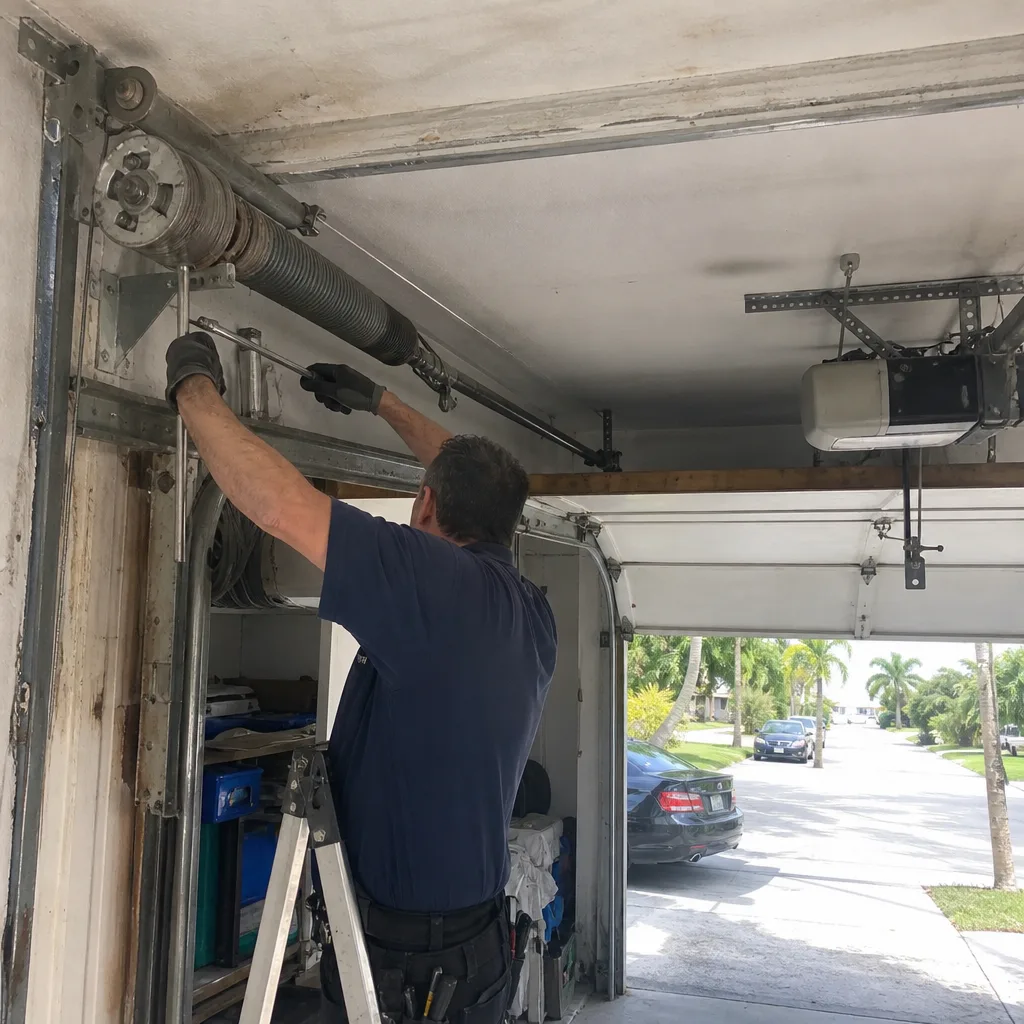 Before
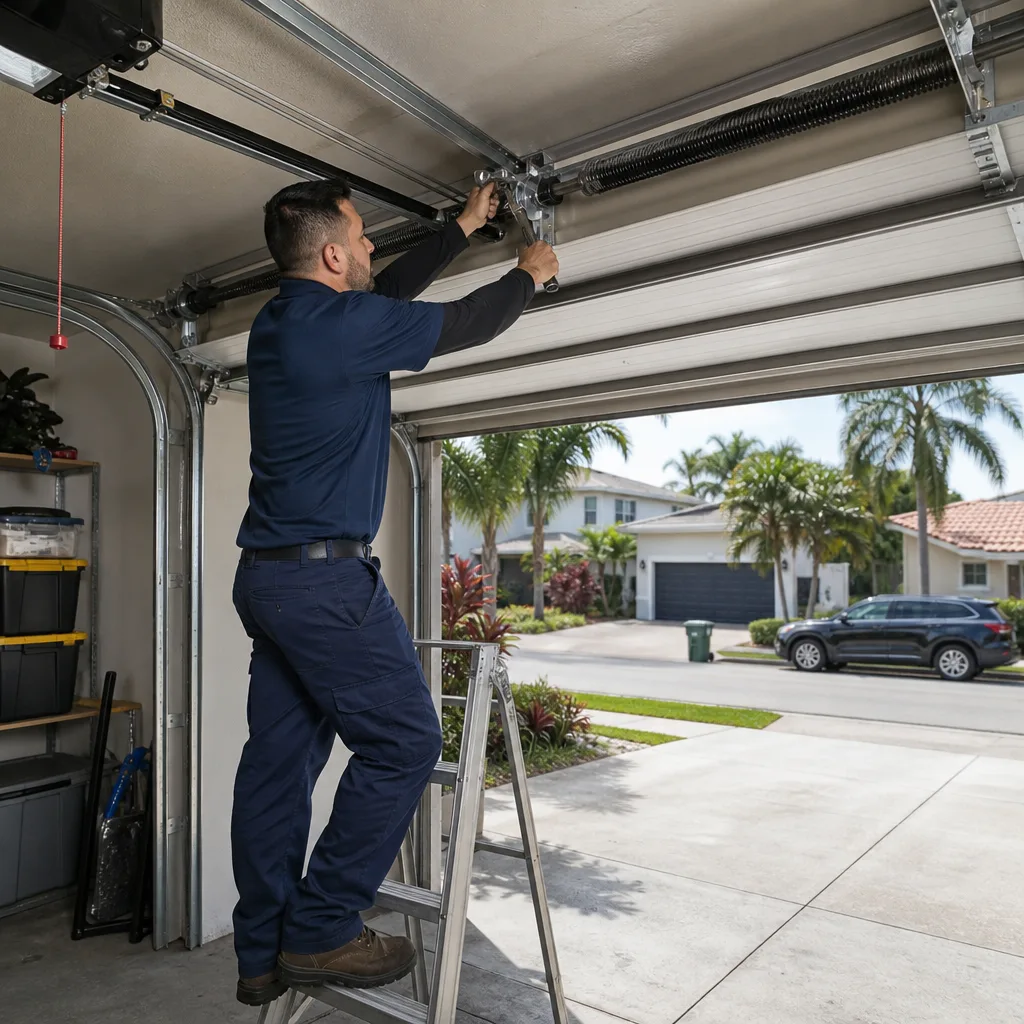 After
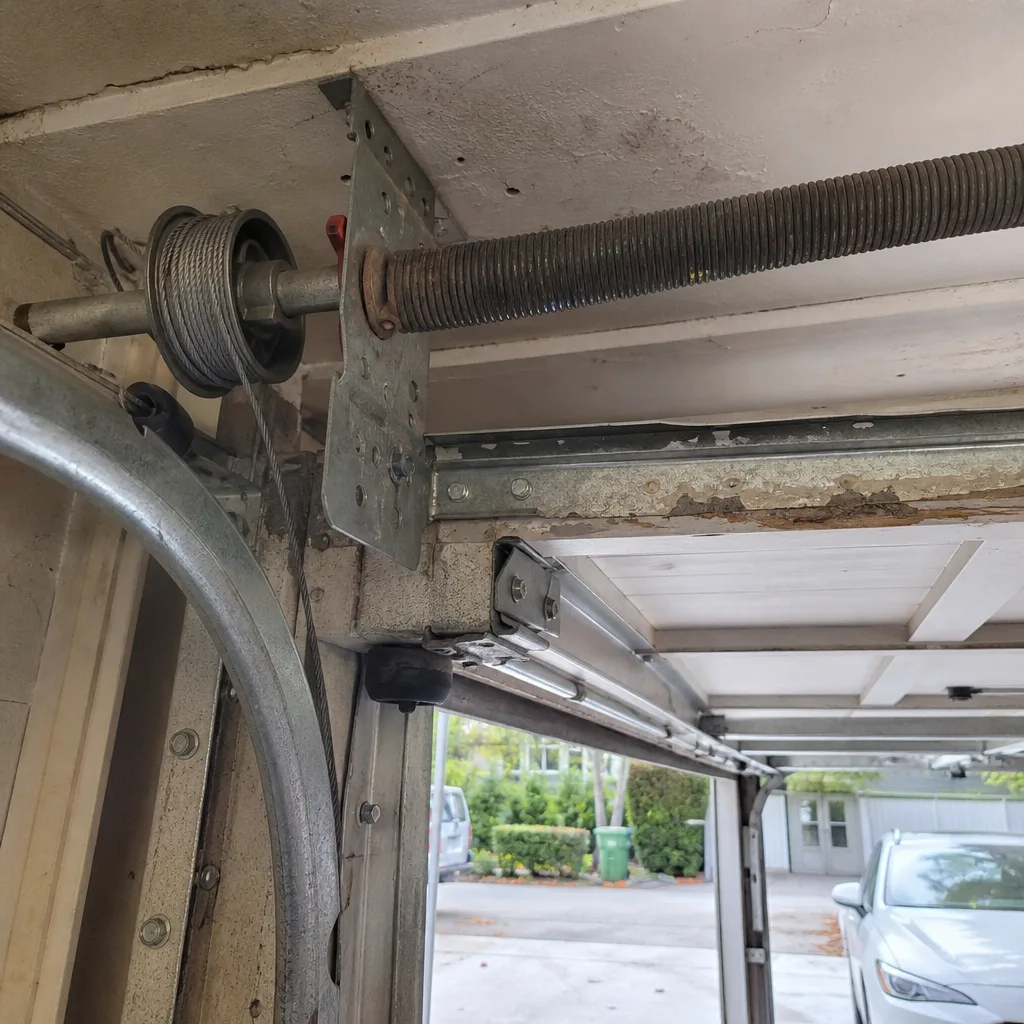 Before
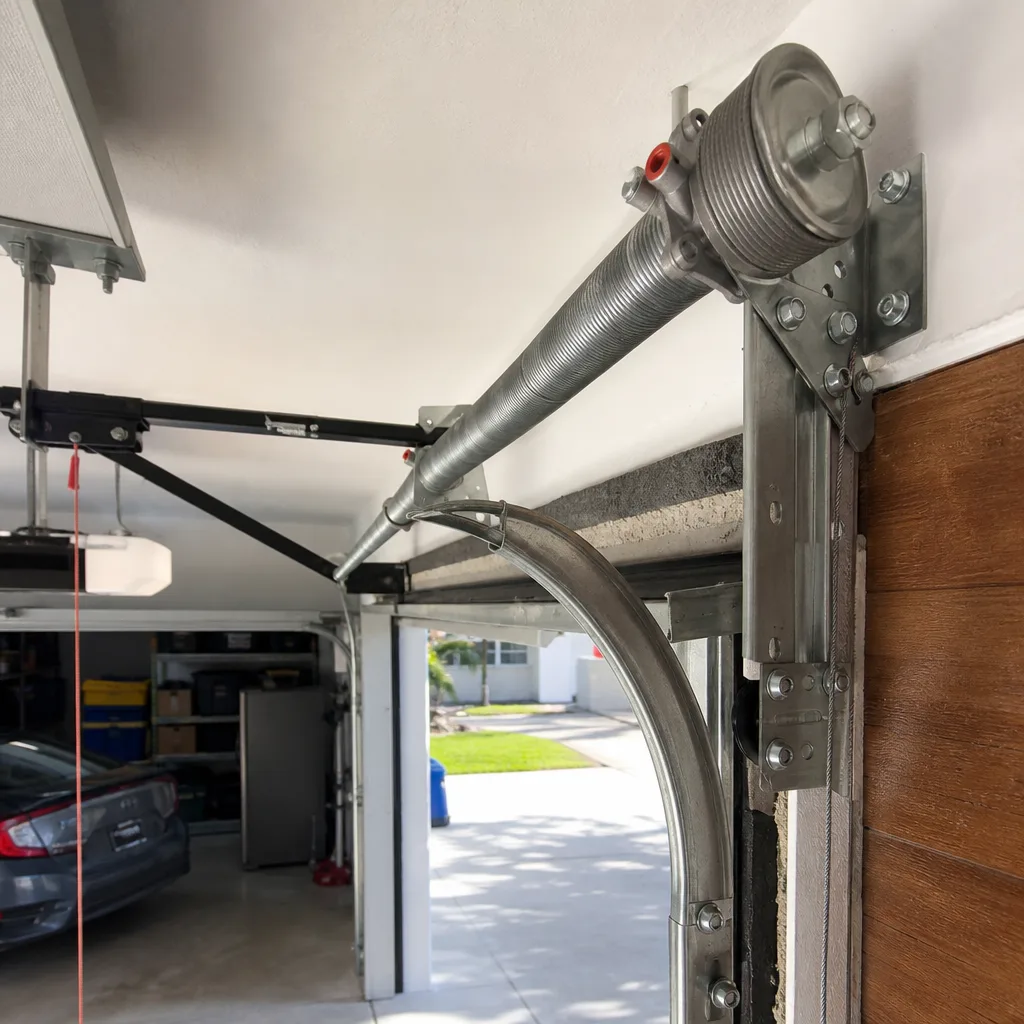 After
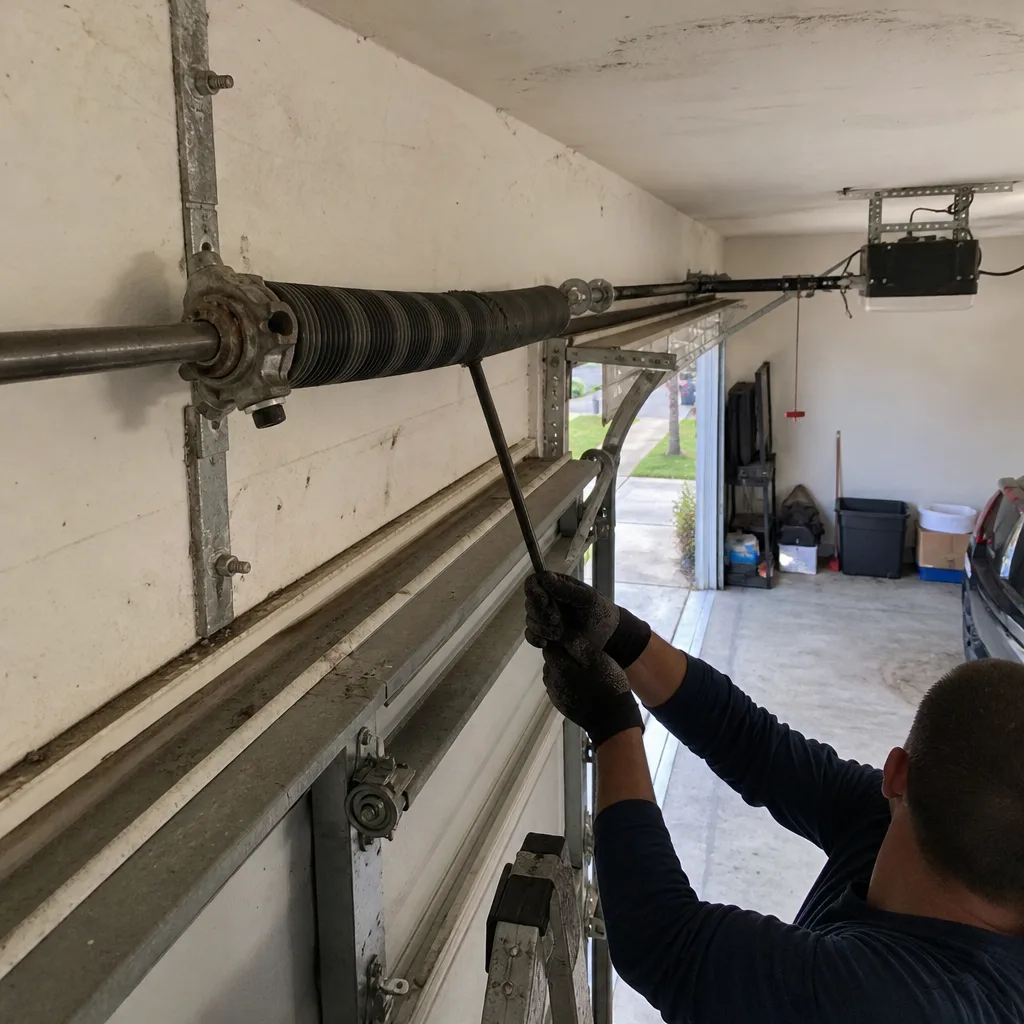 Before
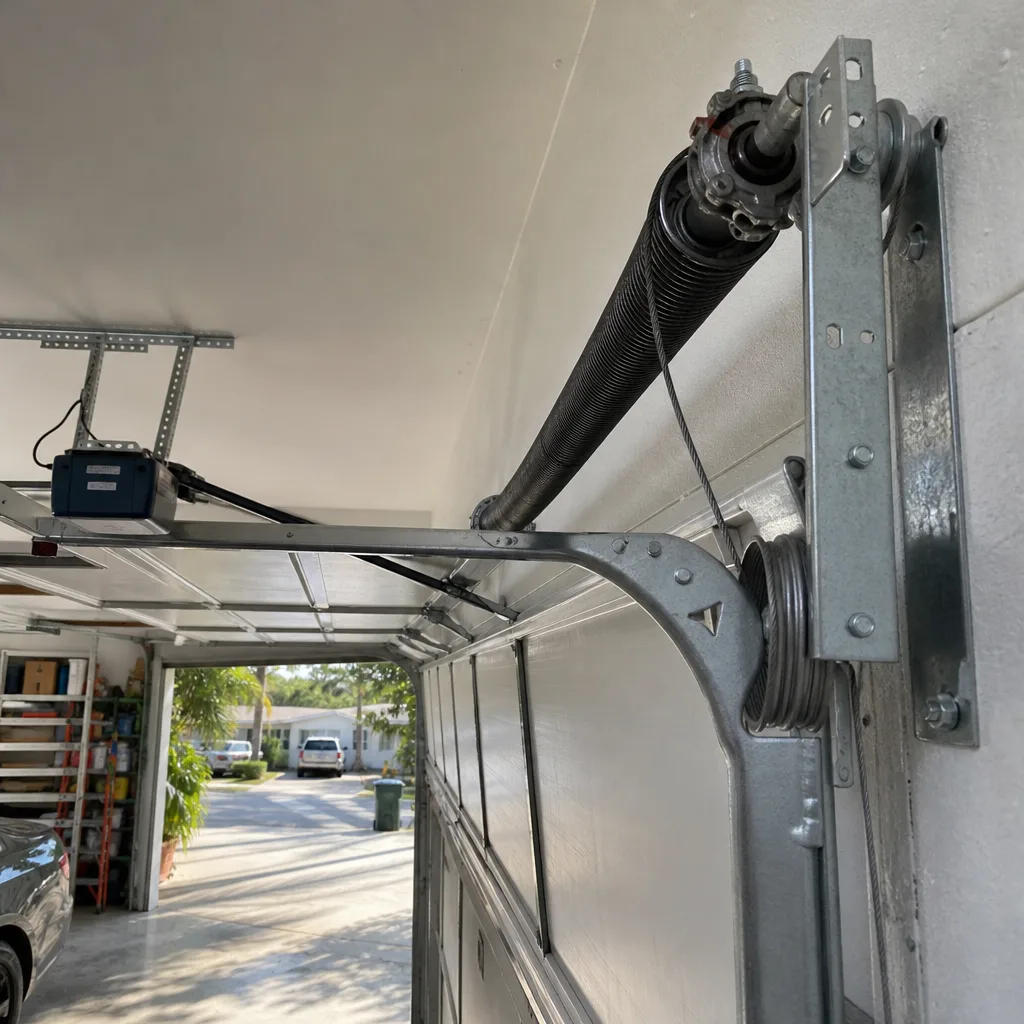 After
When to Call a Professional
Some garage door problems are DIY territory – lubricating a squeaky roller, clearing photo-sensor obstruction, replacing a handheld remote battery. Others are not. If your door has a snapped spring – especially a torsion spring, which is under high tension and can cause serious injury – do not attempt repair yourself. Opener motor failures, track misalignment, panel replacement after impact, and any door that’s off-track are all professional work. And any installation work in Miami Beach requires a permit and a licensed contractor, which makes DIY installation legally off the table. If you’re uncertain whether an issue is safe to handle, err on the side of calling. Bayside Garage Door Repair offers free estimates in Miami Beach – call (855) 674-1679 and we’ll assess the situation honestly, whether that means a repair or a replacement.
Frequently Asked Questions
Yes. Miami Beach requires a permit for garage door installation and replacement, and the work must be performed by a properly licensed contractor. The permit is a pass-through cost that should be itemized on your quote before work begins.
Search the Florida Department of Business and Professional Regulation website at myfloridalicense.com by company name or license number. Confirm the license category (CGC, CBC, or garage door specialty) and status (Active), with no disciplinary actions on file.
A Miami-Dade Notice of Acceptance certifies that a specific garage door model and size has been tested and approved for wind loads in the High Velocity Hurricane Zone, which includes Miami Beach. Your installation should reference a current NOA number for the exact door being installed.
No, unless that handyman holds a Florida contractor license covering garage door installation. Unlicensed installation voids your insurance protection and leaves you without recourse if the door fails. Always verify licensure through the DBPR portal before work begins.
Costs vary significantly by door type, size, wind rating, and brand – which is why any quoted price you receive without a physical inspection is speculative. A reputable contractor will inspect first, provide a written itemized quote, and honor that price once work is approved. Call (855) 674-1679 for a free, no-pressure estimate tailored to your home and equipment.
The answer depends on the door’s age, structural condition, and the specific failure. Many problems – broken springs, opener failures, track issues – are repairable at a fraction of replacement cost. A brand-agnostic contractor will diagnose first and recommend replacement only when the door itself is beyond service. If you’d like an honest assessment, Garage Door Repair in Miami Beach is what we do, and we’ll tell you straight what the right call is.
The Bottom Line
Hiring a garage door contractor in Miami Beach comes down to four filters: verify the Florida license on the DBPR portal, confirm Miami-Dade NOA knowledge and the specific approval for your door, understand whether you’re dealing with a brand-agnostic service provider or a manufacturer dealer, and insist on a written itemized quote that covers permits, disposal, and code work before any job begins. These four steps eliminate the storm-chasers, the unlicensed operators, and the companies that won’t be around when the warranty matters. The contractors who pass all four – we’d like to think Bayside Garage Door Repair among them – are the ones worth trusting with your door and your home. Explore more guides & resources to protect your investment.
Written by the team at Bayside Garage Door Repair, serving Miami Beach since 2014.