
Last updated October 30, 2026
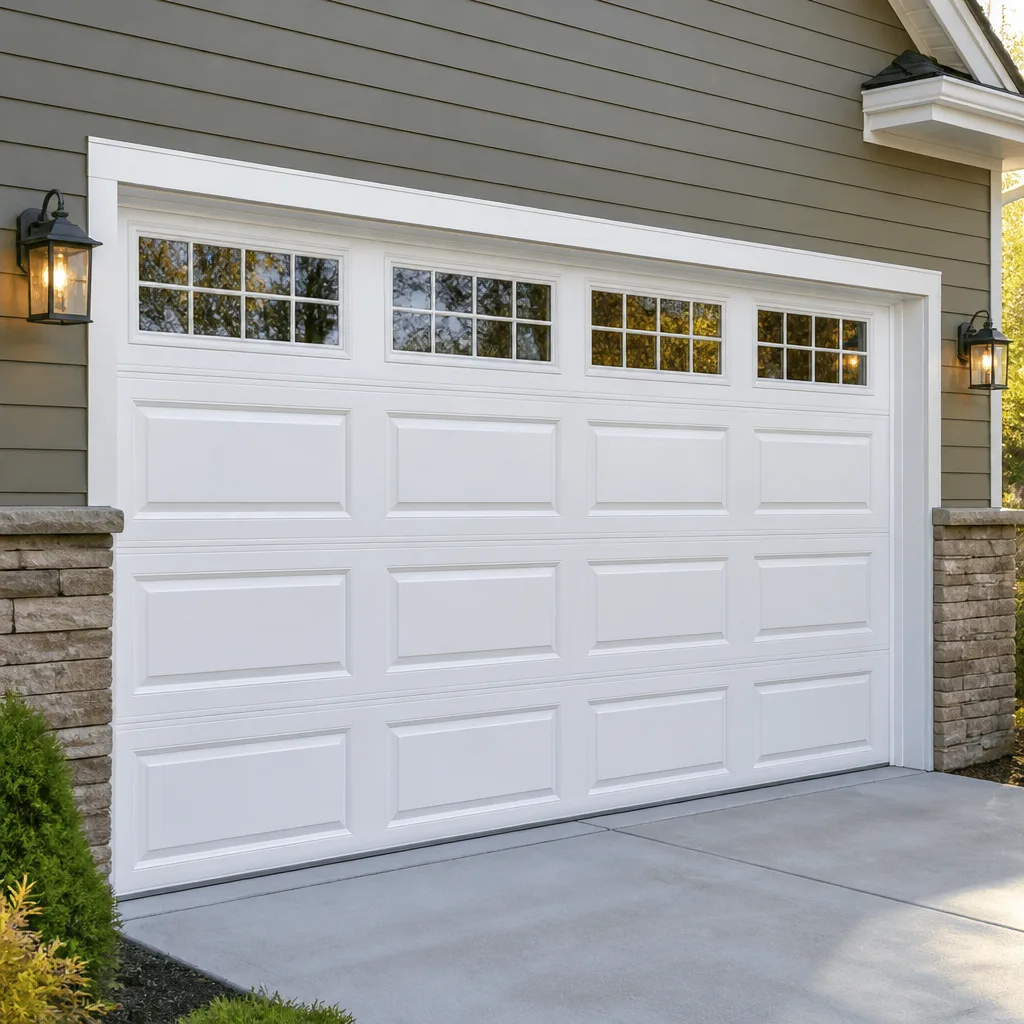 Raised-panel steel
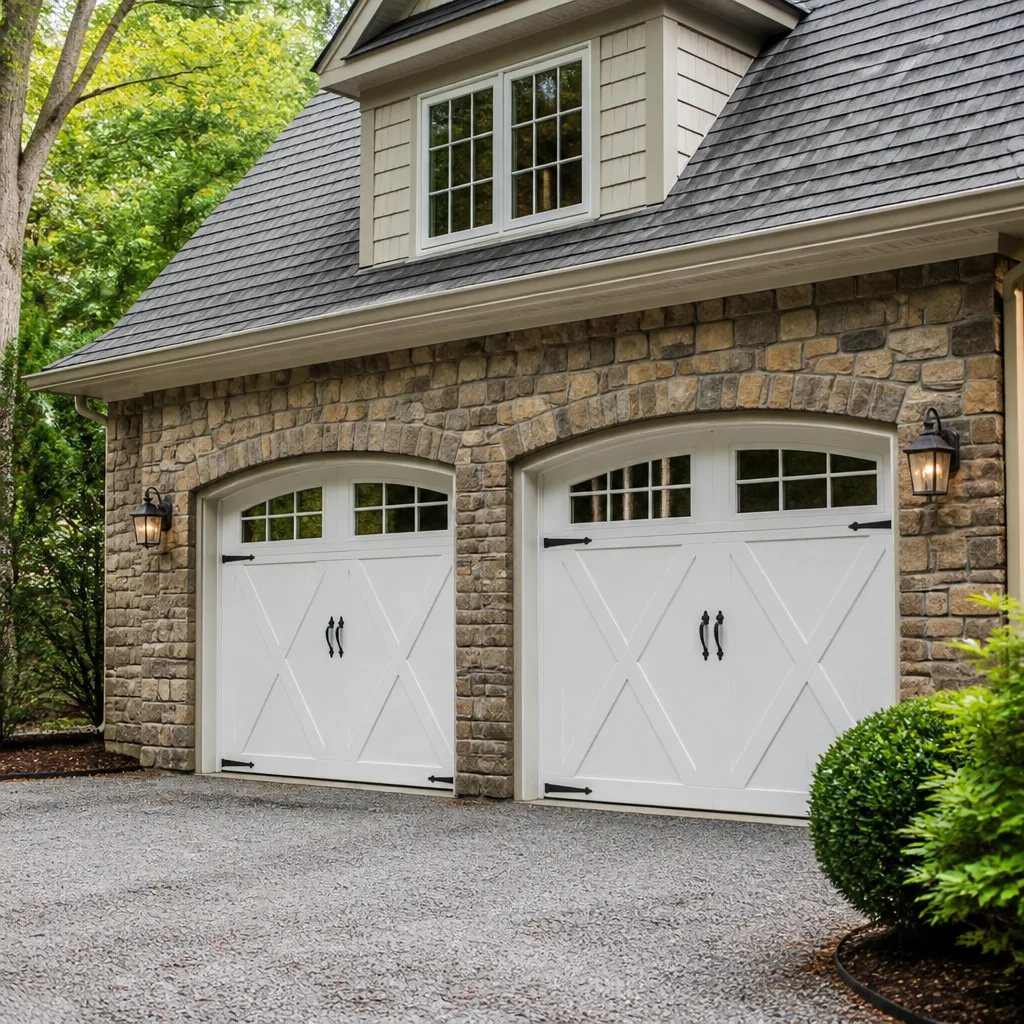 Carriage house
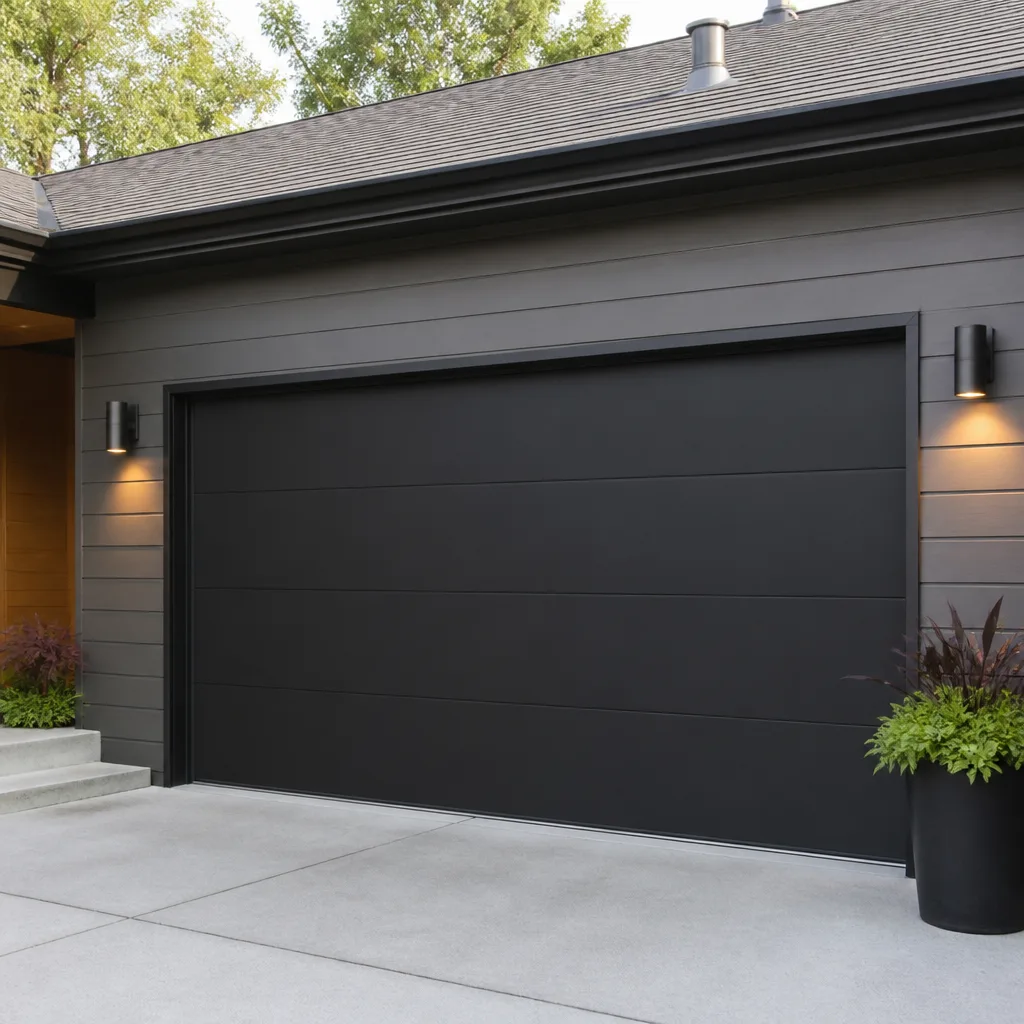 Modern flush
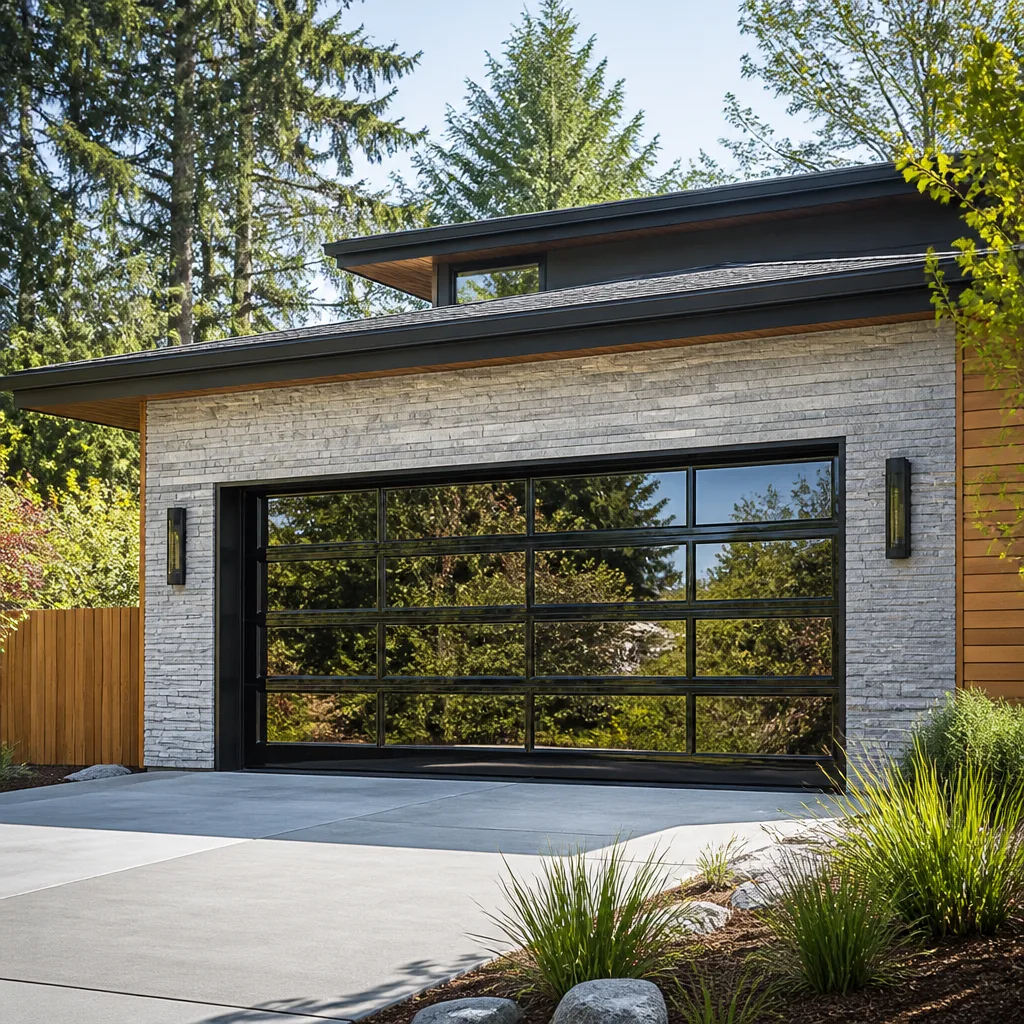 Full-view glass
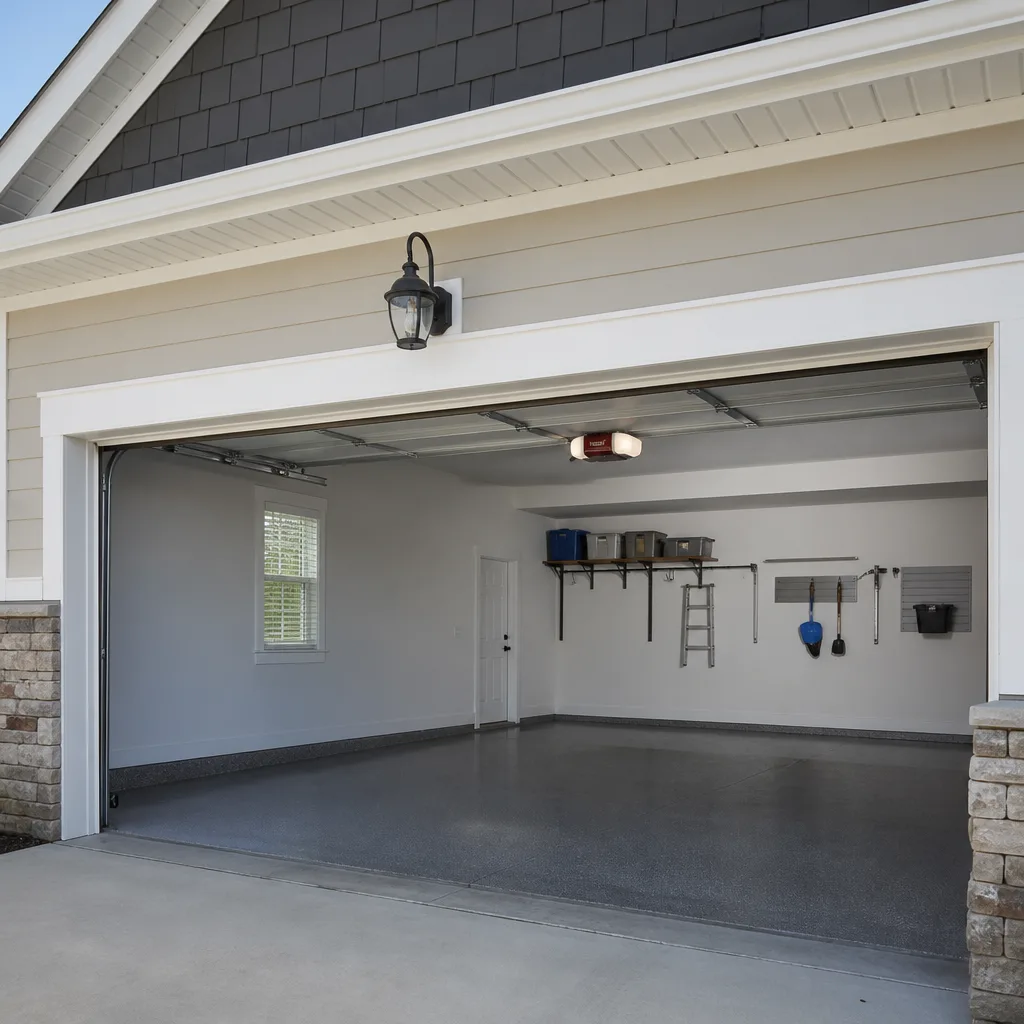 LiftMaster openers
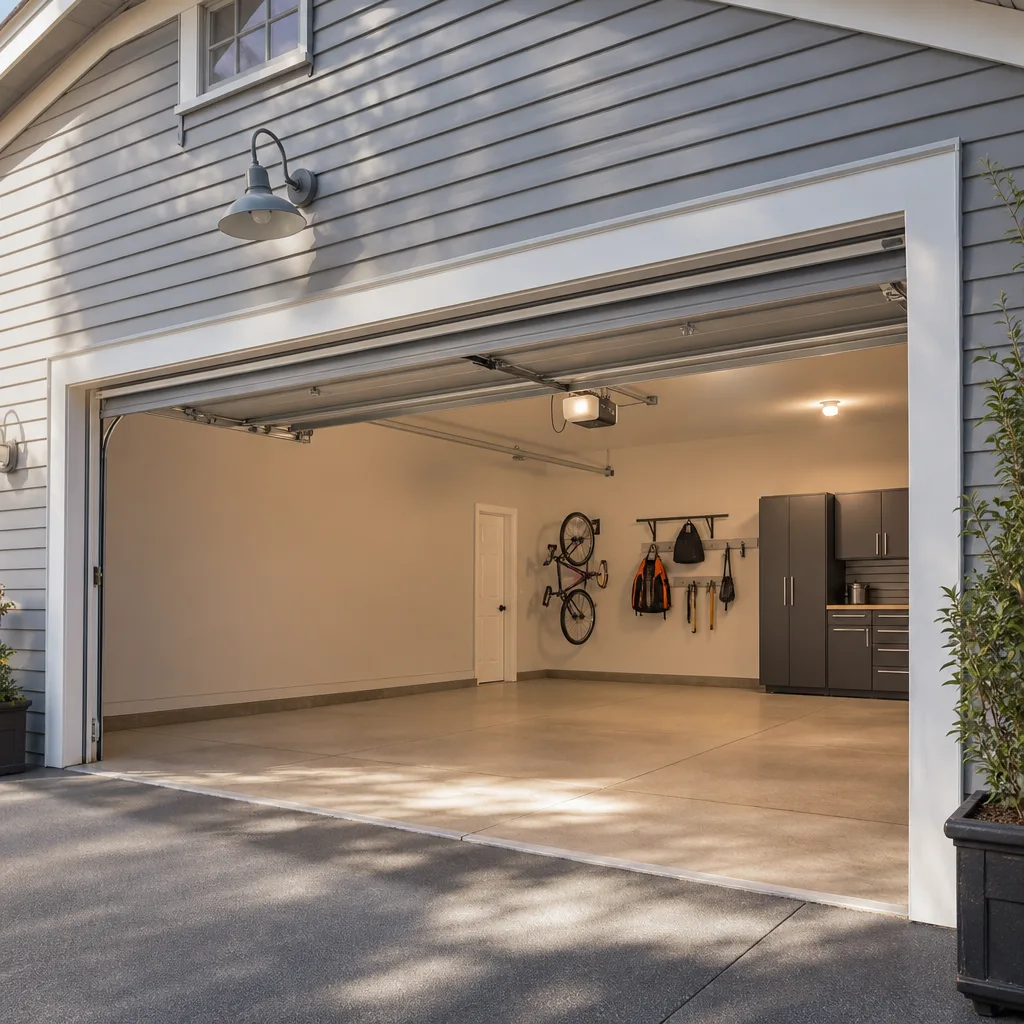 Chamberlain openers
Full 25-point door and opener safety check with every visit - springs, cables, rollers, tracks, and your LiftMaster or Chamberlain opener included
You get a price before we start. It does not change when the truck arrives.
Get your free estimateThe Complete Garage Door Repair Guide for Miami Beach Homeowners
Most garage door guides are written for Phoenix or Chicago, cities where salt corrosion, 90% humidity, and mandatory wind-load ratings are not daily realities. For a deeper local perspective, read The Complete Guide to Garage Door in Miami Beach. If you live in Miami Beach, you’re using the wrong playbook. This guide is built on years of hands-on repair work across Ocean Drive high-rises, Mid-Beach mid-century homes, North Beach ranch properties, and the bay-front communities along the Venetian Causeway. You’ll learn why Miami Beach garage doors fail differently, which repairs make sense to schedule before hurricane season, how to identify your existing hardware, what repairs are genuinely DIY-safe, and when a trained technician is the only sane option. We’ll also cover Miami-Dade County wind-load code and what it means for any repair or replacement decision.
Styles & brands we work with
Quick Answer
The right approach for our Garage Door Repair services in Miami Beach depends on what failed: spring and cable corrosion from salt air is the most common issue, followed by smart opener failures in high humidity. Most garage door repairs in Miami Beach can be completed same day by a licensed technician who stocks parts for your existing brand rather than pushing a full replacement. The key is diagnosing the actual failure point before spending money: a $45 sensor alignment fix should never become a $1,800 door replacement.
Table of Contents
- Why Miami Beach Climate Changes the Repair Equation
- Miami-Dade Wind-Load Code: What Homeowners Need to Know
- Garage Door Springs in Miami Beach: Salt, Wear, and Failure
- Cables, Rollers, and Hinges: The Fastest-Wearing Parts
- Garage Door Opener Repair: The Smart Home Layer
- How to Identify Your Existing Garage Door and Opener Brand
- DIY vs. Professional Garage Door Repair in Miami Beach
- Common Mistakes to Avoid
- When to Call a Professional
- Frequently Asked Questions
- The Bottom Line
Why Miami Beach Climate Changes the Repair Equation
Miami Beach sits on a barrier island between Biscayne Bay and the Atlantic Ocean. Warm salt-laden air moves across the island year-round. The effect on steel garage door hardware is measurable and aggressive. We’ve repaired garage door springs in Mid-Beach that looked fine from the outside but had rusted through at the coil contact points after just four years of service. A spring that would last 12 years in Orlando will sometimes fail in six or seven in Miami Beach, and the difference is almost always salt.
Humidity also changes how garage door components wear. Wood doors absorb moisture and swell, causing uneven panel weight distribution that strains hinges and rollers. Steel doors with minor scratches or coating damage will rust from the edges inward. Aluminum doors resist salt better than steel but are more prone to denting under Miami Beach’s heavy wind-driven debris during tropical storms.
We see three climate-driven failure types regularly in Miami Beach garages:
- Spring corrosion: The combination of salt air and high humidity causes galvanized springs to develop surface rust within months if the coating is compromised. Rust creates friction, friction creates heat, and heat weakens the spring steel. In severe cases, the spring snaps during a normal open/close cycle.
- Track and roller seizing: Rollers with steel bearings corrode and stop rolling, forcing the door to slide rather than roll. This damages the track and overloads the opener motor.
- Opener circuit board corrosion: The electronic brain inside smart openers sits in a humid, warm metal housing. Condensation can form when a garage door opens during a hot afternoon after a cool night, introducing moisture directly onto the circuit board. We open at least two openers a week in Miami Beach with visible green corrosion on the board.
The simple homeowner takeaway: if you can smell salt in the air, your garage door hardware is reacting to it. Inspection every six months on Miami Beach is not overkill, it’s a baseline.
Miami-Dade Wind-Load Code: What Homeowners Need to Know
Miami-Dade County’s wind-load requirements are the strictest in the contiguous United States. Any garage door installed or significantly modified in Miami Beach must meet Miami-Dade County Product Control standards, which include impact-resistance ratings for wind-borne debris in certain zones. If you’re replacing a garage door panel, upgrading to a hurricane-rated door, or installing a new door entirely, the door must carry a Miami-Dade NOA (Notice of Acceptance) or Florida Building Code product approval. This is not optional and it’s not something a handyman will know how to handle.
Here’s what the code means in practical terms for Miami Beach homeowners:
- Replacement doors need a wind-load rating: A door that is not rated for Miami-Dade’s basic wind speed (typically 175 mph or higher depending on the structure’s risk category) will fail inspection. Door manufacturers like Clopay and Amarr produce Miami-Dade approved lines, but you need to confirm the specific model carries the approval before purchasing.
- Impact-rated versus non-impact-rated matters by zone: Homes east of Alton Road in many Miami Beach areas fall within the wind-borne debris region. If your home is within one mile of the coast, your garage door likely needs impact-rated construction, which in the door market translates to reinforced panel types like aluminum or heavy-duty steel with an approved impact system.
- Repairs that don’t change the door’s structural composition generally don’t require a permit: Replacing a spring, a roller, a cable, or an opener typically doesn’t require a permit as long as it isn’t altering the door’s wind-load performance. However, a full panel replacement or a full door replacement does require a permit and an approved product.
If you’re unsure whether your Miami Beach garage door is wind-load compliant, call us and we’ll check the door’s labeling. Most approved doors carry a Miami-Dade County compliance label on the inside of the bottom panel. If it’s missing or damaged, we’ll advise you on your options before you spend money on a repair that won’t pass code.
Garage Door Springs in Miami Beach: Salt, Wear, and Failure
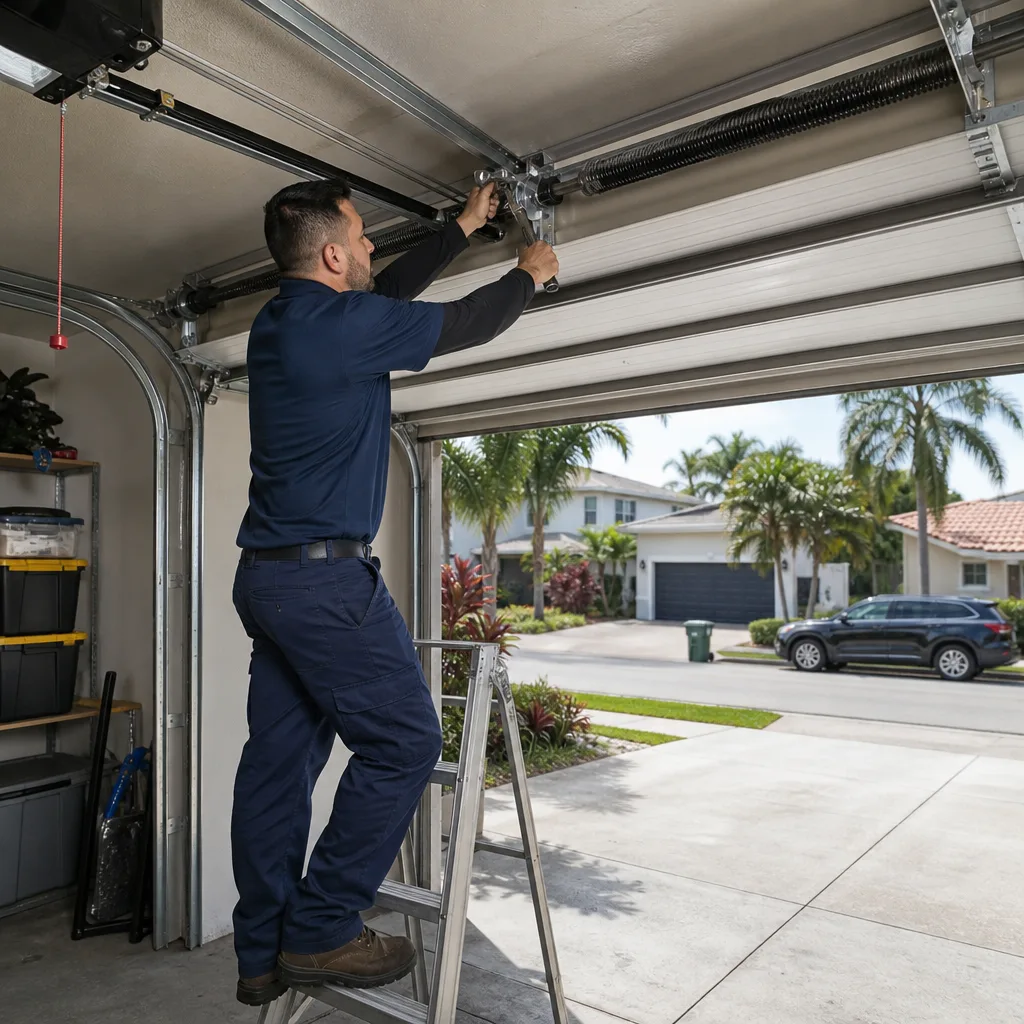
Garage door springs counterbalance the full weight of the door. Without a functioning spring, the opener motor is trying to lift hundreds of pounds of metal and glass on its own, which destroys the motor within weeks. Springs are the highest-failure item in Miami Beach garages, and the failure is almost always accelerated by corrosion.
There are two spring types you’ll encounter in Miami Beach homes:
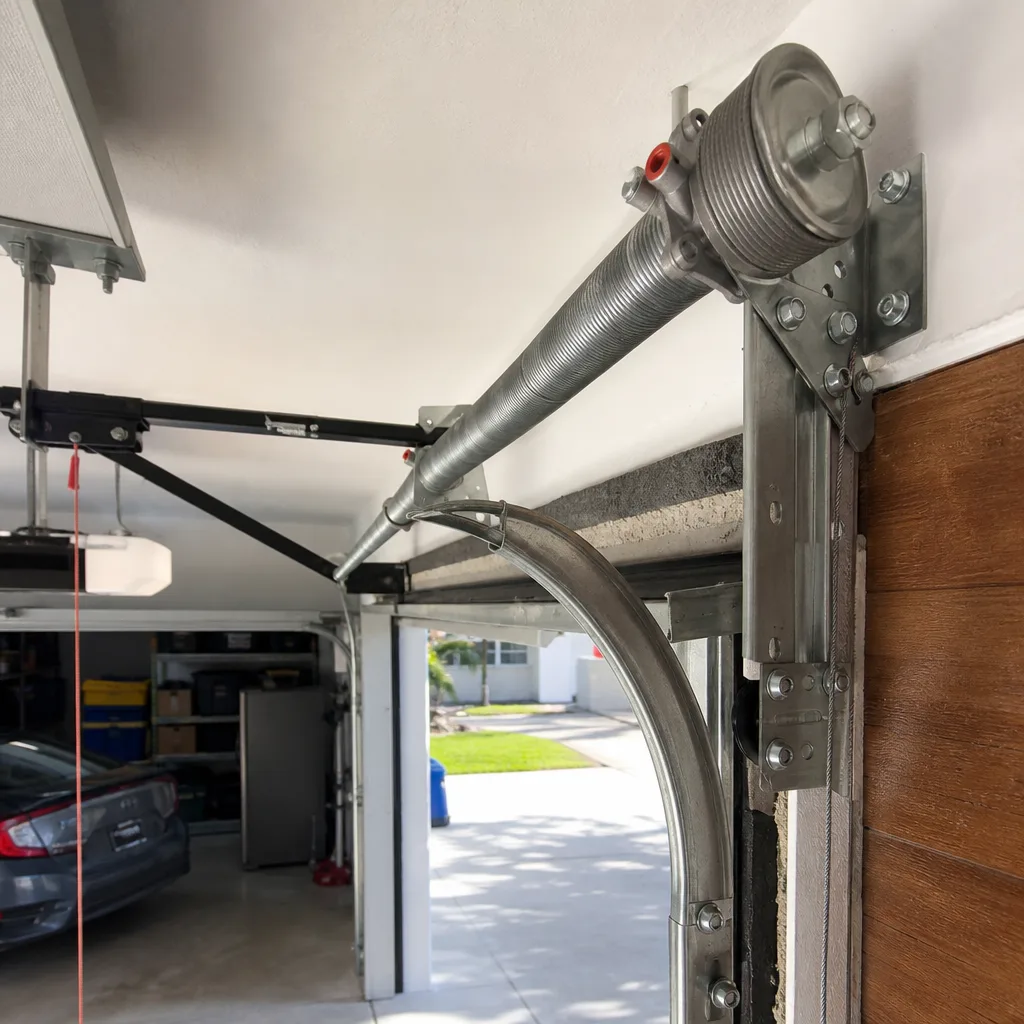
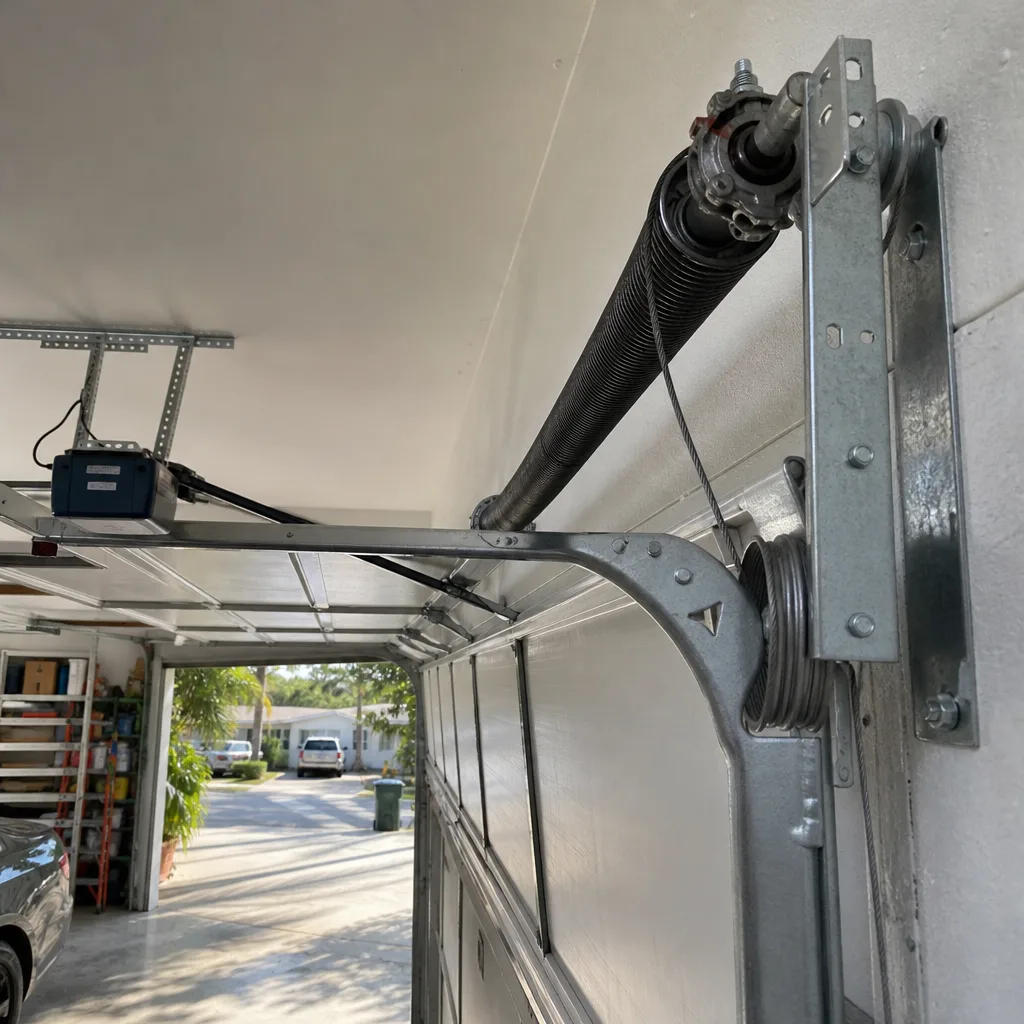
- Torsion springs: Mounted on a steel bar above the door opening, these are standard on modern doors and look like a helix of thick steel coil. Torsion springs wind and unwind to store energy. They are under extreme tension and should never be adjusted without the proper winding bars and experience.
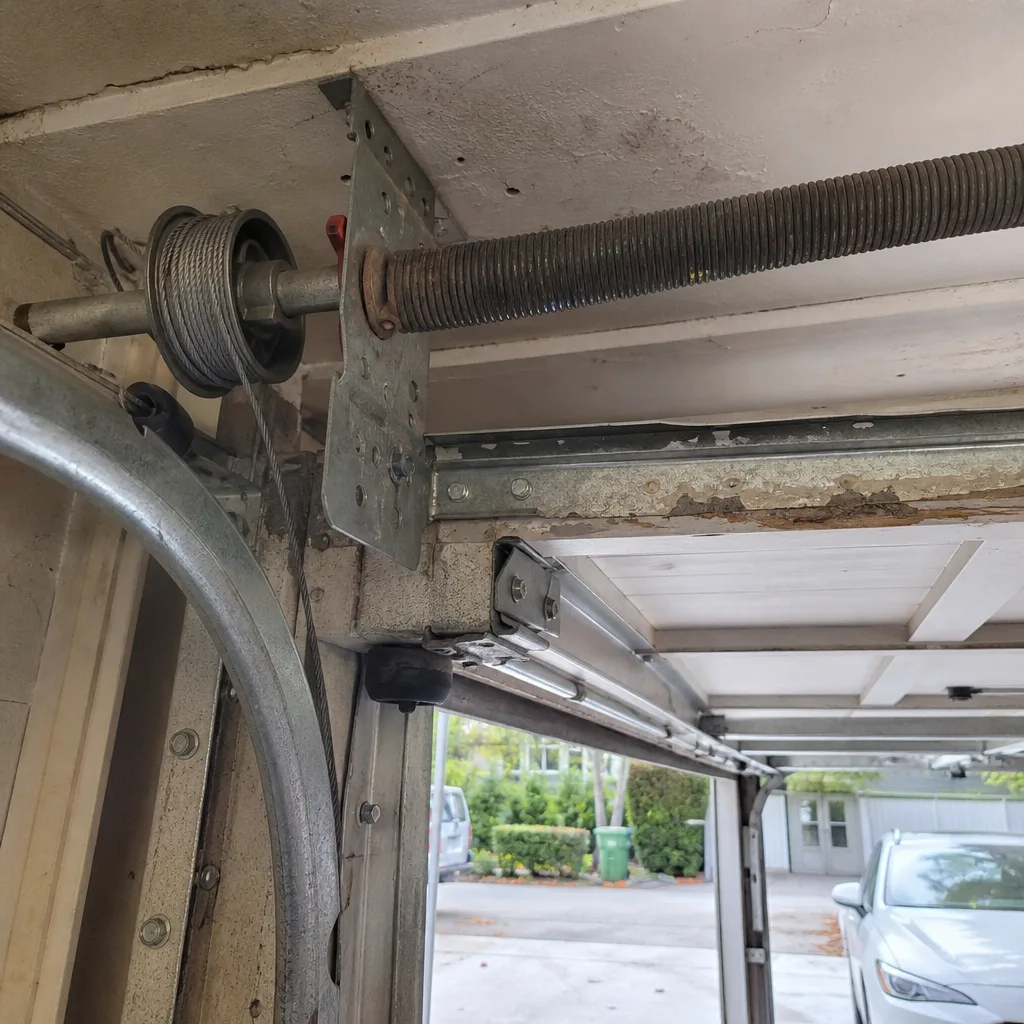
- Extension springs: Mounted on the side tracks, these stretch and contract. Older Miami Beach homes, especially single-car garages built before 1990, often have extension springs. They’re identifiable by the safety cable running through the center, which is required by code to prevent a broken spring from flying across the garage.
A broken torsion spring in Miami Beach typically shows up as a door that won’t lift beyond a few inches, or lifts unevenly with a visible gap in the spring coil. A broken extension spring often makes a loud bang followed by the door hanging crooked. Both failures leave the door effectively dead weight, and attempting to force it open by hand or with the opener can seriously damage the track, the panels, and the opener.
What does spring replacement cost in Miami Beach? Torsion spring replacement in Miami Beach generally runs $180 to $340 including parts and labor, depending on spring size and door weight. Extension spring replacement is typically less, usually $150 to $250 for a pair. We always replace springs in pairs: if one torsion spring has snapped, the other has the same number of cycles on it and has been exposed to the same salt air. Replacing one is a false economy that leaves you calling back in a few months.
Cables, Rollers, and Hinges: The Fastest-Wearing Parts
The spring does the heavy lifting, but the cables, rollers, and hinges translate that force into smooth, straight movement. In Miami Beach, these small parts fail before the door panels do, and failing small parts cause cascading damage.
Cables
Garage door cables are steel wire rope. Salt air and humidity cause the individual strands to rust and fray. A frayed cable may hold for weeks and then snap under the full weight of the door, usually when the door is halfway up. If a cable snaps, the door slams or jams, often bending the track and cracking a panel. We recommend inspecting cables at least twice a year in Miami Beach. Look for any dark discoloration, unwound strands, or thinning near the bottom bracket where salt collects.
Rollers
Rollers are the small wheels that sit in the track and guide the door. Older Miami Beach doors often still have steel rollers with ball bearings. When the bearings seize, the roller stops turning and starts sliding, carving a flat spot into the roller and scoring the track. We replace rollers much more frequently in oceanfront properties than in bay-front or inland Miami Beach neighborhoods. Nylon rollers with sealed bearings last much longer in salt environments and reduce door noise.
Hinges
Hinges connect the door panels and fold as the door travels up the track. In homes near the ocean, hinge pins corrode, causing the hinge to bind. A binding hinge puts uneven tension on the panel, and the panel can crack at the hinge connection. When we replace a hinge in Miami Beach, we check the adjacent hinges and often recommend replacing all of them if they show rust. Replacing hardware before it seizes is far cheaper than replacing a cracked door panel.
Garage Door Opener Repair: The Smart Home Layer
Opener failures in Miami Beach tend to follow a pattern: older units die from heat and age, newer smart units die from connectivity and corrosion. Understanding which failure you’re dealing with changes the repair decision.
Older opener models from LiftMaster, Craftsman, and Genie that were installed 15 or more years ago still use DC or AC motors with physical limit switches and a simple radio receiver. When these units fail in Miami Beach, we usually find one of four problems: a bad capacitor (common in high heat), a stripped plastic drive gear (common when the door is off-balance), corroded wiring connections inside the motor housing, or a logic board that has given up after years of heat cycling. A stripped gear or a failed capacitor is repairable for under $100 in most cases. A dead logic board usually means the opener has reached the end of its economic life.
Newer smart openers from Chamberlain and LiftMaster add a Wi-Fi module, a camera, and a phone app to the same basic motor. These units introduce a different failure profile. The most common issue we see in Miami Beach is the Wi-Fi module losing connectivity due to router placement or firmware issues, followed by sensor misalignment caused by humidity-warped door panels, and wall button failures from sweat and corrosion.
Garage Door Opener Repair in Miami Beach is one of our core services specifically because the diagnostic layer is so different from a spring or cable job. We test the motor, the logic board, the sensors, and the limit settings before recommending replacement. In many cases, a $60 sensor or a $25 capacitor fixes the problem, and we’ll tell you that up front.
How to Identify Your Existing Garage Door and Opener Brand
Before calling any technician, it helps to know what you actually have hanging in your garage. Brand identification is usually fast if you know where to look.
To identify your opener:
- Check the motor housing label: The motor unit is that metal box hanging from the ceiling. Most units have a sticker or metal plate on the front or underside with the brand name and model number. LiftMaster units often have a black or dark gray housing with a yellow learn button. Older Craftsman units share the same chassis and typically show a purple or green learn button. Wayne Dalton and Raynor openers are less common but not rare in older Miami Beach homes.
- Look at the wall control: A LiftMaster or Chamberlain wall console with a screen means you have a newer smart model. A simple two-button wall switch points to an older opener.
- Check the remote: Most remotes carry a brand stamp on the back. Keep in mind that remote brands don’t always match the opener, because homeowners mix and match universal clickers.
To identify the door:
- Look at the bottom panel interior face: Door manufacturers usually rivet or stick a label on the inside of the bottom panel. Clopay doors often show a white label with red and blue text. Amarr doors typically have a silver sticker with a serial number beginning with the letter A. Wayne Dalton doors often show a blue label with their name on a foil tag.
- Count the panel seams: A four-panel steel door in a mid-century Miami Beach home can often be matched by measuring panel width and rib pattern rather than relying on a logo. We do this all the time on homes where the original builder installed an off-brand door that has since been discontinued.
Knowing the brand helps a technician bring matching parts. It also protects you from being talked into a full replacement when a simple part from your existing manufacturer would do the job. Bayside Garage Door Repair is certified to repair and service eight major brands, including LiftMaster, Chamberlain, Genie, Clopay, Amarr, Wayne Dalton, Craftsman, and Raynor. We work with the brand you already have.
DIY vs. Professional Garage Door Repair in Miami Beach
Some garage door maintenance and minor fixes are reasonable for a careful Miami Beach homeowner. Others are not, and the difference isn’t always obvious from a YouTube video. See DIY vs Professional Garage Door: The Miami Beach Homeowner’s Decision Guide for help deciding.
What you can do yourself
- Visual inspection: Walk the track, look at the cables, check the springs for rust, and test the safety sensors. This takes ten minutes and requires no tools.
- Lubrication: A spray of white lithium grease on rollers, hinges, and the torsion spring every six months will slow corrosion and reduce wear. Use a garage-door-specific lubricant, not WD-40, which is a solvent and will strip grease.
- Sensor alignment: If your door starts closing and reverses immediately, the photo-eye sensors near the floor may have been knocked out of alignment. Most sensors have a visual indicator light: if one light is blinking, simply loosening the bracket screw and adjusting the angle until the light turns solid will fix the problem.
- Battery replacement in remotes and wall controls: A dead 9-volt or coin cell is a five-minute fix. We’ll never charge you for something you can do yourself.
What you should never attempt yourself
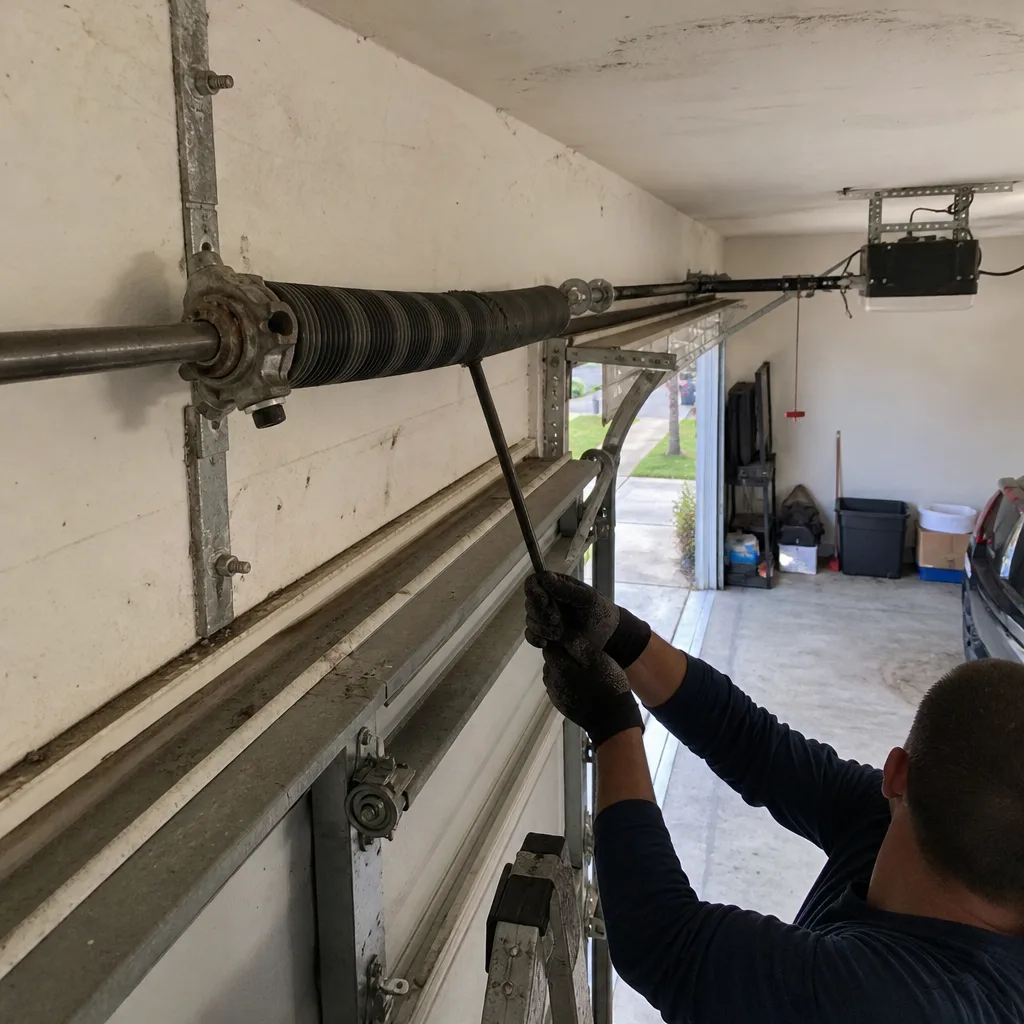
- Torsion spring replacement or adjustment: Torsion springs are under several hundred pounds of torque. An improperly wound spring can release suddenly and cause severe injury. This is not a cautiousness disclaimer, it’s a hard line. Call a professional who carries the correct winding bars and has done it thousands of times.
- Cable replacement: Cables work with the spring under tension. Removing a cable without releasing spring tension is extremely dangerous. The cable can whip as it fails, causing lacerations.
- Track repair: A bent track requires the door to be removed and the track straightened or replaced. Attempting to hammer a track back into shape while the door is in place puts the door at risk of falling.
- Opener motor replacement inside a live unit: If the opener motor has failed but the door is still attached, the spring system is holding hundreds of pounds. Disassembling the opener without disengaging the door is a recipe for a falling door.
We regularly see Miami Beach homeowners who tried a DIY fix after watching a video, created a more expensive problem, and ended up calling us anyway. The honest guidance is this: if the repair involves a spring under tension, a cable under load, or the door itself coming off the track, the repair is not DIY-safe. Garage Door Repair in Miami Beach is what we do full-time, and our parts inventory and tools are specific to this trade.
Common Mistakes to Avoid
- Keeping using the door after a spring breaks: Every time you force a door open or closed with a broken spring, you’re bending track, straining the opener motor, and risking a panel cracking. Stop using the door immediately and call for spring replacement.
- Replacing only one broken spring: Springs wear together and fail close together. Replacing one is the most common false economy we see on Miami Beach garage doors. You’ll pay for a second service call within months.
- Skipping hurricane-rated hardware to save a few hundred dollars: In Miami Beach, a non-rated door is a code violation and a genuine safety risk. The cost difference between a wind-load approved door and a standard door is small compared to the cost of replacing a door after a storm comes through.
- Using penetrating oil instead of garage door grease: WD-40 and similar products remove grease rather than lubricate. They actually accelerate wear on rollers and hinges. Use lithium grease designed for garage doors.
- Ignoring a slow or jerky door: A door that moves unevenly or hesitates is telling you something. That something is often a failing roller or a spring losing tension. Fixing the warning sign costs less than fixing the failure.
- Hiring a general handyman for a spring or opener repair: Garage door work requires specific tools, specific training, and specific parts. A handyman may be excellent at drywall, but a torsion spring demands a garage door specialist. Garage doors are all we do.
- Replacing the whole door when one panel is damaged: On many Miami Beach homes we can match a single panel. When a door has discontinued panel styles, we’ll tell you honestly and discuss replacement options from Clopay or Amarr rather than leaving you with a mismatched panel.
When to Call a Professional
Call a garage door specialist when you hear a loud snap or bang from the spring area, when the door won’t lift or closes unevenly, when the cables have frayed strands, when the door comes off the track, or when the opener stops responding to wall controls and remotes. Also call when you’re in the process of selling or buying a Miami Beach home: a pre-purchase garage door inspection catches hidden corrosion and worn hardware before closing. Bayside Garage Door Repair offers free estimates in Miami Beach. If you have a question about a repair, call us at (855) 674-1679. We’ll tell you what we think over the phone before we ever schedule a visit.
Frequently Asked Questions
Most garage door repairs in Miami Beach cost between $75 and $350 depending on the specific part. A spring replacement typically runs $180 to $340, a cable replacement $90 to $150, and a roller or hinge replacement $75 to $125 including the part and labor. We confirmed the exact price before any work starts, so what you’re quoted is what you pay. Call (855) 674-1679 for an exact quote on your specific issue.
Yes, spring, cable, roller, hinge, and opener repairs are typically same-day when parts are in stock. We carry inventory for the major brands including LiftMaster, Chamberlain, and Wayne Dalton, so the repair is usually done on the first visit. Call (855) 674-1679 and we’ll let you know immediately if your part is on the truck.
Yes. Miami-Dade County requires garage doors that are newly installed or structurally replaced to carry a Miami-Dade NOA or state product approval. If your home is in the wind-borne debris region east of Alton Road in many Miami Beach areas, impact-rated construction may be required. We verify this as part of our repair consultations.
Inspect the springs, cables, rollers, and hinges every six months. Salt air accelerates corrosion here, so Miami Beach homeowners should not follow the standard annual maintenance advice written for inland climates. Lubricate moving parts twice a year and replace corroded hardware before it fails.
In many cases, yes. Door and opener manufacturers specify that improper adjustments or parts not approved for the system void the warranty. Using the wrong spring size or tension can also damage the door and opener. We work with the brand you already have and confirm the correct parts before installation.
No. We quote a firm price for the repair before we begin, and that price is agreed in writing before any work starts. If we find additional issues during the repair, we will stop and show you before proceeding. You’ll never receive an invoice that’s larger than what you approved. Call (855) 674-1679 for a free estimate and an honest diagnosis.
The Bottom Line
Miami Beach garage doors live a harder life than their inland counterparts. Salt air shortens spring life, humidity corrodes opener boards, and wind-load code sets a legal floor for replacement work. The smart homeowner approach, in order, is this: inspect every six months, fix small parts before they cascade, never force a broken door, and use a specialist who knows your existing brand instead of defaulting to a full replacement. Garage Door Installation in Miami Beach is the right page when a full replacement genuinely makes sense, but most of the time a targeted repair gets you back up and running for a fraction of the cost. If you’re dealing with a garage door problem right now in Miami Beach, call Bayside Garage Door Repair at (855) 674-1679. We’ll diagnose what you have, quote a firm price, and get your door moving again.
Written by the team at Bayside Garage Door Repair, serving Miami Beach since 2014. Bayside Garage Door Repair home.
See the difference
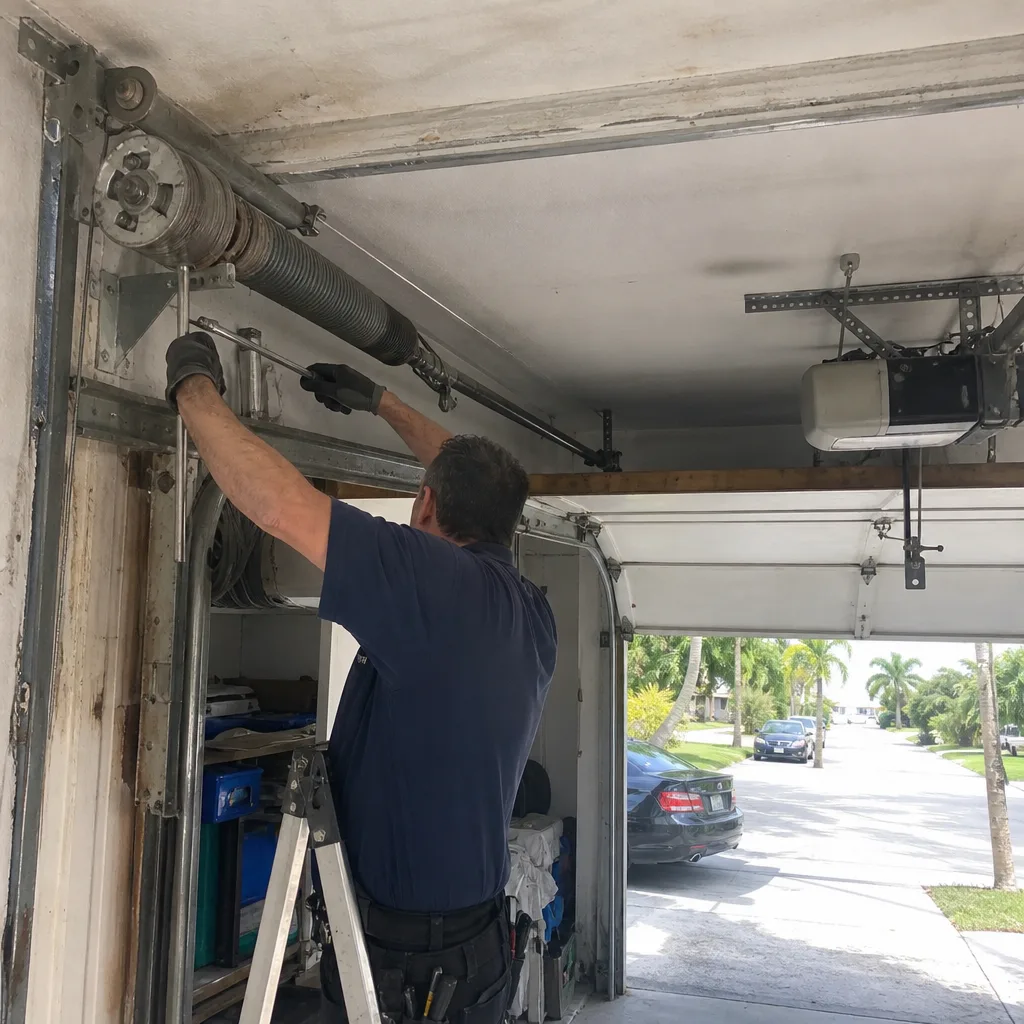 Before
 After
 Before
 After
 Before
 After