
Last updated October 30, 2026
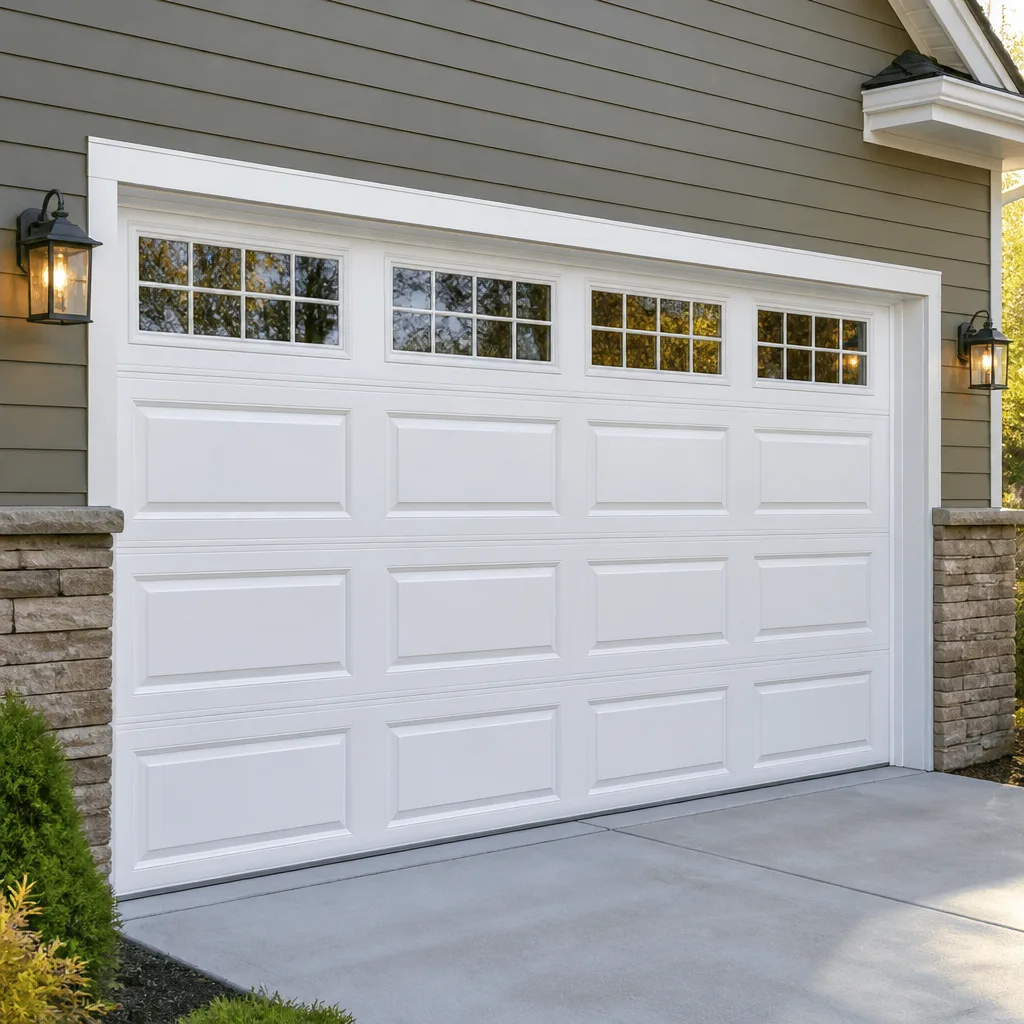 Raised-panel steel
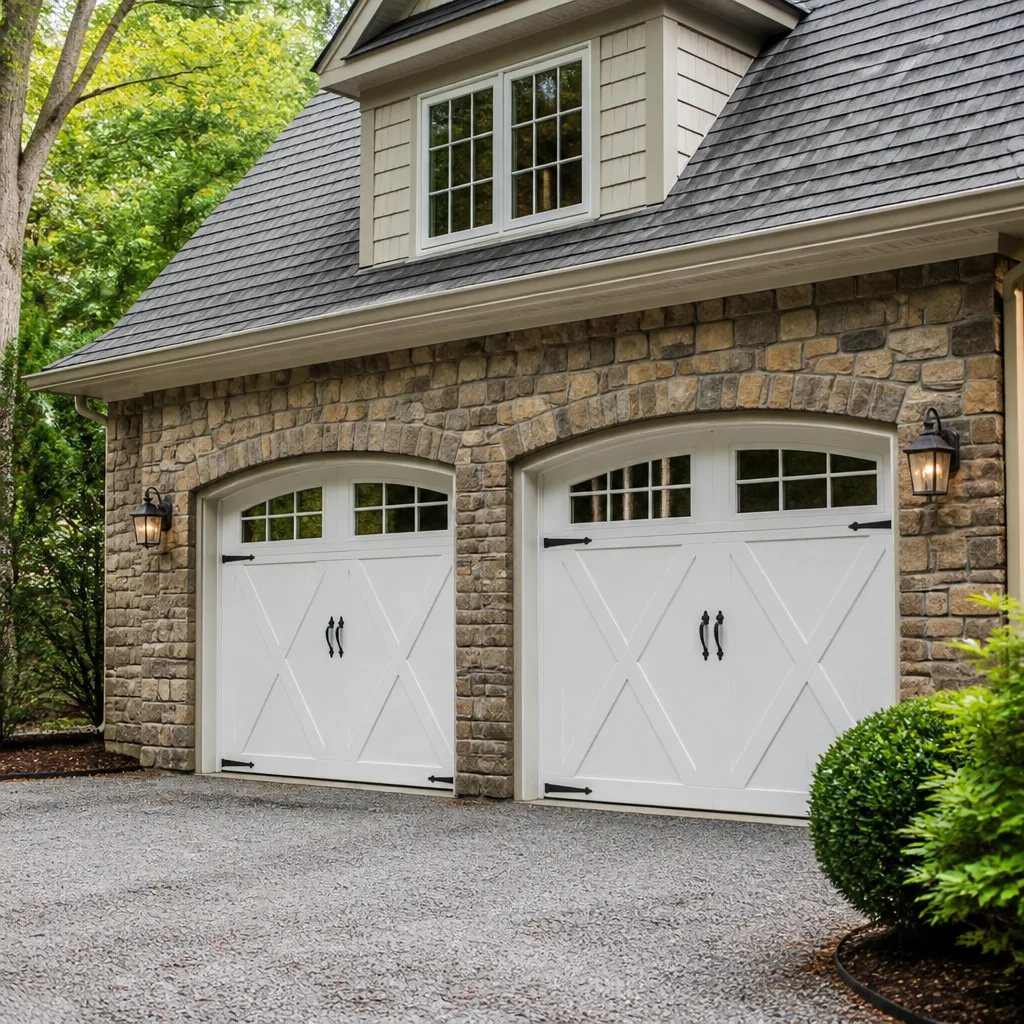 Carriage house
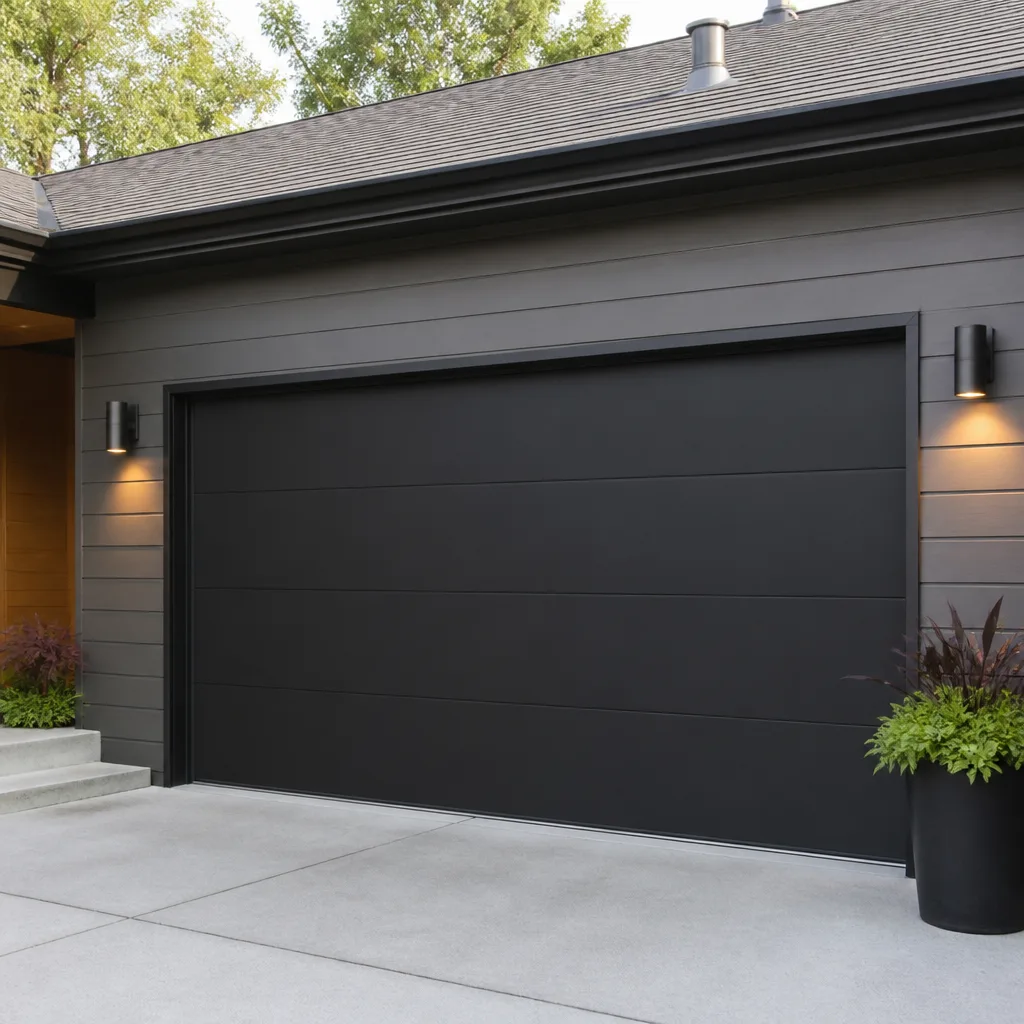 Modern flush
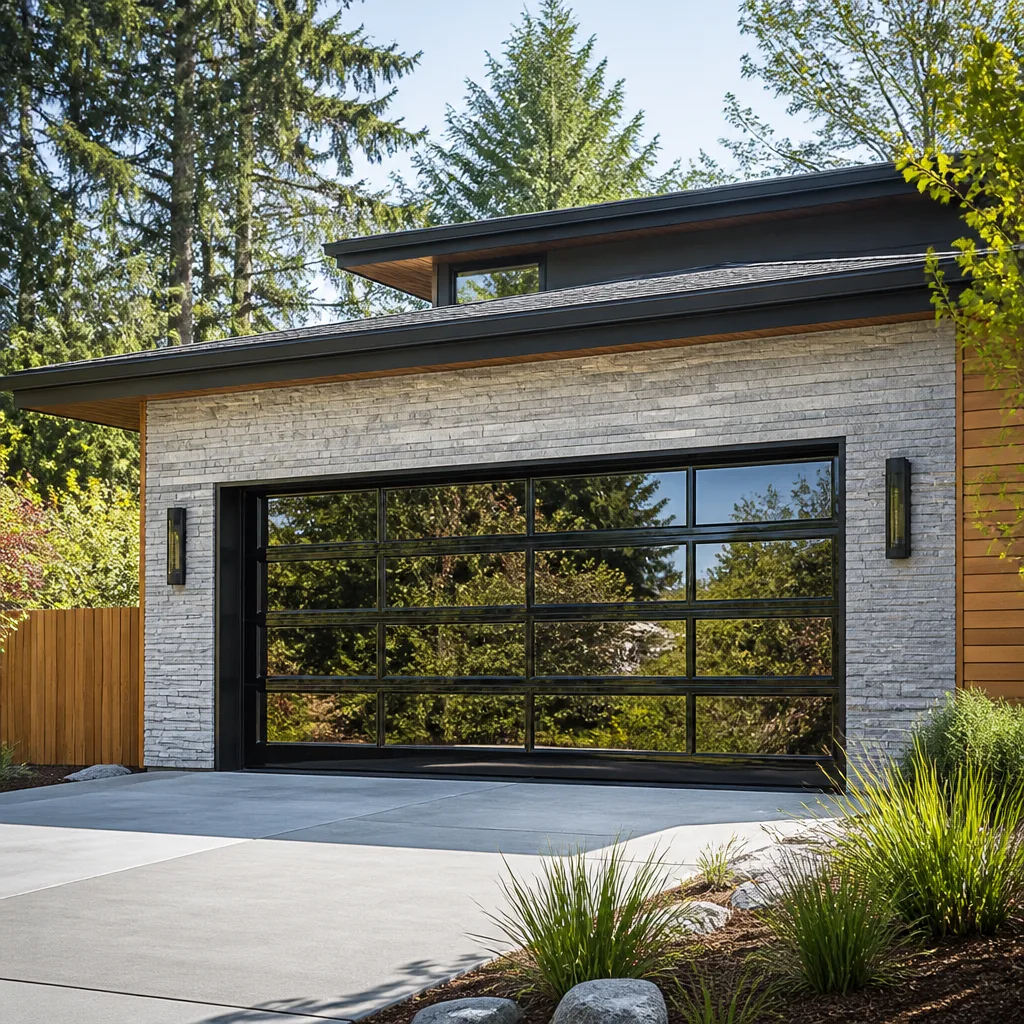 Full-view glass
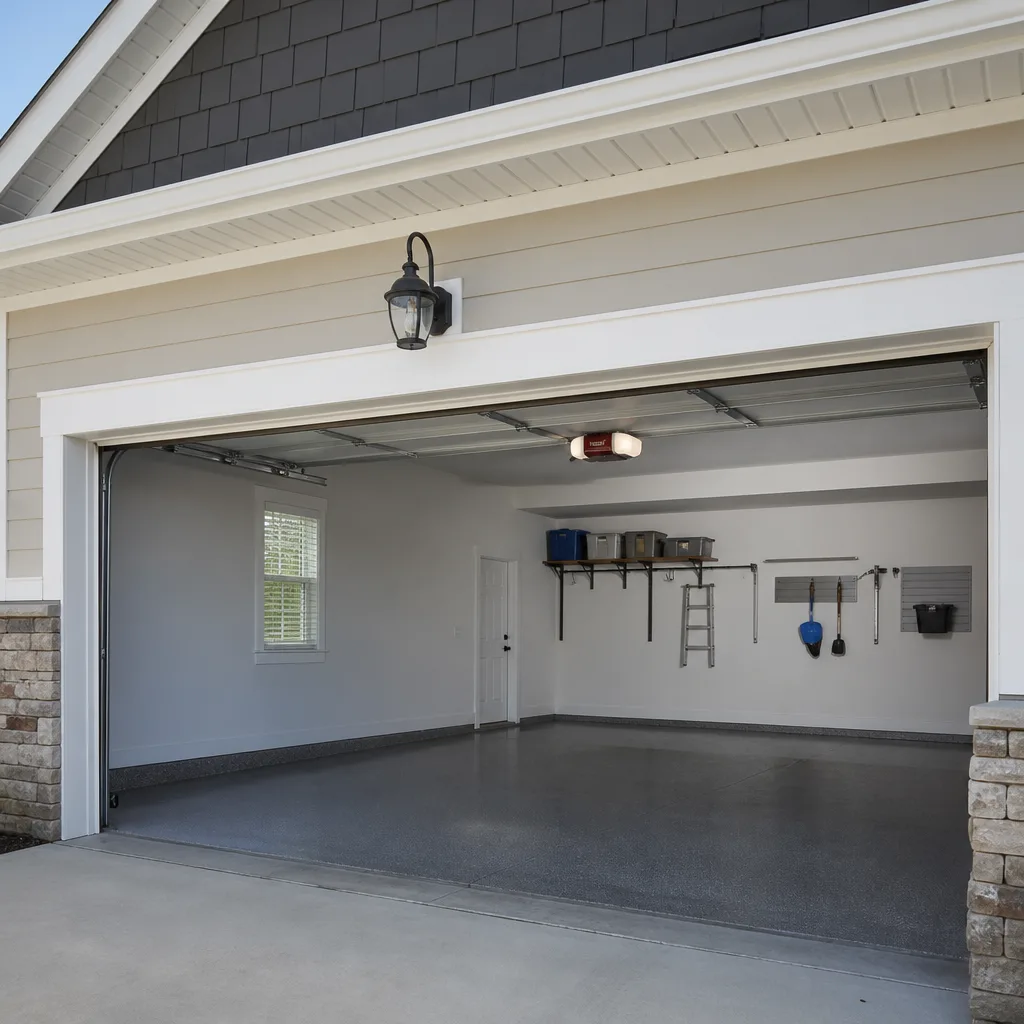 LiftMaster openers
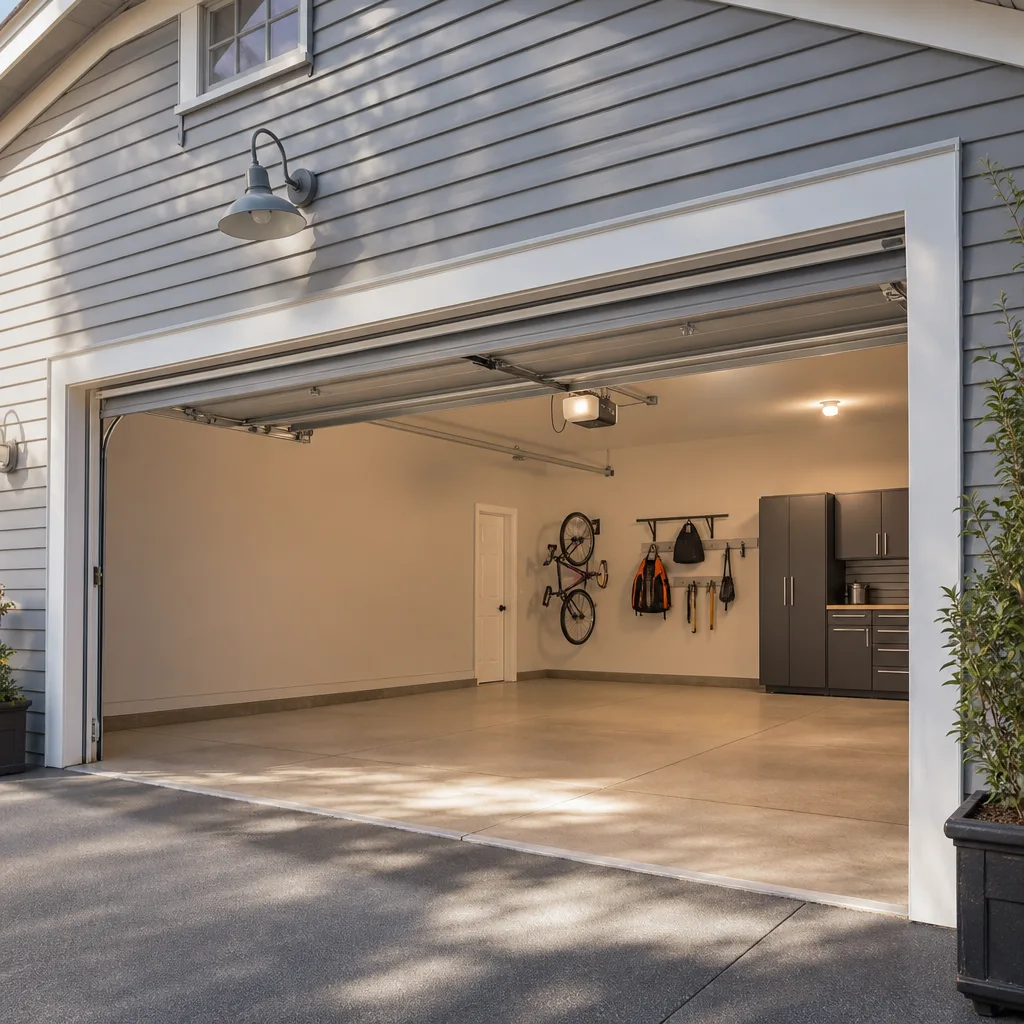 Chamberlain openers
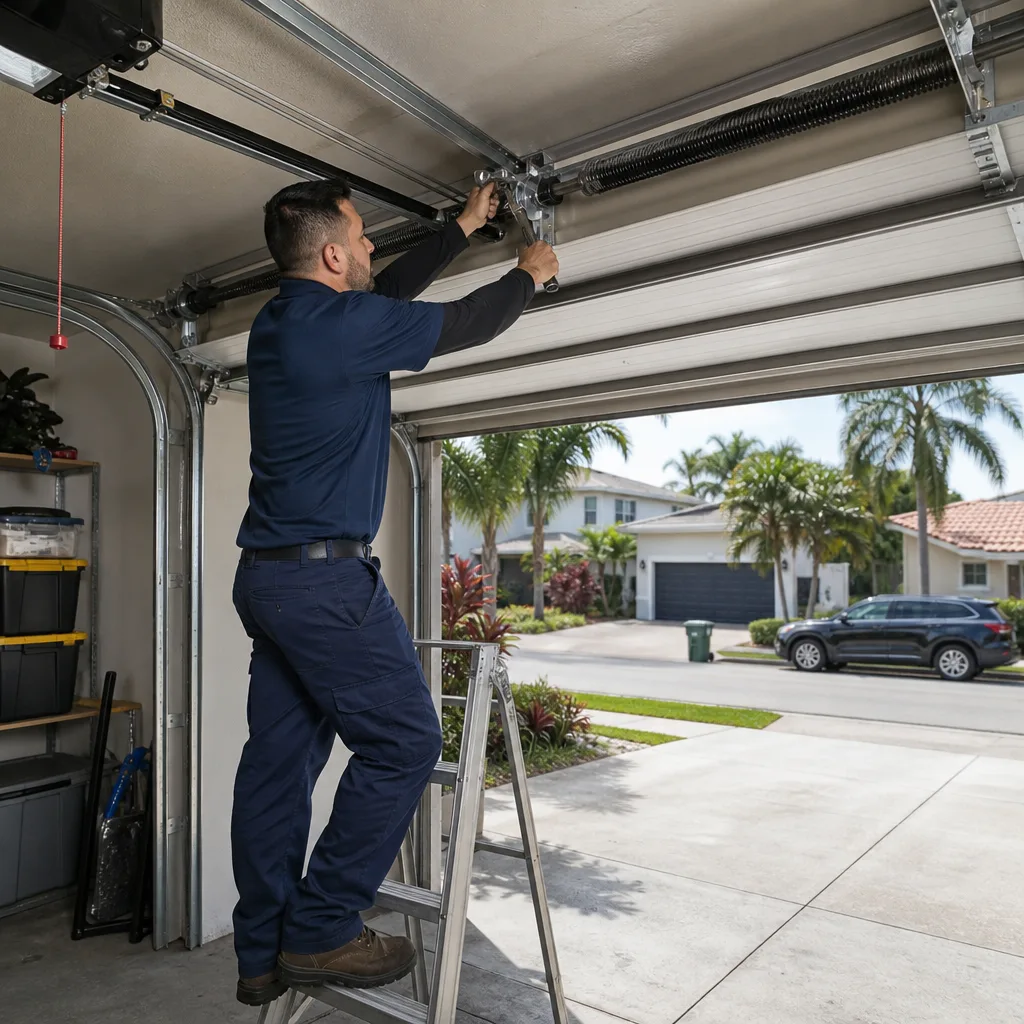
Full 25-point door and opener safety check with every visit - springs, cables, rollers, tracks, and your LiftMaster or Chamberlain opener included
You get a price before we start. It does not change when the truck arrives.
Get your free estimateThe Complete Guide to Garage Door in Miami Beach
Miami Beach sits within the highest coastal wind-zone classification in the continental United States. The garage door that’s perfectly fine two counties inland is potentially a code violation, and a structural liability, on your street. This guide covers what every Miami Beach homeowner needs to know about garage doors, alongside our more guides & resources: the Miami-Dade code requirements that override everything else, how salt air actually attacks your door, which materials survive on a barrier island, and the honest math on when to repair versus replace.
Styles & brands we work with
Quick Answer
Garage doors in Miami Beach must meet Miami-Dade County Product Approval standards, which go far beyond national ratings. Salt air, hurricane wind loads, and year-round humidity mean material selection and hardware choices matter more here than almost anywhere else in the country. The right door for Miami Beach is wind-rated for your specific exposure, built from corrosion-resistant materials, and serviced by someone who understands the difference.
Table of Contents
- Miami-Dade Product Approval: Why It Overrides Everything
- The Salt-Air Material Hierarchy: What Survives on a Barrier Island
- Impact-Rated vs. Hurricane-Rated: What Your Home Actually Needs
- How Miami Humidity Cuts Spring Life in Half
- HOA Guidelines in Miami Beach: What You Can’t Change
- Repair or Replace: The Math for Coastal Homes
- Garage Door Openers for Miami Beach: The Smart-Home Angle
- Common Mistakes to Avoid
- When to Call a Professional
- Frequently Asked Questions
- The Bottom Line
Miami-Dade Product Approval: Why It Overrides Everything
Before we talk about brands, materials, or prices, we need to talk about the single most important document for any garage door in Miami Beach: the Miami-Dade County Product Approval, commonly called an NOA (Notice of Acceptance). This is not a marketing certification. It is a legal requirement that says a specific product, from a specific manufacturer, with specific components, has been tested to withstand the wind pressures that Miami-Dade calculates for your exact location.
Here’s what most national garage door guides miss: a door can carry an impressive-sounding “wind-rated” label from a manufacturer, but if it doesn’t have a current Miami-Dade NOA, it is not legal to install in Miami Beach. Period. The county’s testing standards are more rigorous than almost anywhere else in the country because the wind loads on a barrier island are genuinely higher. A door that meets the requirements for central Orlando will not necessarily clear the bar for the 33139 ZIP code.
The NOA system works like this:
- The manufacturer tests a specific door model with specific tracks, springs, hinges, and mounting hardware. Not just the panel. The entire installed system.
- Miami-Dade evaluates the test data and calculates the maximum design pressure the system can handle, measured in pounds per square foot (psf).
- The county issues an NOA with an approval number, a pressure rating, and often specific installation instructions that must be followed exactly.
- Your contractor must pull a permit for any new door installation, and the inspector will verify that the installed door matches the NOA on file.
We see Miami Beach homeowners run into this constantly: they find what looks like a great deal on a door online or through a national retailer, only to discover during permitting that the door lacks an NOA for Miami-Dade. At that point, they either return the door or install it unpermitted, which creates a real problem when they sell the home or file an insurance claim. For a deeper look at what installation in Miami Beach actually involves, see our guide on Garage Door Installation in Miami Beach.
What the NOA Actually Means for Your Home
Your home’s location on Miami Beach determines its specific wind load requirements. A home on the bay side of West Avenue faces different pressures than a home on the ocean side of Collins Avenue. A taller building faces different uplift forces than a single-story home. The NOA system accounts for this: each approval lists maximum pressure ratings, and your installer must select a door whose rating meets or exceeds what your home’s location demands.
This is why you cannot simply ask “what’s the best garage door brand” and get a meaningful answer for Miami Beach. The best brand is the one that has an approved door for your specific pressure requirements, made from materials that can handle coastal exposure, installed in a way that preserves the engineered performance. Bayside Garage Door Repair works across all the major manufacturers, including Clopay, Amarr, Wayne Dalton, and others, precisely because the right answer always depends on the specific home.
The Salt-Air Material Hierarchy: What Survives on a Barrier Island
Here’s a phrase we hear from newcomers to Miami Beach all the time: “It’s only been five years and the door looks terrible.” That’s not a defect. That’s salt air doing exactly what salt air does. The ocean is a relentless delivery system for fine salt particles that settle on every exposed surface, and when those particles meet humidity, they create a low-grade corrosion bath that runs 24 hours a day, 365 days a year.
The result: standard hardware that might last 20 years in the Midwest corrodes in 3 to 5 on Miami Beach. This isn’t a warning against buying a garage door. It’s a warning against buying the wrong garage door for this specific climate. The hierarchy of materials matters enormously:
- Marine-grade stainless steel is the gold standard for coastal hardware: hinges, brackets, fasteners, and tracks. It costs more upfront and it’s the only material we’ve seen hold up consistently over a decade on the barrier islands.
- Galvanized steel is the mid-tier option. The zinc coating sacrifices itself to protect the steel underneath, but once the zinc is gone, the steel goes quickly. Expect meaningful corrosion at the 5 to 7 year mark in direct coastal exposure.
- Powder-coated aluminum performs exceptionally well for door panels and frames because aluminum forms its own protective oxide layer. The powder coating protects against the aesthetic damage of salt spotting while the aluminum resists structural corrosion.
- Standard painted steel is the budget option and the shortest-lived in this environment. Once the paint gets scratched by a passing storm or a bicycle handlebar, salt water attacks the raw steel directly.
The lesson from this hierarchy applies to the entire door, not just the panel you see. When we evaluate an existing door for repair, the first thing we check is the condition of the hardware, because the panel can look great while the track brackets are quietly rusting through. That’s a safety issue and it’s one of many reasons we recommend having a door inspected even when it’s not broken. If you’re dealing with specific problems, our Garage Door Repair in Miami Beach page covers the common failure patterns.
Impact-Rated vs. Hurricane-Rated: What Your Home Actually Needs
These two terms get confused constantly, and the distinction matters in Miami Beach. If you understand nothing else from this guide, understand this: impact-rated is about debris. Hurricane-rated, in the context Miami homeowners actually use it, is about wind pressure. Both matter here.
Impact-rated doors are tested to withstand a direct hit from airborne debris without being penetrated. Think: a 2×4 fired out of a cannon at highway speed. A door that’s impact-rated can survive that hit, remain in place, and continue protecting the building envelope from the pressure differentials that cause roofs to blow off and walls to collapse. In Miami-Dade, impact-rated doors are tested to the Large Missile Impact standard for the active zone on the map.
Hurricane-rated doors, in common usage, are doors tested for internal wind pressure resistance. The concern is the wind pushing directly on the door from the outside, trying to bow the door inward or rip it off its tracks. The pressure is measured in psf, and Miami-Dade sets minimums based on the home’s location and height.
Now, the practical advice for a Miami Beach homeowner:
- If your garage door faces east or northeast, toward the ocean, reach the higher standard mandatory in your zone. The access path to the beach means you don’t just have wind pressure; you have whatever the wind is carrying. This is also a primary budget factor.
- If your garage door faces west or into a protected courtyard, you may satisfy code with the correct wind-load-rated door, but check with your insurance agent. The rate difference may push you toward impact-rated anyway.
- If your home was built before 2002, when modern Miami-Dade garage door codes phased in, you may have a grandfathered door that would never pass today’s standards. That’s worth knowing now, not during hurricane season.
The key point is this: in Miami Beach, impact-rated and hurricane-rated are not the same thing, and the right choice depends on your specific exposure, your building’s height, and your insurance policy. A competent installer will walk you through the actual pressure requirements for your lot, and that conversation is more important than any brand’s national marketing claims.
How Miami Humidity Cuts Spring Life in Half
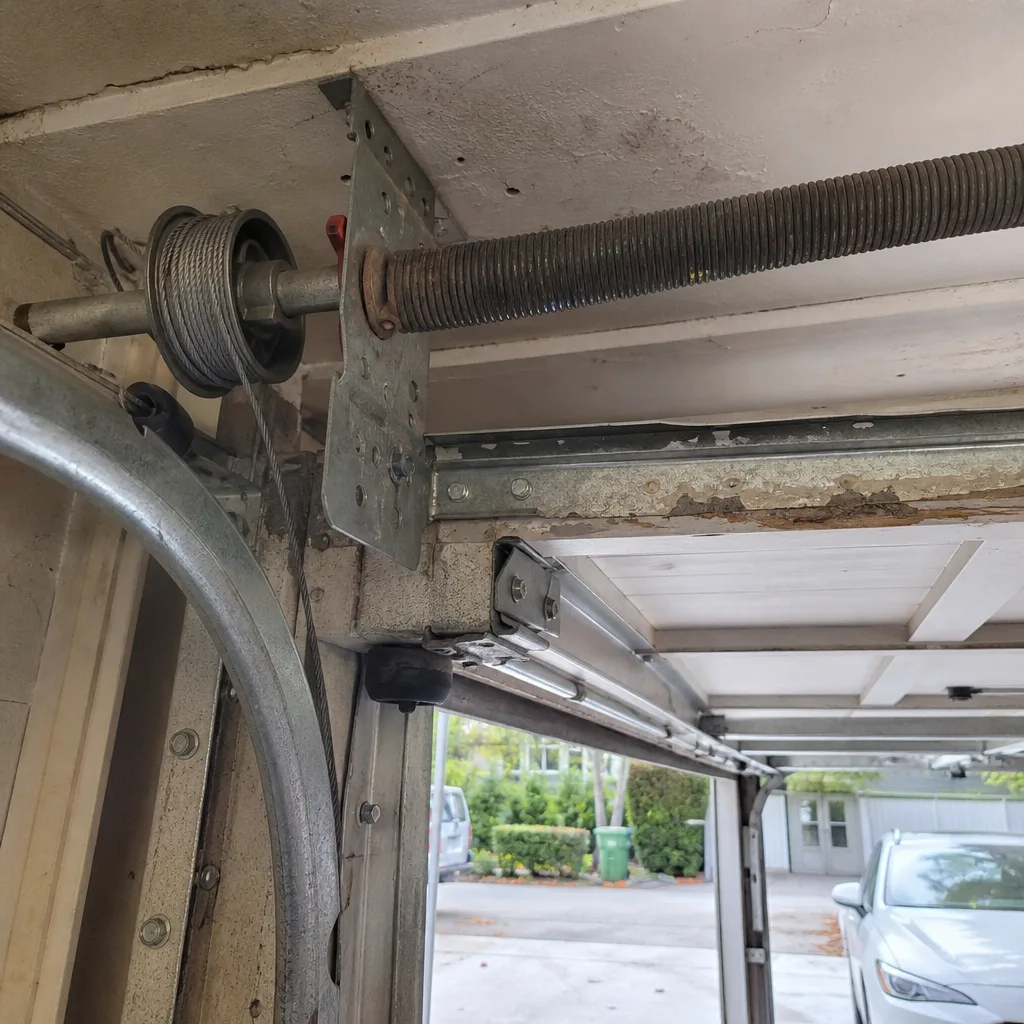
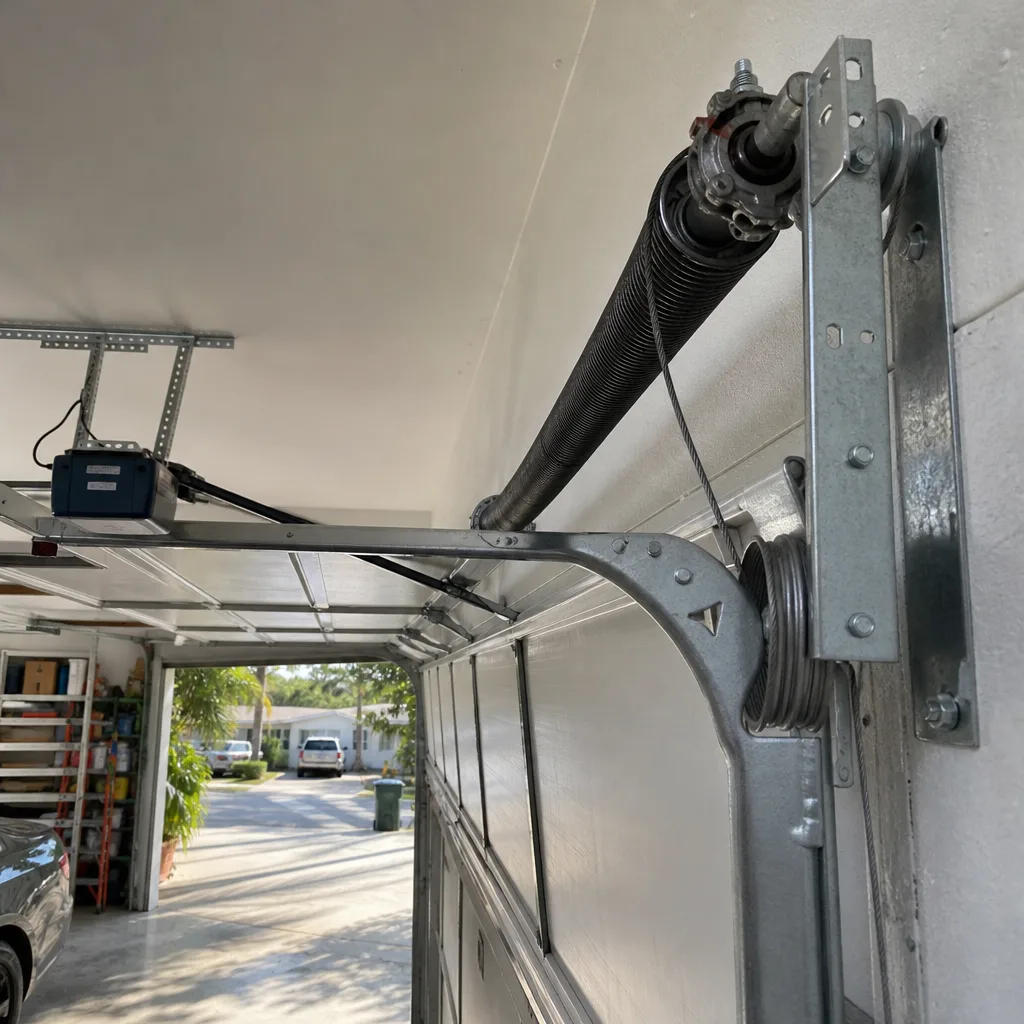
The standard torsion spring on a garage door is rated for roughly 10,000 cycles. That’s about 7 years in a two-car household in a mild climate. But that number assumes a certain operating environment, and Miami Beach’s environment is not mild. The humidity here is relentless, and it has a specific, measurable effect on spring life.
Garage door springs are high-tension steel that flexes and unflexes with every open and close cycle. That flexing generates internal friction, and the heat from that friction normally dissipates into the air. In Miami Beach, the air is often saturated with moisture, which accelerates a process called hydrogen embrittlement, the microscopic process by which steel under stress absorbs atmospheric hydrogen and loses ductility. The result: a spring that would survive 10,000 cycles in a dry climate may snap at 6,000 cycles here. It’s not a manufacturing defect. It’s physics meeting geography.
What does this mean for the Miami Beach homeowner?
- Replace springs proactively when you notice signs of wear like uneven lifting, a door that’s heavier than usual, or visible gaps in the coil. Waiting for a snap means waiting for the door to become immovable at the worst possible time.
- Expect shorter replacement intervals than what national guides tell you. If you’ve had springs for 5 years on Miami Beach, you’re likely in the window.
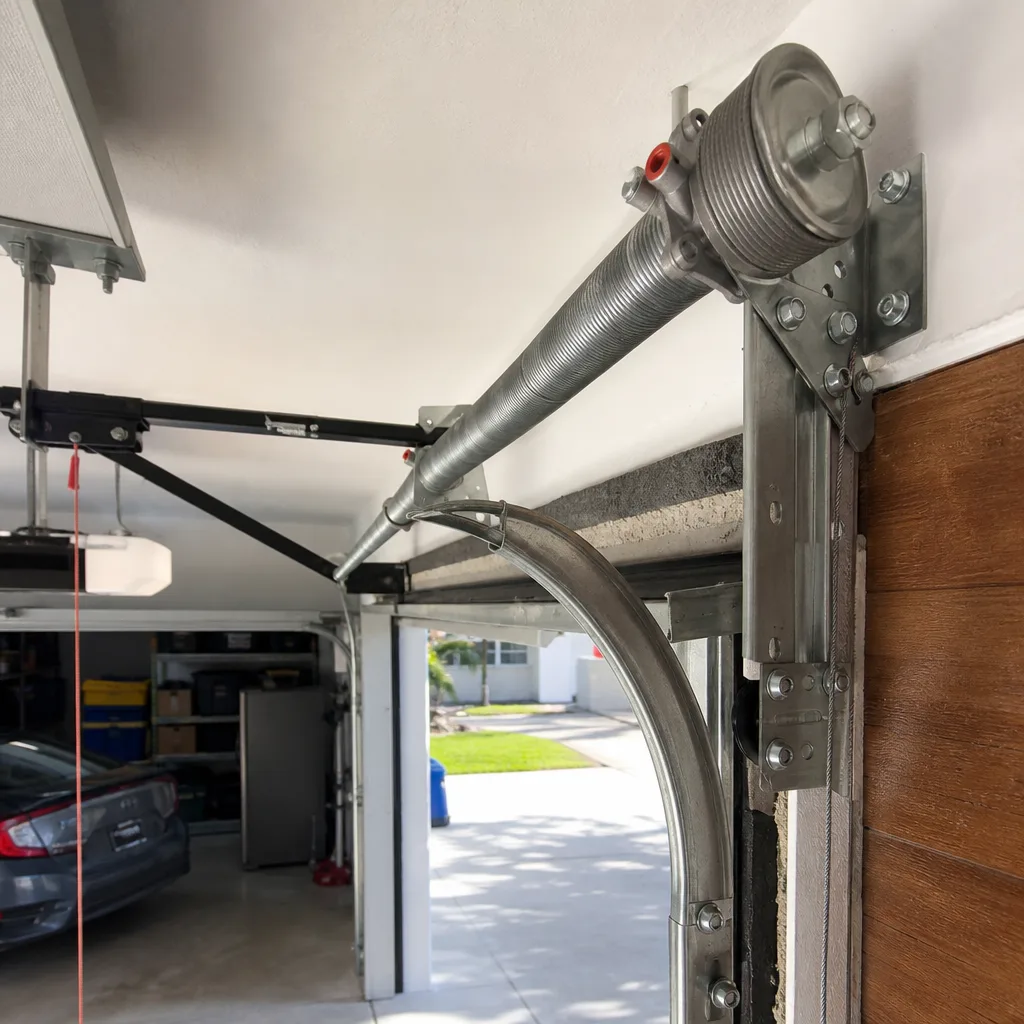
- Use high-cycle springs when you replace. Springs rated for 25,000 or 50,000 cycles are available from the major manufacturers, and the extra cost is small compared to the labor of a second replacement.
- Keep the door balanced. A door out of balance puts uneven load on the spring and shortens its life further, and that imbalance is common after years of humidity-driven cable stretch.
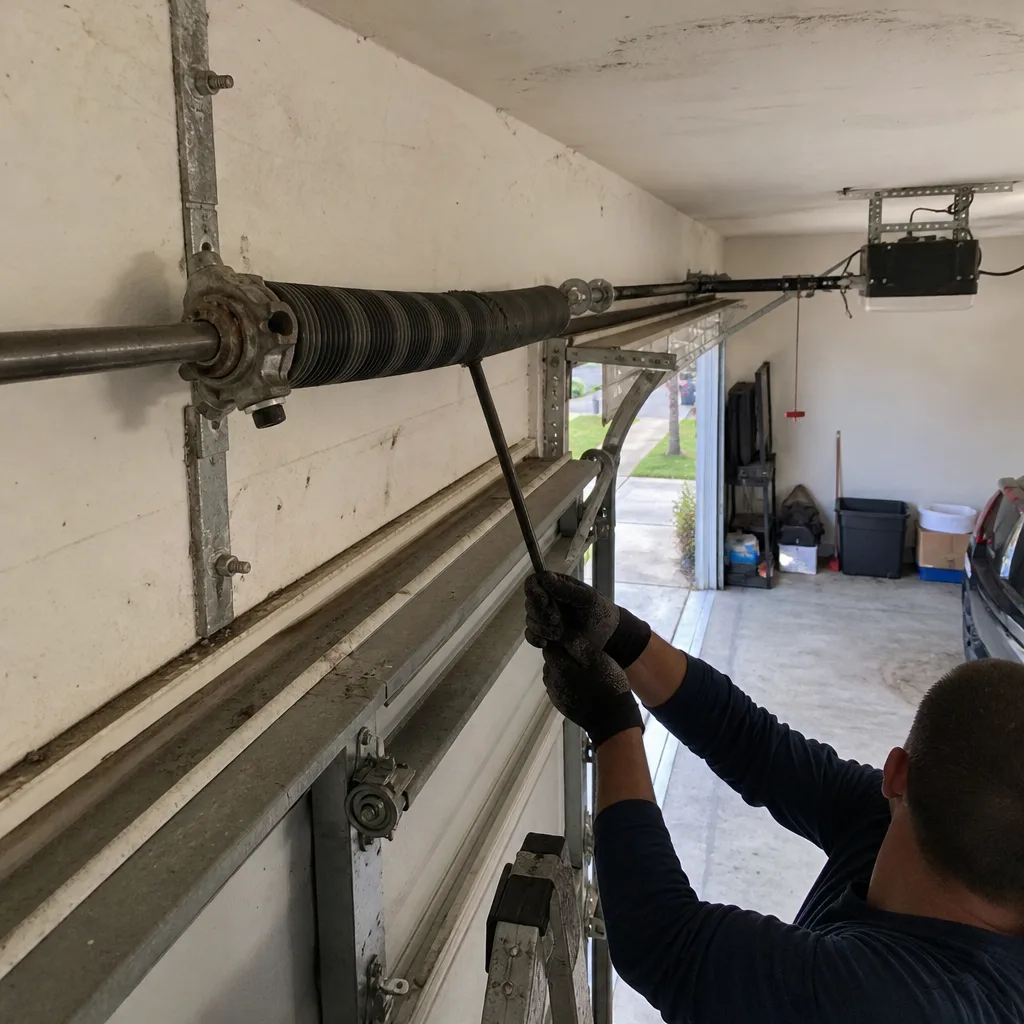
Important safety note: Torsion springs are under enormous tension, enough to cause serious injury or death if they release unexpectedly. The winding, adjusting, and replacement of torsion springs is not a DIY project—see our DIY vs Professional Garage Door: The Miami Beach Homeowner’s Decision Guide—and we strongly recommend you don’t attempt it. The tools and techniques are specialized, and the margin for error is essentially zero. This is one area where a trained professional is genuinely non-negotiable.
HOA Guidelines in Miami Beach: What You Can’t Change
If you live in a condominium, a gated community, or one of the historic districts on Miami Beach, you already know this dance: the HOA or condo association has architectural guidelines that restrict what you can put on your own home. What surprises people is how much those guidelines intersect with garage doors, and how frustrating that intersection gets when the HOA’s rules collide with building code.
The most common HOA restrictions in Miami Beach include:
- Color matching to a specific palette, often tied to the neighborhood’s historic designation. In the Art Deco districts, for example, the pastel palette is protected, and a bright white garage door can trigger a violation notice.
- Window style in the door panels. Some communities require window inserts to match within specific grid patterns, which adds cost and limits your material options.
- Material prohibitions. Older associations still have rules on the books that were written before modern composite materials existed, which means some approved-in-code doors are prohibited by the HOA and some approved-by-HOA doors are problematic under current wind codes.
- Automation visibility. Some Miami Beach communities restrict the placement of opener motors, smart-home controllers, or exterior keypads, which affects how your opener system gets installed.
The practical advice here is straightforward: pull your HOA’s architectural guidelines before you shop for a door, not after. A good contractor will help you navigate the intersection of HOA rules and Miami-Dade code, but the homeowner needs to lead with the HOA document, because it’s a restriction the contractor cannot override. We regularly see cases where a homeowner has fallen in love with a door that neither the HOA nor the county will approve. It’s always cheaper to learn that before the door is ordered.
Repair or Replace: The Math for Coastal Homes
The question that drives most calls to our office is some version of “should I fix this or should I replace the whole door?” For a detailed breakdown, see our Garage Door Cost Breakdown: The Miami Beach Homeowner’s Reference for 2026. The honest answer in Miami Beach has more variables than in most markets, because the coastal environment changes the cost-benefit calculation.
Here’s the framework we use:
- If the panel is intact and the hardware is functional, repair is almost always the right call. Springs, cables, rollers, hinges, and openers are all wear parts that get replaced individually, and there’s no reason to scrap a solid door because a $300 spring snapped.
- If the panel is dented but the hardware is sound, you may still be a repair candidate. Individual panel replacement is possible on many models, though color matching on a sun-faded door can be tricky.
- If the hardware shows significant corrosion, especially on tracks, brackets, or hinge plates, you need an honest assessment of what’s salvageable. Salt corrosion is a progressive disease, and replacing only the visible damage while leaving corroded structural components in place buys you months, not years.
- If the door is more than 15 years old and predates the modern wind codes, replacement is often the smart move even if it still works. The code has changed for a reason, and the insurance implications alone can justify the spend.
- If the door is structurally compromised, replacement is the only safe option. A door with a rusted-through bottom panel or a track that’s pulling away from the wall is a safety hazard, not a maintenance project.
Our philosophy at Bayside Garage Door Repair home is simple: diagnose first, replace only if necessary. We’d rather replace a spring and keep a good door in service than push a full replacement that isn’t justified. That said, we also don’t sugarcoat it when the math favors replacement, because patching a 20-year-old door in a coastal environment is often throwing good money after bad.
Garage Door Openers for Miami Beach: The Smart-Home Angle
The opener is the electronic brain of your garage door system, and in Miami Beach, the smart-home angle matters more than most people realize. The state has essentially the nation’s highest concentration of vacation homes, second homes, and rental properties, which creates a specific set of opener requirements: remote monitoring, temporary access codes for renters and service providers, and the ability to verify the door is closed from 2,000 miles away.
Bayside Garage Door Repair works extensively with the opener brands that dominate the American market, including Genie, LiftMaster, and Chamberlain, and we’re specifically equipped to repair the modern Wi-Fi-enabled systems that generalist contractors often won’t touch. The electronics layer, the motor, the sensors, the app integration, is exactly where we see the most mistakes made by homeowners trying to self-diagnose.
What matters for an opener in Miami Beach specifically:
- Battery backup is non-negotiable if you rely on the door as your primary entry point. Power outages are a recurring fact of life here during storm season, and an opener with no battery is a locked door with extra steps.
- DC motors run cooler and quieter than AC motors, which matters when your garage is unconditioned, which describes most garages in Miami Beach.
- App integration is worth it if you rent the property or travel frequently. The ability to open and close the door remotely, see its status in real time, and set up temporary access codes solves problems before they become emergency phone calls.
- Corrosion resistance in the opener’s internal components matters even though the opener is inside the garage. The salt air doesn’t stop at the door seal, and we’ve seen corrosion shorten the life of exposed motor housings and sensor contacts.
If your current opener is losing range, operating intermittently, or making noise that wasn’t there a year ago, our Garage Door Opener Repair in Miami Beach page details the common failure modes and what’s worth fixing versus replacing. The short version: opener repair is generally far cheaper than most people assume, especially when the problem is a sensor, a capacitor, or a limit switch, and a specialist who knows these systems by brand can often have you back up and running the same day.
Common Mistakes to Avoid
- Buying a door online without checking for a Miami-Dade NOA. The savings evaporate the moment the permit application gets rejected, and the return shipping on a 200-pound door is not trivial.
- Treating all “hurricane-rated” labels as the same. The label means whatever the manufacturer’s marketing department wants it to mean. The NOA is the only document that matters for a Miami Beach installation.
- Ignoring hardware corrosion because the panel looks fine. We’ve replaced plenty of doors where the panel was pristine and the track system was one rusted bolt away from catastrophic failure. The pretty part and the structural part are different systems.
- Waiting for a spring to snap before calling. The snap is not the moment the spring failed. It’s the moment the accumulated fatigue reached the breaking point, which means the failure was visible long before if you knew what to look for.
- Assuming your HOA has no garage door rules. Almost every condo and gated community on Miami Beach has architectural guidelines, and the penalties for violating them start with “remove the door you just paid to install.”
- Attempting DIY spring or cable work. The forces involved in a torsion spring are lethal. This is not a job where you watch a video and save a few hundred dollars. This is a job where the consequences of a mistake include a trip to the emergency room.
- Choosing a door based on price alone. In this climate, the cheapest door is often the most expensive five years later, once the hardware has corroded and the panel has faded and the manufacturer’s warranty turns out to exclude coastal environments.
When to Call a Professional
Some garage door work is genuinely DIY-appropriate: lubricating hinges, tightening visible bolts, cleaning the photoelectric sensors. Other work is not, and knowing the difference is the cheapest decision you’ll make this year. Call a professional when you hear grinding from the opener motor, when the door won’t stay in place without the opener holding it, when you see sagging or misalignment in the tracks, when the door makes a loud bang and drops, or when you’re considering any repair that involves the springs or cables. Bayside Garage Door Repair offers free estimates in Miami Beach. Call (855) 674-1679 and we’ll give you an honest diagnosis.
Frequently Asked Questions
Garage door replacement in Miami Beach typically runs higher than the national average because wind-rated doors with Miami-Dade NOAs cost more than standard doors, and permitting adds fees that other markets don’t have. The final number depends heavily on your specific wind-load requirements, panel material, size, and whether the opener gets replaced at the same time. Rather than guess, call (855) 674-1679 for a free, itemized estimate on your specific door.
Yes, a new garage door installation in Miami Beach requires a permit, and the permit process requires that the door carry a valid Miami-Dade Product Approval. The contractor typically pulls the permit and schedules the inspection, but homeowners should confirm this is included in the quote and not an afterthought, because an unpermitted installation creates issues at resale and with insurance.
We repair most existing doors, including those from Clopay, Amarr, Wayne Dalton, Genie, and every other major brand. The only reasons we recommend replacement are structural corrosion, panel damage beyond cost-effective repair, or the door predating modern wind codes and no longer meeting the requirements for your location. We diagnose first, replace only if necessary.
In Miami Beach’s humidity, expect torsion springs to last 3 to 5 years on average, compared to 7 to 10 years in drier climates. The moisture-rich air accelerates the microscopic fatigue process that eventually causes all springs to snap, and the best defense is annual inspection and proactive replacement when the spring shows signs of wear like gaps in the coil or uneven lifting.
A wind-rated door is tested to resist wind pressure, measured in psf, without failing. An impact-rated door is tested to resist a direct hit from airborne debris, like a 2×4 fired from a cannon, without penetration. In Miami Beach, your specific exposure determines which standard applies, and an impact-rated door is generally the more stringent and more expensive option. Your insurance agent can tell you which one gets the better rate for your property.
Yes, and they vary significantly. The historic Art Deco districts have aesthetic restrictions tied to the preservation of the neighborhood’s visual character, while many condo buildings have architectural boards that approve or deny colors, materials, and styles. Some communities restrict the visibility of opener motors or exterior keypads. Always pull your HOA or condo association’s guidelines before you order a door, because the association’s approval is not negotiable after installation.
The Bottom Line
A garage door in Miami Beach is not a commodity purchase. It’s a piece of coastal infrastructure that has to stand up to wind loads, salt air, and humidity that would destroy a standard door in half the time. The smart approach: understand your Miami-Dade code requirements before you shop, choose materials based on what actually survives in this environment rather than what looks good in a catalog, and work with a contractor who treats your existing equipment honestly. Bayside Garage Door Repair works with the brand you already have, diagnoses first, and replaces only when it’s genuinely necessary. Call (855) 674-1679 for a free estimate.
Written by the team at Bayside Garage Door Repair, serving Miami Beach since 2014.
See the difference
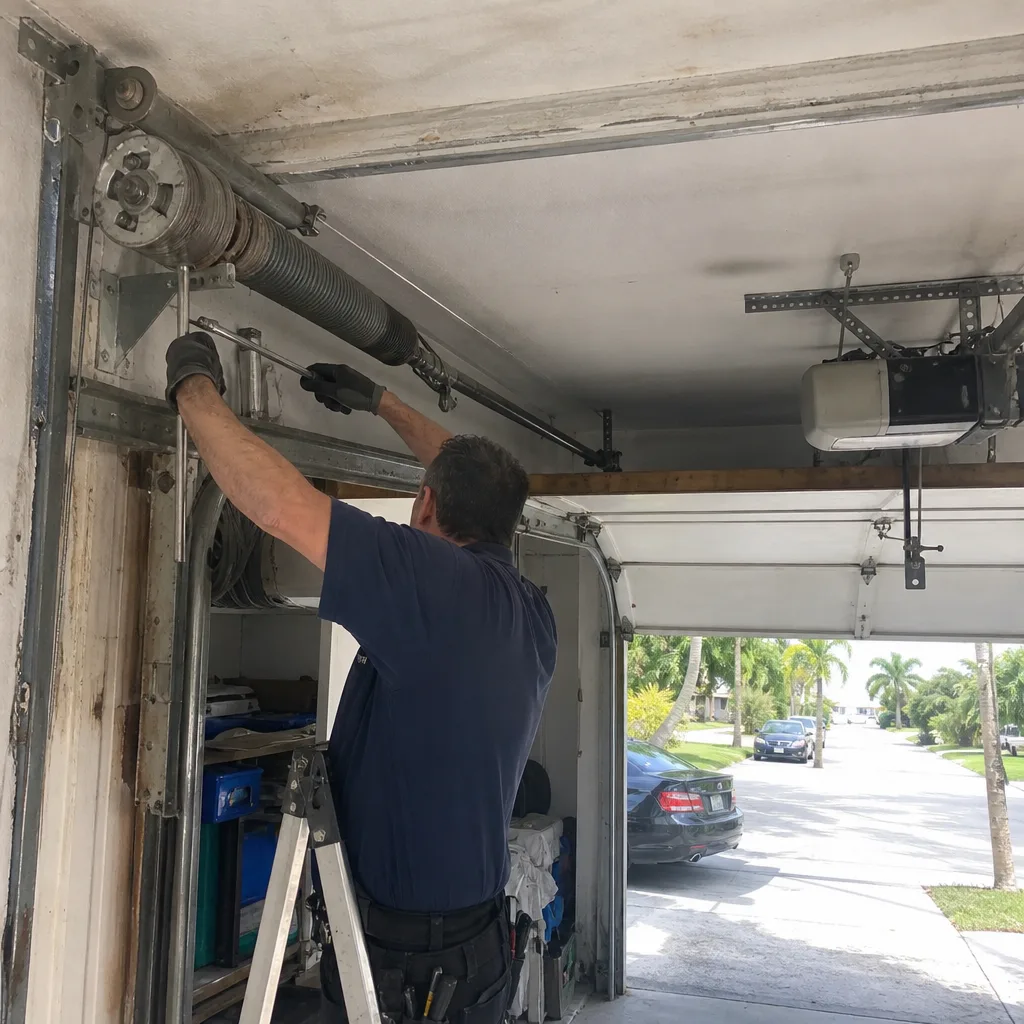 Before
 After
 Before
 After
 Before
 After