
Last updated October 30, 2026
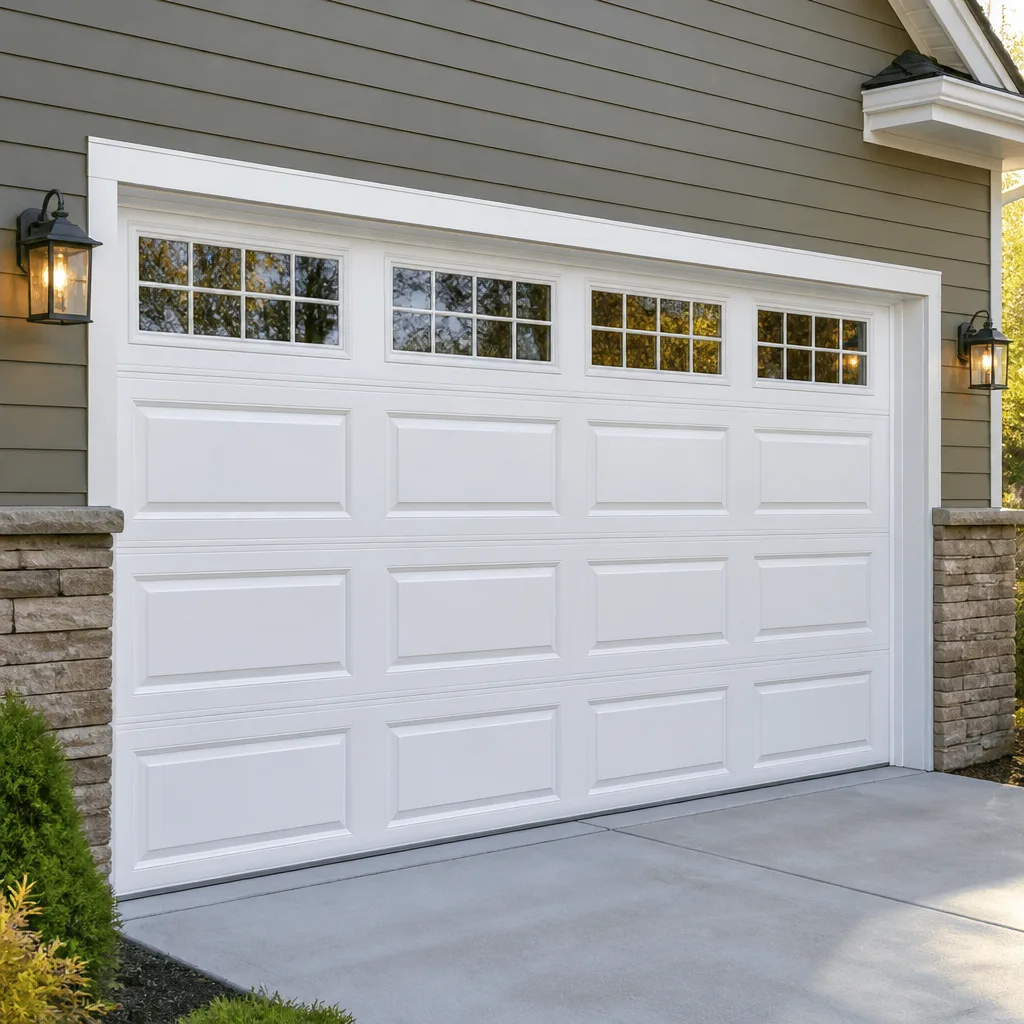 Raised-panel steel
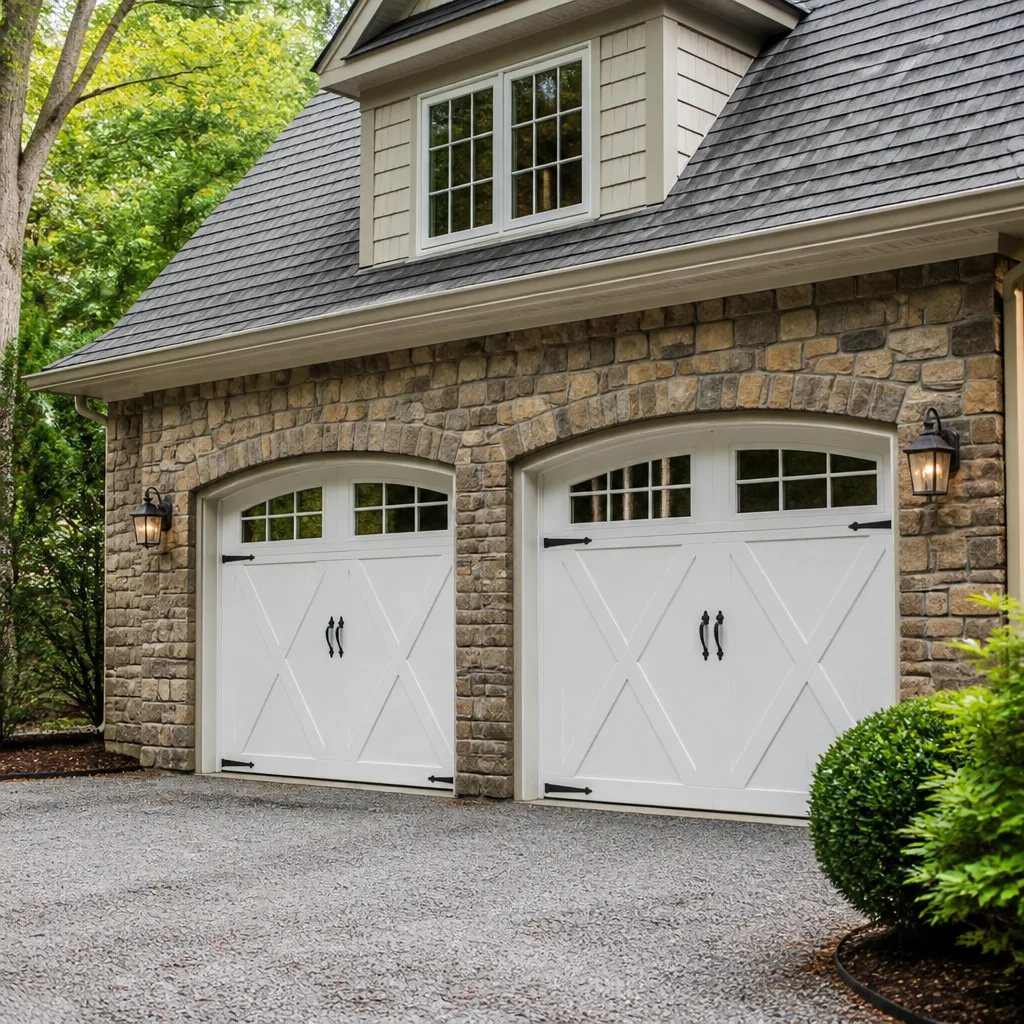 Carriage house
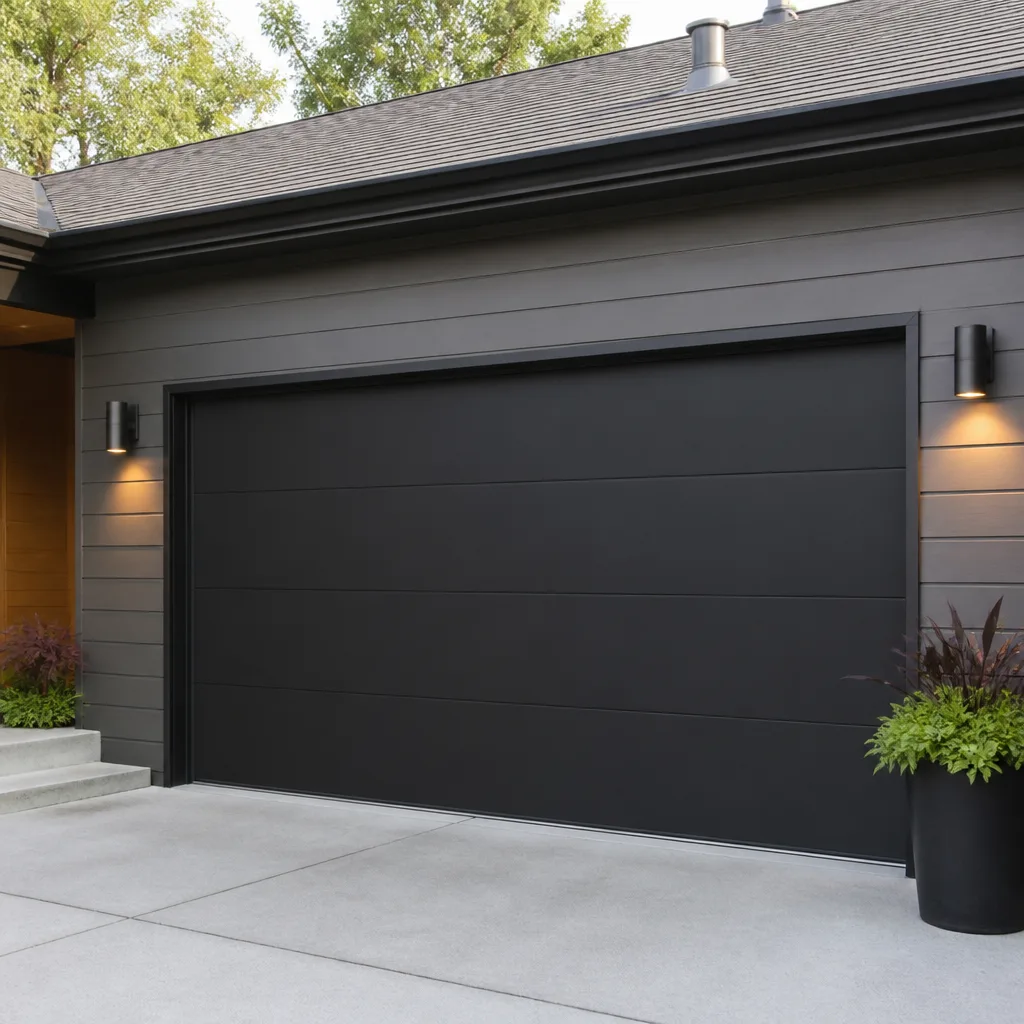 Modern flush
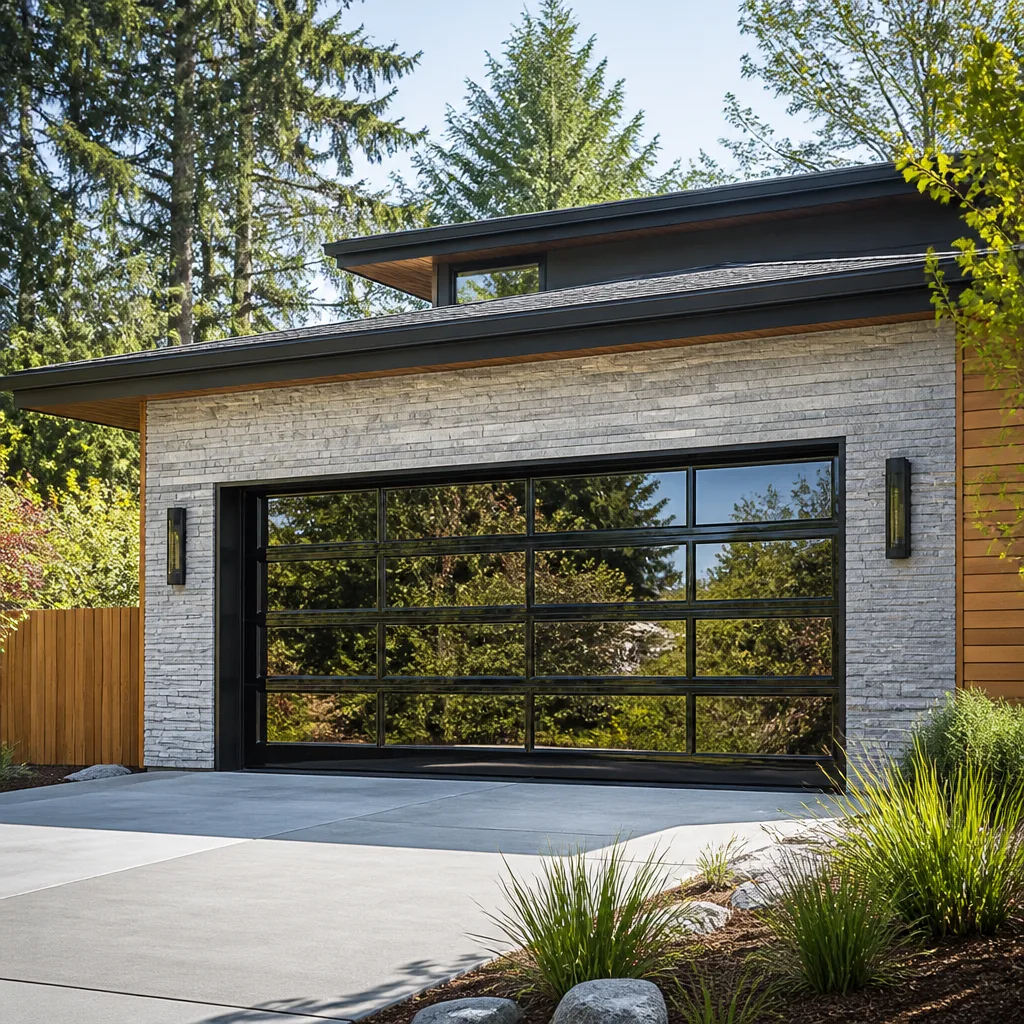 Full-view glass
 LiftMaster openers
 Chamberlain openers
Full 25-point door and opener safety check with every visit - springs, cables, rollers, tracks, and your LiftMaster or Chamberlain opener included
You get a price before we start. It does not change when the truck arrives.
Get your free estimateGarage Door Warning Signs: A Miami Beach Homeowner’s Reference Guide
Most garage door warning-sign guides are written for places where the air behaves itself. In Miami Beach, a door that works perfectly in February can bind, strain its opener motor, and shed a torsion spring by August, not because anything broke, but because wood and steel panels expand measurably in summer humidity, and most openers were never set with that seasonal change in mind. This guide covers what Miami Beach homeowners are actually seeing: rust bloom patterns from salt air, weatherstripping failure from UV intensity, and opener strain signals that national checklists never mention. For seasonal garage door care in Miami Beach, timing your checks to our climate makes all the difference. By the end, you’ll know which warning signs are cosmetic, which are structural, and when to make a call before a $40 part turns into a $900 repair.
Quick Answer
The most important garage door warning signs in Miami Beach are rust that spreads beneath paint, a door that hesitates or slows in summer months despite a healthy opener, weatherstripping that has turned brittle or chalky along the bottom edge, and a torsion spring that shows visible gaps or rust streaks at its coil ends. If you notice any two of these together, call a garage door specialist for an inspection; a single one may be routine, but paired symptoms usually indicate the door is working against itself.
Styles & brands we work with
Table of Contents
- Rust vs. Corrosion: The Salt-Air Test Every Miami Beach Homeowner Should Know
- Opener Strain: What Humidity-Swollen Panels Do to Your Motor
- Weatherstripping Failure: South Florida’s Fastest-Moving Warning Sign
- Torsion Spring Warning Signs Before the Break
- Panel Alignment: Storm Wind-Load Stress vs. Normal Settling
- What Each Garage Door Noise Actually Means
- The 15-Minute Miami Beach Garage Door Checkup
- Common Mistakes to Avoid
- When to Call a Professional
- Frequently Asked Questions
Rust vs. Corrosion: The Salt-Air Test Every Miami Beach Homeowner Should Know
Every metal garage door in Miami Beach will eventually show some rust. That’s not a warning sign by itself; it’s chemistry. The question is whether you’re looking at cosmetic surface rust that can be sanded and sealed, or structural corrosion that is actively eating the door’s integrity. In our experience working on doors from North Beach to South of Fifth, the distinction is the single most useful diagnostic a coastal homeowner can make, and it takes about thirty seconds.
The Finger Tap Test
- Find the rusted area and wipe it with a dry cloth. If the cloth comes away with a fine orange powder, that’s surface rust.
- Tap the rusted section with a key or coin. A solid metallic ring means the steel underneath is still intact.
- Press your thumb firmly against the rust bloom. If it flakes away and leaves pitting, or if the metal feels soft or spongy, that’s corrosion, not rust.
- Check the bottom panel corners first. Those are the first to go in Miami Beach because they sit closest to salt spray carried on sea breezes and standing water after heavy rain.
Surface rust is treatable. Wire brush it, apply a rust-inhibiting primer, and repaint with a marine-grade enamel. Structural corrosion is different. Once the steel has lost enough thickness to feel soft under thumb pressure, the panel’s wind-load rating is compromised, and in a hurricane-prone city, that’s not a cosmetic issue. We’ve seen doors on older Collins Avenue condos where the bottom panel looked fine from the outside but had corroded completely through from the back side where salt mist had been trapped against the insulation. That’s a replacement situation, and it’s why garage door repair in Miami Beach starts with an inspection rather than a sand-and-paint job.
Amarr and Clopay both build coastal-specific lines with zinc-galvanized steel that resists this process measurably better than builder-grade doors, but no door is immune. If you’re weighing options, see our guide on choosing the right garage door brand for Miami Beach. If you live within half a mile of the water, expect to inspect for corrosion at least twice a year, and don’t wait for the door to start sagging before you look.
Opener Strain: What Humidity-Swollen Panels Do to Your Motor
Here’s the scenario we see every summer in Miami Beach: a homeowner calls because their opener “sounds tired” or the door pauses halfway up and then jerks forward. The opener is three years old. The rails are lubricated. Nothing obvious is broken. What’s actually happening is that the door panels, particularly wood and older steel models without a thermal break, have absorbed enough moisture to gain weight. A standard 16-by-7-foot door can pick up 20 to 40 pounds in a humid summer compared to its dry-winter weight, and the opener’s motor doesn’t know why it’s suddenly working harder. It just pulls more current, runs hotter, and eventually shortens its own lifespan.
Signs Your Opener Is Fighting the Door
- The door hesitates at the same point on every cycle in summer but not in winter. Moisture weight is load-dependent, and the hinge line is where the extra mass shows up first.
- The opener housing feels warm to the touch after a single open-close cycle. A properly matched opener runs cool.
- Your lights flicker or dim when the opener starts. That’s current draw symptom, and no, it’s not just “normal” for an older home.
- The door reverses for no clear reason on a hot, humid afternoon. Many openers have force-sensing that gets triggered when the motor strain exceeds a preset threshold, and moisture-swollen panels push right up against that line.
The fix is not cranking up the force limit on the opener. That’s the quick answer a generalist gives, and it’s the wrong one. Increasing force settings masks the real problem and turns the opener into a pipe wrench, applying more power to a door that needs less weight or better balance. The right approach is to re-balance the door for its current weight, which usually means adjusting or replacing torsion springs, and then recalibrate the opener’s force settings down to where they belong. If you’re noticing these strain symptoms, call a garage door opener repair specialist in Miami Beach before the motor overheats one too many times. Opener electronics don’t recover from repeated thermal stress the way mechanical parts do.
Weatherstripping Failure: South Florida’s Fastest-Moving Warning Sign
Weatherstripping on a Miami Beach garage door fails differently than weatherstripping in, say, Chicago. In cold climates, the rubber crackles and splits from freeze-thaw cycles. Here, the enemy is ultraviolet radiation and heat, which break down the polymer bonds in the strip. You’ll see it turn gray, then chalky, then brittle, and finally it starts snapping off in chunks when the door closes. Many homeowners don’t notice until water starts pooling in the garage after a summer downpour, or their energy bill creeps up because conditioned air is leaking out through the gap.
The Visual Check
- Run your thumb along the bottom seal. If it leaves a white, powdery residue on your skin, the UV breakdown is already underway.
- Look at the side jambs. In Miami Beach, the top corners where the weatherstripping meets the header are the first places to fail because they’re in direct sun for the longest portion of the day.
- Check for daylight. Close the door and look along the edges from inside the garage. If you see light penetrating, the seal has lost its shape and is no longer compressing against the frame.
Failed weatherstripping costs more than most homeowners expect. First, water intrusion during heavy afternoon thunderstorms, which in South Florida can deliver an inch of rain in half an hour, enough to soak cardboard boxes, damage stored items, and promote rust on any metal surface inside the garage. Second, energy loss: if your garage shares a wall with conditioned living space, a gap at the bottom of the door is a direct opening for outside air. And third, pest entry. The humid subtropical environment supports roaches, rodents, and lizards that need only a quarter-inch gap to move in. Replacing a worn weatherstrip is a fifteen-minute job if the track is clean and the door is aligned. If the seal is failing repeatedly, the real issue is usually a door that’s out of square, which is where a full-system check by our team comes in.
Torsion Spring Warning Signs Before the Break
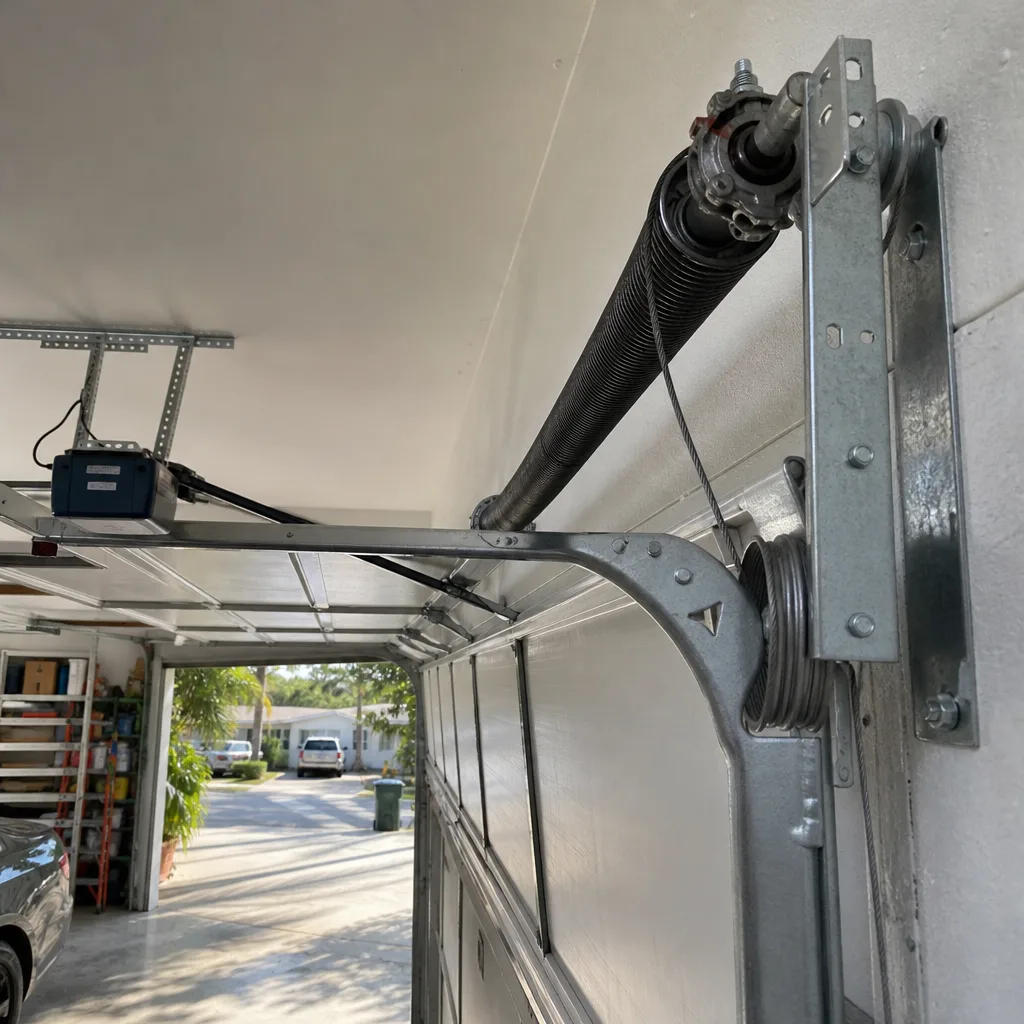
Torsion springs have a lifespan measured in cycles, not years, and Miami Beach doors cycle more often than the national average. Think about it: you open the door to leave for work, close it, open it when you come home, close it. Twice a day minimum, plus gym trips, dog walks, surf sessions, late-night food runs along Washington Avenue. A standard spring rated for 10,000 cycles can be used up in six or seven years here, whereas the same spring in a part of the country where people park in driveways might last a decade. The key is recognizing the signs that a spring is approaching the end of its life before it snaps, because the snap itself is startling at best and dangerous at worst. Torsion springs are under enormous tension, and when they fail, the release of energy can damage the door, the opener, and anything nearby. This is not a component to inspect with your face close to it.
Pre-Failure Visual Indicators
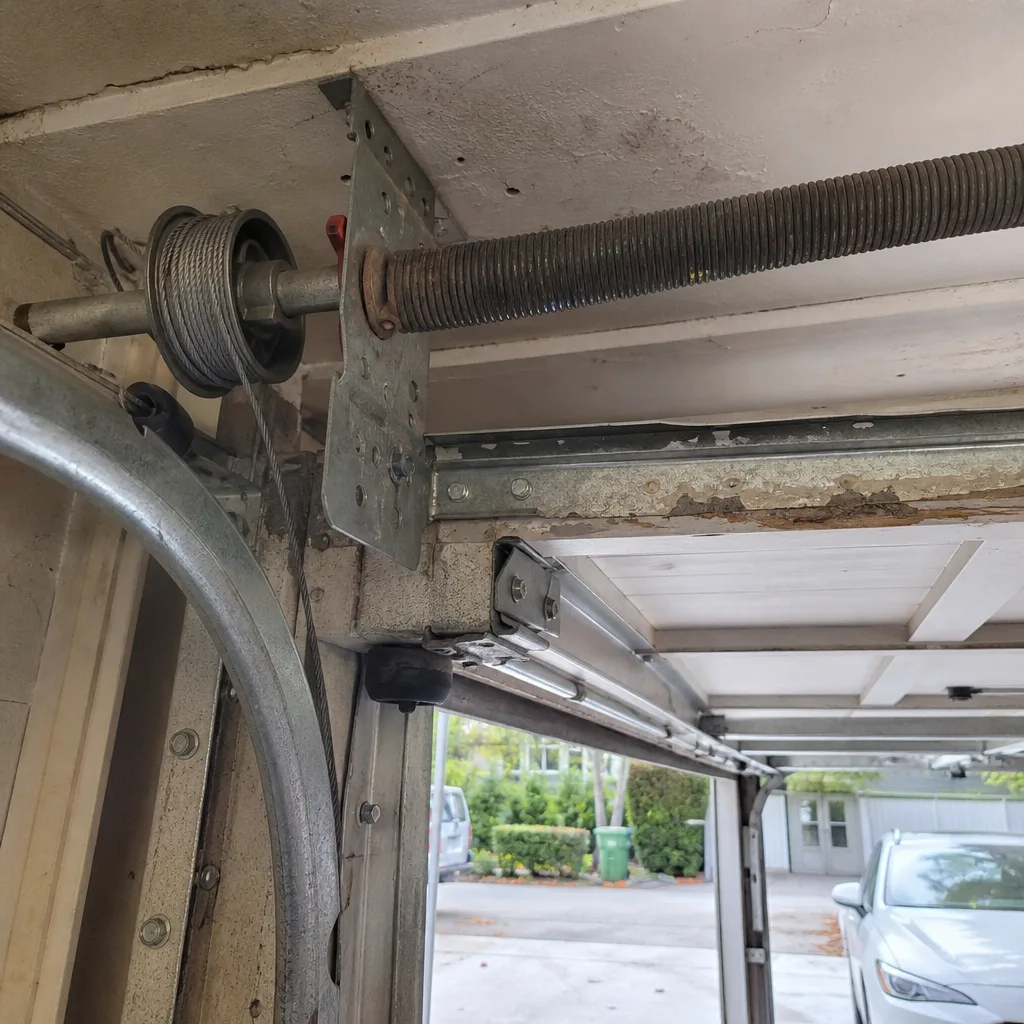
- Rust streaks running lengthwise along the coils. Surface rust is expected on an older spring in salt air, but streaking that follows the wire path indicates the spring’s protective coating has failed and the metal is degrading.
- A visible gap anywhere along the coil stack. A healthy torsion spring has coils tight against one another. A gap means the spring has deformed and is no longer distributing tension evenly.
- One side of the door sits slightly higher than the other when closed. This means one spring is carrying more load and wearing faster.
- The door feels heavier when you operate it manually after pulling the release cord. A properly balanced door should feel like it weighs about ten pounds. If you can feel the full weight of the panel, the spring has already lost significant tension.
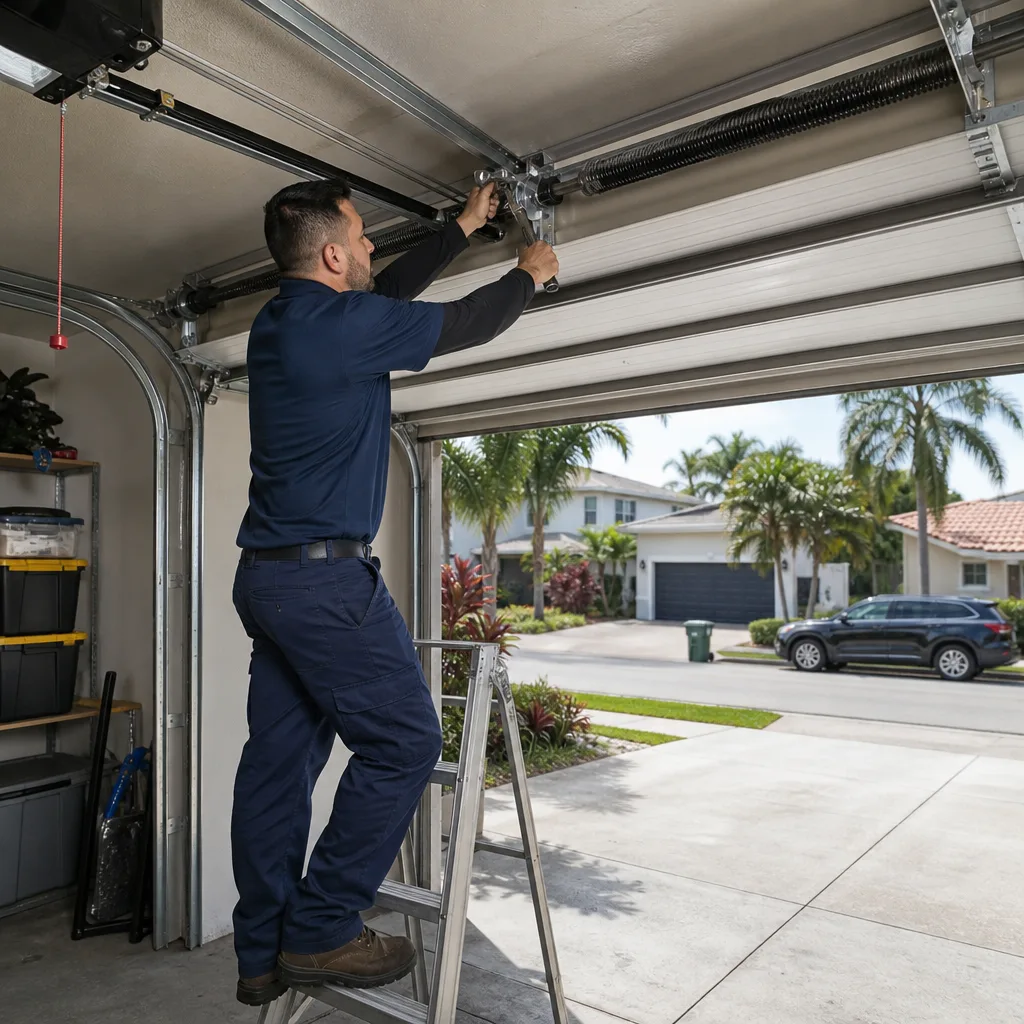
We work with torsion springs from Wayne Dalton, Raynor, and Clopay systems on a weekly basis, and the pattern is consistent: by the time a homeowner notices the door is heavy, the spring is within weeks of failure. If you’re planning a project, read how to hire a garage door contractor in Miami Beach first. If you see any of these signs, call a professional. Garage doors are all we do, and spring replacement is a job where the cost of doing it wrong is measured in hospital bills and door damage, not just wasted time.
Panel Alignment: Storm Wind-Load Stress vs. Normal Settling
Not all panel misalignment is created equal. A door that’s been in service for a decade will drift slightly out of square from normal settling; that’s expected, and it’s usually fixed by adjusting the track brackets. But a door in Miami Beach that’s been through a couple of hurricane-force wind events will show a different pattern, one that involves the panels themselves rather than the framing. Wind pressure pushes against the door face, and over repeated storms, the horizontal struts that reinforce each panel can deform while leaving the overall frame square and true. The result is a door that looks straight from a distance but binds at a specific hinge point when it travels.
Storm Stress Indicators
- The door binds at the same hinge line every time, regardless of temperature or humidity. Normal settling is weather-responsive; wind-load deformation is not.
- You can see light between two panels when the door is closed and latched. This indicates a panel has bowed inward but the hinge points haven’t moved, which is the classic signature of wind pressure.
- One or more horizontal struts show a kink or bend near the center. On doors from Amarr and Clopay, these struts are often hidden behind insulation, so you may need to inspect the door from inside the garage.
- The door rattles noticeably during high-wind events even when the lock bars are engaged. Loose panel-to-strut connections are a prelude to more serious deformation.
Storm-stressed panels require a different repair approach than drifted track brackets. Tightening the brackets or adjusting the track won’t fix a bowed panel, and in some cases it makes the binding worse by forcing a deformed shape through a straight track. The solution is usually panel reinforcement or replacement, which is a job where the repair or replace decision matters. We follow a “diagnose first, replace only if necessary” approach on every panel issue, because a homeowner shouldn’t pay for a new door when a strut and two hinges will solve the problem. That said, if a door has lost structural rigidity, garage door installation in Miami Beach is often the honest recommendation, and we’ll tell you that directly.
What Each Garage Door Noise Actually Means
Garage doors make noise. That’s a given. What separates a routine noise from a warning sign is consistency: a noise that happens every cycle at the same point is diagnostic; a noise that comes and goes with weather or usage is usually benign. Here’s the taxonomy we use when a Miami Beach customer describes a sound over the phone. Grinding with no rhythm, often worse when the door is moving up under load, almost always points to worn rollers or, less often, a stripped gear in the opener. Squealing that changes pitch as the door speeds up is a bearing issue, either in a roller or the torsion tube. A sharp pop at the start of each cycle is the door breaking free from accumulated moisture on the weatherstripping, common in our humidity and usually harmless if the seal is in good shape. But a continuous groaning sound that rises in pitch as the door travels, and that you can hear even when standing at the kitchen, means the opener motor itself is working against excessive resistance. That’s the one that should prompt a same-week service call, because an opener running that hot is on a timer.
Noise Reference Table
| Sound | Likely Cause | Urgency |
|---|---|---|
| Grinding, rhythmic | Worn rollers or hinge wear | Schedule within 2 weeks |
| Grinding, irregular with heat | Stripped opener gear | Call immediately |
| High-pitched squeal | Roller or bearing failure | Schedule within 1 week |
| Sharp pop on open | Weatherstripping release | Monitor only |
| Groaning, rising pitch | Opener overloading | Call same week |
One clarification on the table above: opener gear failure is the one scenario where continued use makes the problem worse very quickly. Plastic gears inside Chamberlain, LiftMaster, and Genie openers are designed to fail before the motor does, which is good engineering but bad news if you keep running the door. The stripped gear loses teeth progressively, until eventually the opener’s carriage won’t move the door at all and the motor spins freely, at which point you’re looking at a full opener replacement rather than a gear swap.
The 15-Minute Miami Beach Garage Door Checkup
You don’t need to be a technician to catch most of the warning signs in this guide early. Fifteen minutes, twice a year, is enough to identify problems while they’re still cheap to fix. Here’s the exact sequence we recommend for Miami Beach homeowners, timed for May and November, which correspond to the start of our rainy season and the start of our dry season respectively.
- Close the door and inspect the outside face panel by panel, looking for rust blooms, paint bubbling, or panel bowing. Pay attention to the bottom two panels on oceanside-facing doors.
- Open the door fully and look at the spring bar. Check for rust streaks, gaps between coils, and any signs of metal fatigue like small cracks or flaking at the coil ends. Do this from a ladder, not by climbing on anything unstable.
- Disconnect the opener using the red release handle, then operate the door by hand. It should lift smoothly with even resistance and stay in place when you stop at waist height. A door that drops or rises on its own has a balance problem.
- Inspect the weatherstripping along the bottom and sides. Look for brittleness, chalky residue, daylight leaks, and any gaps around the corners where the strips meet.
- Watch the door travel once under opener power, listening for grinding, popping, or groaning, and watching for any hesitation or jerking at the midpoint.
- Test the auto-reverse safety feature by placing a 2×4 flat on the ground under the door and closing it. The door should reverse within two seconds of contacting the wood. If it doesn’t, that’s an immediate repair item regardless of what else looks fine.
If you do this checkup in May and November, you’ll catch most humidity-related issues before they become operational failures, and you’ll have a baseline for what “normal” looks like on your specific door. Different brands age differently: Amarr doors tend to show panel wear before spring wear, while some Craftsman-era openers we service run hot in summer regardless of door condition, simply due to motor age. Knowing your baseline matters more than comparing your door to a neighbor’s.
Common Mistakes to Avoid
- Lubricating the wrong parts. Spraying lubricant on rollers, hinges, and bearing plates is good maintenance. Spraying it on the weatherstripping or the door’s photo-eye sensors is not. Lubricant on a UV-damaged seal accelerates breakdown, and grease on a sensor lens causes phantom reversing issues. Use a dry silicone spray on these parts or leave them alone.
- Adjusting the opener force settings to “fix” a heavy door. This masks the real problem whether it’s moisture-swollen panels or a failing spring, and it turns a $150 spring replacement into a $500 opener replacement when the motor eventually burns out.
- Painting over structural corrosion without addressing the rust underneath. In Miami Beach’s salt air, rust continues to spread under paint unless the oxidation is mechanically removed first. A fresh coat of paint over active corrosion lasts six months before bubbling through.
- Ignoring the auto-reverse test because “the door has always worked fine.” Auto-reverse systems fail quietly, and in a city with as many children, pets, and rental properties as Miami Beach, a non-working safety sensor is a lawsuit waiting for a timeline. Test it every six months without exception.
- Replacing one spring when the door has two. Torsion springs fatigue at similar rates when they’re installed as a pair. If one breaks, the other is within months of the same failure. Replacing only one leaves the door unbalanced and doubles your labor cost when the second one goes.
- Assuming a rental property’s garage door is the tenant’s responsibility. In Miami Beach, garage door maintenance on rental properties falls to the landlord unless the lease specifically transfers it, and a door that fails while a tenant’s car is inside it creates liability far beyond the repair cost. Landlords should treat annual door inspections as standard property maintenance.
- DIY torsion spring work. This is the one DIY mistake that can genuinely kill someone. The springs are loaded with enough tension to remove fingers, break bones, and cause permanent disability when they release unexpectedly. No amount of YouTube confidence changes the physics.
When to Call a Professional
Call a garage door professional when you see any of the structural corrosion signs described above, when your torsion spring shows pre-failure indicators, when the door is noticeably heavy to lift manually, when the opener is audibly fighting the door cycle after cycle, or when safety sensors stop reversing the door reliably. These are not maintenance items, and delaying them multiplies the eventual repair cost. If you’re in Miami Beach, Bayside Garage Door Repair offers free estimates for exactly these inspections. We’re specialists in one trade, and we work with the brand you already have rather than steering you toward a replacement you may not need. Call (855) 674-1679 and we’ll tell you honestly whether the door needs an adjustment, a new part, or nothing at all. In our experience, roughly a third of the calls we take end with “keep an eye on it,” which is a fine outcome for everyone.
Frequently Asked Questions
Serious rust in Miami Beach is rust that has progressed to structural corrosion: the metal feels soft under thumb pressure, flakes away in chunks, or shows visible pitting deeper than the paint surface. Surface rust that powders off with a cloth and leaves solid metal underneath is cosmetic and can be treated with a rust-inhibiting primer and marine-grade paint. Check the bottom panel corners first, as those see the most salt spray and standing water.
Summer humidity in Miami Beach causes wood and older steel panels to absorb moisture and gain weight, sometimes 20 to 40 pounds on a standard double door. The opener, which was balanced for the door’s dry-season weight, now has to work harder and may trigger its force limiter or overheat. The fix is re-balancing the door for its current weight, not cranking up the opener’s force settings.
Spring lifespan depends on cycles, not calendar years, and Miami Beach doors cycle more often than the national average due to year-round vehicle use and high outdoor activity. A spring rated for 10,000 cycles might last six to eight years here, compared to ten or more in colder climates. Watch for rust streaks along the coils and gaps between them as pre-failure warning signs.
In most cases, yes, though the specific repair depends on the stress pattern. Wind-load stress typically bows panels and deforms horizontal struts while leaving the track and frame square, which means panel reinforcement or replacement is the right fix, not track adjustment. A door that still operates smoothly after a storm should still be inspected, since hidden strut deformation can fail later under load.
An opener housing that feels warm after a single cycle indicates the motor is drawing more current than it should, usually because the door is out of balance or moisture-swollen panels have added weight. A properly matched opener runs cool in normal operation. Continued operation under these conditions shortens the motor’s lifespan and can eventually burn out the control board.
The salt air, hurricane season, and high humidity of Miami Beach make twice-yearly inspections a better cadence than once a year. We recommend checking in May before the rainy season and in November before winter dry air shifts the door’s balance again. The fifteen-minute checkup described in this guide catches most issues while they’re still inexpensive to address. For more guides & resources on keeping your garage door running smoothly, explore our blog.
The Bottom Line
Garage doors in Miami Beach fail in patterns that generalist guides miss. Salt air turns surface rust into structural corrosion faster than inland homeowners expect. Humidity shifts a door’s weight enough to strain or destroy an opener every single summer. UV radiation eats weatherstripping in months, not years. And storm winds stress panels in ways that normal settling never will. The common thread is that all of these problems announce themselves early, if you know what to look for, and nearly all of them are cheaper to fix in their warning phase than their failure phase. Twice-yearly checks, attention to noise and resistance, and a professional call when the warning signs pair up will keep your door running through August and beyond. If your door is telling you something, call (855) 674-1679.
Written by the team at Bayside Garage Door Repair, serving Miami Beach since 2014.
See the difference
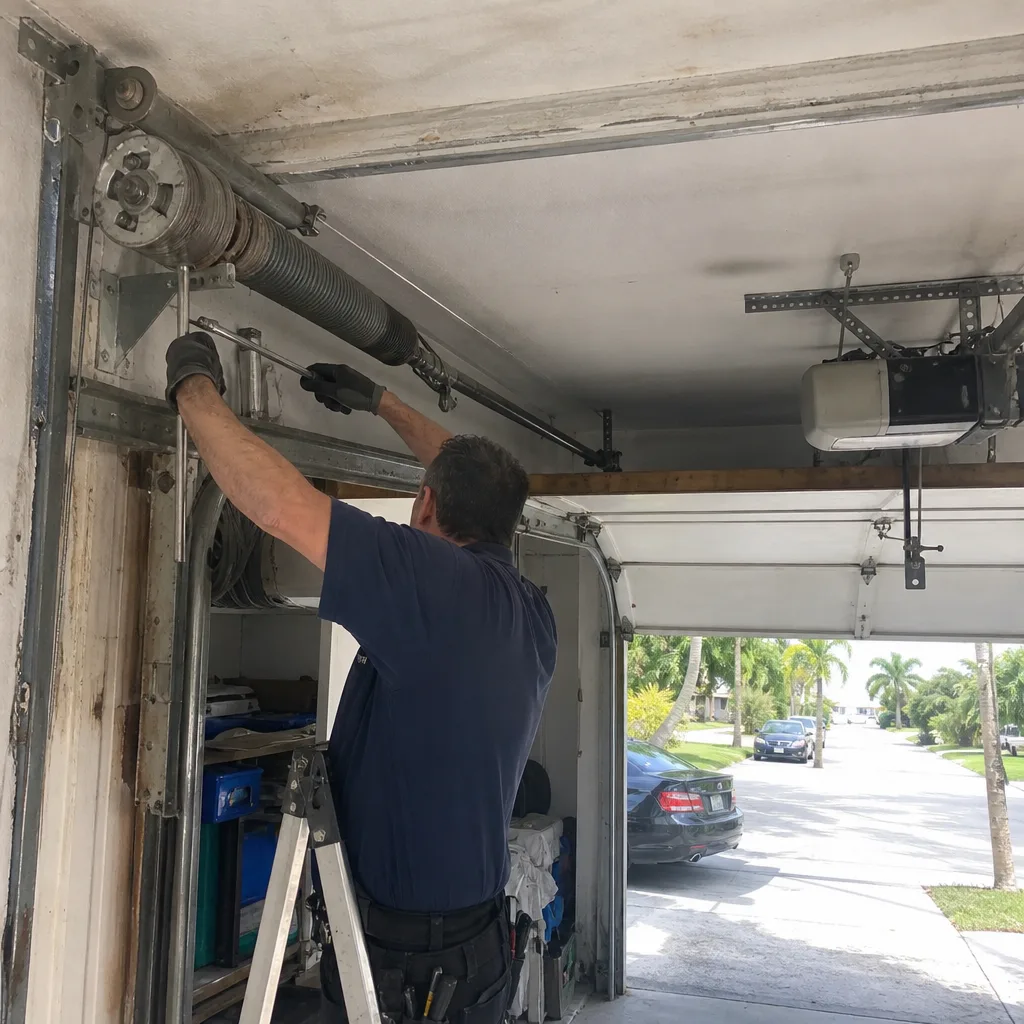 Before
 After
 Before
 After
 Before
 After